Introduction: Why Robot Selection Matters in 2026
-
Choosing the right industrial robot is a long‑term strategic decision that shapes your factory’s productivity, cost structure and flexibility for many years. The market now offers a wide range of robot types, from six‑axis arms and SCARA robots to autonomous mobile robots (AMRs) that move materials across warehouses and production floors. Without a structured selection approach, it is easy to end up with robots that either cannot handle real workloads or are over‑engineered and expensive for the actual task.
-
This guide explains how to choose an industrial robot step by step: starting from your applications, defining technical requirements, comparing robot types, considering integration and costs, and finally selecting the right supplier. It reflects best practices that solution providers like
iBEN Robot follow when designing industrial robot solutions for manufacturing customers.
Define Your Applications Before Looking at Robots
-
The most important rule in industrial robot selection is to start from applications, not from robot catalogs. Industrial robots are tools, and each tool is optimized for specific tasks. Before evaluating brands, you should clearly describe what you want the robot to do and where it will work.
-
Typical industrial use cases include palletizing and depalletizing, case packing, machine tending, fastening, welding, assembly, inspection and internal material handling. Each application places different demands on payload, reach, accuracy, cycle time and environmental resistance. For example, a high‑throughput carton palletizing cell will require a different robot than a delicate assembly station for small electronics.
-
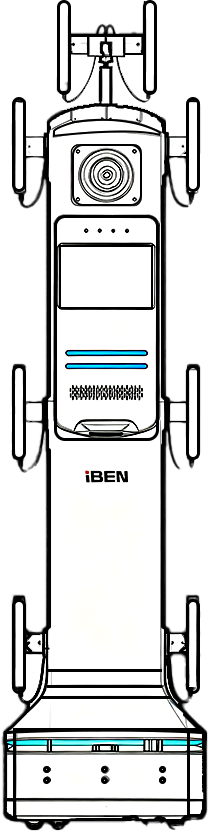
If your focus is internal logistics—moving pallets, racks or components between warehouse and production lines—industrial AMRs such as the
X300 industrial transport robot may be more appropriate than fixed robot arms. Starting from detailed application descriptions prevents you from choosing robots that look powerful but do not match your real needs.
Map the Process and Set Performance Targets
By quantifying throughput and quality targets, you will be able to filter out robots that cannot meet your requirements and avoid over‑paying for capabilities you will never use. For instance, if your line requires 400 cycles per hour and a robot is rated for 1,000 cycles per hour, you may be paying for performance far beyond what is needed.
Process mapping should also consider constraints such as floor space, access for operators and maintenance, necessary safety zones and interactions with other machines. These constraints directly influence the type, size and layout of the robot cell.
Pick the Right Robot Type
With your application and performance targets clear, you can decide which robot type is most suitable. The main categories used in industrial settings include:
-
Articulated robots (typically 6 axes) Highly flexible and capable of complex motion paths, ideal for welding, palletizing, complex assembly and machine tending.
-
SCARA and delta robots Designed for high‑speed pick‑and‑place and small‑part handling where speed and precision matter more than orientation flexibility.
-
Cartesian and gantry robots Good for large, rectangular work envelopes with simple, linear motions, often used for machine loading, inspection and some heavy handling.
-
Collaborative robots (cobots) Built for safe operation near people with lower payload and speed, commonly used for light assembly, small‑batch production and flexible tasks.
-
Industrial AMRs and AGVs Mobile robots for internal transport rather than direct manipulation, ideal for moving materials between storage and production or between lines.
The right type depends on your mix of payload, reach, cycle time, motion complexity and interaction with workers. In some factories, you may end up using multiple robot types—articulated robots on lines and AMRs like X300 serving as automatic handling robots that keep those lines supplied.
Determine Key Technical Specifications
After choosing a robot type, you must define the technical specifications in more detail.
-
Payload Payload is the maximum weight a robot can handle, including the part and end‑of‑arm tooling. Undersizing payload can cause overloads and damage, while oversizing increases cost without practical benefit.
-
Reach and work envelope Reach specifies the maximum distance the robot can reach, both horizontally and vertically. It must cover all pick and place points plus some margin for approach, avoidance and maintenance access.
-
Accuracy and repeatability Accuracy is how close the robot can get to a programmed point, while repeatability describes how consistently it can return to the same point. For tasks like precision assembly or machining, tighter repeatability is essential; for palletizing, tolerances are often more forgiving.
-
Speed and cycle time The robot’s axis speeds and motion profiles must support your takt time and throughput targets with a safety buffer. Higher speed robots can reduce cycle time but may require stronger safety measures and stiffer end‑of‑arm tooling.
-
Environment and protection Dust, moisture, temperature extremes and chemical exposure all influence required protection levels (such as IP ratings). For clean‑room or food environments, specialized models or protective covers are needed.
Industrial robot solution guides from iBEN and other suppliers often provide tables that map typical applications to recommended payload, reach and accuracy ranges, giving buyers a starting point for specification.
Consider Integration, Controls and Programming
Robot hardware is only one part of a working system; integration and controls can easily account for half or more of project costs and risks. When choosing an industrial robot, you must evaluate how it will connect to existing equipment and how easy it will be to program and adapt.
Integration questions include:
-
Which fieldbuses and communication protocols are supported?
-
How will the robot controller interface with PLCs, conveyors, vision systems and safety components?
-
Are there standard function blocks or libraries available for your PLC platform?
Programming questions include:
-
Does the robot support intuitive programming environments or templates for common tasks like palletizing and machine tending?
-
How difficult is it to adjust paths, speeds and I/O logic when products or fixtures change?
-
Can your in‑house engineers learn to maintain and modify programs, or will you depend on external integrators for every update?
For mobile robots like the X300, you should also consider fleet‑management software, mission configuration and integration with WMS or MES systems. Systems that are easier to integrate and maintain often deliver better long‑term ROI than technically impressive but rigid solutions.
Understand Cost, Budget and ROI
Cost is a critical factor, but focusing only on robot unit price can lead to poor decisions. A realistic budget must include hardware, engineering, safety, integration, training and ongoing maintenance.
Cost guides from iBEN and other vendors show that mid‑range palletizing robot arms often fall in the tens‑of‑thousands of euros for hardware alone, with complete integrated cells costing significantly more once conveyors, guarding and engineering are added. Similarly, mid‑range industrial AMRs and AGVs for factory and warehouse use generally fall in the €15,000–€40,000 band per vehicle, depending on payload and technology.
To judge whether a project is attractive, you should build an ROI model that compares total investment with expected savings and gains over several years. Inputs include:
-
Current labor costs and staffing levels for the target process.
-
Scrap, rework and product damage rates.
-
Throughput constraints and overtime costs.
-
Safety incidents and associated expenses.
Many successful robot projects report payback periods between 12 and 36 months, especially in high‑volume production with multiple shifts. Conservative assumptions are advisable; it is safer to plan for slower payback and then be positively surprised than to count on aggressive numbers and miss expectations.
Evaluate Robot Suppliers and Integrators Carefully
Even the best robot hardware cannot deliver expected value if the supplier or integrator is not up to the task. Choosing the right partner is therefore as important as choosing the robot model.
Key evaluation criteria include:
-
Experience with similar applications and industries.
-
Breadth of portfolio, covering robot arms, AMRs and related automation where needed.
-
Engineering capabilities: design, simulation, programming and on‑site commissioning.
-
Local service presence and spare‑parts availability.
-
Transparency in pricing, scope and performance guarantees.
Guides like IBEN’s “Choose Industrial Robot Wholesaler” and “How to Choose the Right Industrial Robot Solution” emphasize structured evaluation frameworks rather than relying on brand reputation or price alone. Vendors who can provide real references, site visits and clear KPIs are generally a safer choice than those who offer only generic promises.
Plan for Future Flexibility and Scalability
Industrial robots are long‑term assets, so you need to think beyond today’s project. Product mixes, order volumes and customer requirements will change, and your robot system should be able to adapt without complete replacement.
For fixed robots, flexibility comes from modular cell designs, configurable grippers, reusable fixtures and software that can handle multiple products. For mobile robots like the X300, it comes from flexible navigation, mission configuration and the ability to add new stations and workflows through software rather than construction.
Scalability is another important aspect. A single robot cell or small AMR fleet may be enough today, but you should ensure that your chosen platform can grow to support additional lines, warehouses or plants. This typically requires standardized interfaces, centralized management and coherent safety and IT architectures.
Build a Phased Industrial Robot Roadmap
Rather than trying to automate everything at once, most successful manufacturers adopt a phased approach. They start with one or two high‑ROI applications, gain experience and then expand coverage as confidence and skills grow.
A typical roadmap might look like:
-
Automate a single palletizing or machine tending cell in a stable process.
-
Add more robots to cover similar processes in the same plant.
-
-
Extend automation to upstream and downstream steps, integrating robots more deeply with MES and WMS systems.
This phased strategy reduces technical and organizational risk while creating a clear learning path for your team. It also aligns capital expenditure with demonstrated returns rather than speculative expectations.
Conclusion: Choosing the Right Robot with Confidence
Choosing an industrial robot is not about finding a single “best” model but about matching technology to your specific processes, performance targets and future roadmap. By starting from well‑defined applications, mapping processes, specifying technical needs, considering integration and cost, and carefully selecting suppliers, you can make confident decisions that pay off over the long term.
If you are at the beginning of this journey, a practical first step is to review application examples and product information on
iBEN Robot, then evaluate whether platforms like the X300 and related industrial robot solutions align with your factory’s needs. From there, you can build a phased roadmap that gradually increases automation while maintaining control over risk and ROI.