Introduction: Buying Warehouse AGVs as a Long-Term Investment
-
For many logistics and manufacturing companies, selecting a warehouse AGV is no longer a one‑time equipment purchase but a strategic investment in an automation platform. The decision affects not only material flow and labor structure, but also future expansion options and the reliability of your supply chain. At the same time, buyers face an increasingly crowded market with different technologies, price structures and wholesaler models.
-
A warehouse AGV is only as good as the ecosystem around it—software, service, spare parts and the wholesaler or integrator that stands behind it. This guide focuses on how to choose both the
AGV itself and a
warehouse AGV wholesaler capable of supporting multi‑year automation roadmaps, similar to how one‑stop providers like
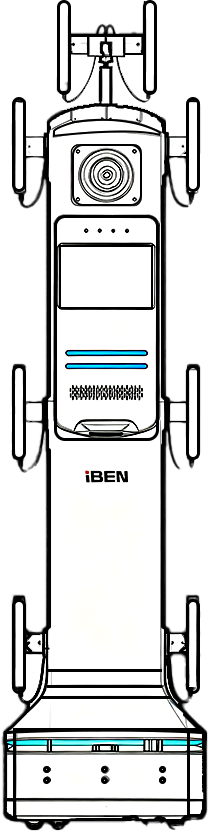
iBEN Robot position their portfolio.
Clarify Your Warehouse Automation Strategy
Your answers will influence whether you need a simple point solution or a scalable platform from a one‑stop warehouse AGV wholesaler. A wholesaler that understands your long‑term plan can propose a phased roadmap instead of a collection of disconnected projects.
Analyze Layout, Loads and Flows
The next step is to analyze your warehouse layout, loads and material flows in detail. This technical picture will directly determine which types of AGVs are appropriate.
You should document:
-
Building dimensions, aisle widths, ceiling heights and any mezzanines.
-
Storage types: floor storage, selective racks, drive‑in racks, high‑bay AS/RS and so on.
-
Dock positions, staging areas and key process zones (receiving, picking, packing, returns).
-
Load types and characteristics: pallet sizes, rack footprints, cart designs, weights and center‑of‑gravity issues.
You also need traffic data: volumes and patterns of moves between zones, peak versus average load, and seasonal variations. A strong warehouse AGV wholesaler will typically ask for this information early and may help you collect it, because it is essential for designing a viable system.
Choose Suitable Warehouse AGV Types
Warehouse AGV solutions use several vehicle types, each with strengths and trade‑offs. As a buyer, you should understand the main options:
-
Pallet AGVs These carry pallets on a platform and move them between docks, storage and staging. They work well for floor storage and conveyor interfaces.
-
Forklift AGVs These operate like automated forklifts, lifting pallets into and out of rack positions at multiple levels. They are suitable for retrofits where existing racks are kept.
-
Tugger AGVs Designed to pull trains of carts for milk‑run replenishment or batch transport. They are useful when many small loads share similar routes.
-
Low‑profile AGVs / AMRs These drive under racks, trolleys or carts and lift them slightly for movement. They are particularly compact in narrow aisles and can be combined with static shelving systems.
Your layout and handling equipment will largely determine which combination makes sense. In some cases, industrial AMRs such as the
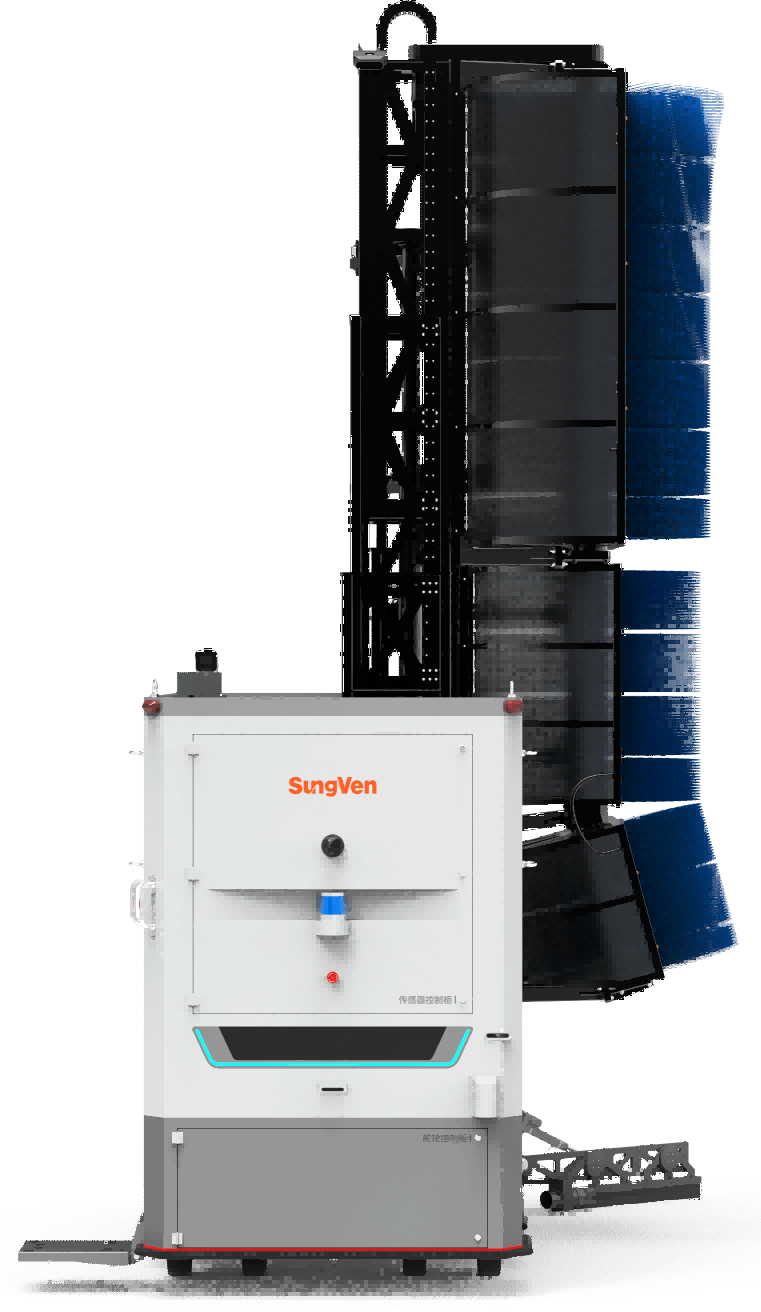
X300 industrial transport robot can serve as a flexible base for pallet or rack handling, especially when retrofitting brownfield warehouses that must remain in operation during installation.
Understand Navigation and Safety Requirements
Navigation and safety form the technical core of a warehouse AGV solution. Traditional AGVs used fixed guidance like magnetic tape or wires, while modern systems increasingly rely on laser SLAM or natural feature navigation.
When choosing a warehouse AGV, you should evaluate:
-
Navigation method: Marker‑free SLAM brings faster deployment and easier layout changes but may require higher upfront hardware and software sophistication.
-
Environmental robustness: How well does the navigation handle highly reflective surfaces, changing light, narrow aisles or busy crossings?
-
Safety functions: Certified laser scanners, emergency stop circuits, speed reduction zones and safe field configurations are essential for safe mixed traffic.
Better wholesalers provide reference projects where their navigation and safety concepts have been validated under similar conditions, rather than only lab tests. They can also advise on safety zoning, signage and procedures to satisfy internal safety teams and regulatory requirements.
Evaluate Fleet Management and Integration Capabilities
Fleet‑management software is one of the main differentiators between warehouse AGV solutions. It affects daily operations, scalability and integration effort.
Critical aspects include:
-
Task assignment and optimization: The software should dynamically assign missions to vehicles based on position, battery level and queue length, rather than fixed routes.
-
Traffic control: It must coordinate intersections, manage priority rules, handle narrow cross‑sections and avoid deadlocks.
-
Workflow flexibility: You should be able to configure different mission types, such as simple point‑to‑point moves or multi‑stop milk runs, without custom coding.
-
Monitoring and analytics: Dashboards, historical reports and alerting help you manage performance and detect issues early.
Integration with WMS, WCS and possibly MES is equally important. A warehouse AGV wholesaler with a mature platform will offer standard APIs or connectors for typical WMS systems, reducing project risk and integration cost. You should clarify which system has “control authority” for tasks like pallet selection and dock assignment to avoid conflicts.
Analyze Total Cost and Typical Price Ranges
Warehouse AGVs represent significant investments, so understanding price ranges and cost drivers is essential. Studies and vendor pricing guides indicate that mid‑range warehouse AGVs with around 1,000 kg capacity and laser‑based navigation typically cost between €15,000 and €40,000 per vehicle. More advanced forklift AGVs or niche vehicles with high reach or extreme conditions can be substantially more expensive.
System‑level investments also include:
-
Fleet‑management software licenses or subscriptions.
-
Integration engineering and commissioning.
-
Safety equipment, possible changes to conveyors and racking.
-
Training and change‑management efforts.
A good wholesaler will provide transparent quotations that break down vehicle costs, software, integration and optional service packages. This allows you to compare offers fairly and build realistic ROI calculations rather than relying on marketing numbers alone.
Build an ROI Model That Reflects Your Business
To judge whether a warehouse AGV solution is attractive, you need a robust ROI model. This model should capture both direct savings and strategic benefits.
Typical ROI inputs include:
-
Reduced forklift labor or redeployment of drivers to value‑added tasks.
-
Lower accident frequency and less damage to goods, racks and building infrastructure.
-
Higher and more predictable throughput, especially in peak seasons.
-
Potential space savings from denser storage and more efficient staging.
Cost inputs cover capex for vehicles and infrastructure as well as opex for maintenance, energy, software, repairs and periodic upgrades. Many well‑designed AGV projects achieve payback within one to three years, depending on labor costs and utilization. Experienced wholesalers can provide benchmark models and adjust them to your local conditions.
Assess the Warehouse AGV Wholesaler, Not Just the Product
Choosing a warehouse AGV is not only about technical specifications; it is also about selecting a wholesaler who can support you through design, rollout and long‑term operation. A trusted wholesaler combines product breadth with solution expertise.
Key aspects to evaluate include:
-
Portfolio breadth: Do they offer multiple AGV types (pallet, forklift, low‑profile) and related robots such as interior storage or handling robots?
-
Solution capability: Can they design routes, safety concepts and IT architectures, not just sell vehicles?
-
Project experience: Do they have references in similar warehouse sizes, industries and regions?
-
Service network: Is there local or regional support for maintenance, spare parts and emergency interventions?
-
Commercial terms: Are pricing, payment terms and warranty conditions clear and competitive?
One‑stop wholesalers like
iBEN Robot, who also supply interior storage robots and handling robots, can simplify procurement and ensure technology compatibility across your automation roadmap.
Check Contracts, Service Levels and Lifecycle Support
Long‑term support and contractual clarity are crucial for warehouse AGV projects. When evaluating wholesalers, you should request and compare:
-
Standard service‑level agreements (SLAs) with response times and resolution targets.
-
Preventive maintenance plans and spare‑parts stocking policies.
-
Upgrade and update strategies for software and firmware.
-
Options for extended warranties, remote monitoring and performance audits.
Total cost of ownership depends heavily on these lifecycle services. A wholesaler that only focuses on initial sales but lacks robust after‑sales support may offer lower up‑front prices but higher long‑term risks and costs. You should also check how they handle changes in your warehouse—such as layout modifications or new process requirements—and what typical engineering costs are for updates.
Plan a Phased Rollout with Your Wholesaler
Even with a carefully chosen warehouse AGV and wholesaler, success depends on planning the rollout in manageable phases.
A typical approach:
-
Pilot phase: Implement AGVs in one or two well‑defined flows, such as dock‑to‑storage or storage‑to‑picking, in a limited area.
-
Stabilization: Verify that performance and safety meet agreed KPIs, and optimize routes, task logic and charging.
-
Expansion: Add more routes, vehicles and shifts gradually while monitoring system behavior and user acceptance.
-
Standardization: Once the concept is proven, standardize AGV designs and integration patterns for other sites in your network.
A strong wholesaler will act as a partner in this journey, helping you manage risk, handle change and align automation investments with business priorities.
Conclusion: Selecting Warehouse AGVs and Wholesalers with Confidence
Choosing a warehouse AGV and wholesaler is a strategic decision that will shape your automation capabilities for years. By clarifying your strategy, analyzing layout and flows, matching AGV types and navigation to your environment, evaluating software and integration, analyzing total cost and ROI, and assessing wholesalers on portfolio, service and contracts, you can make informed choices instead of relying on marketing claims.
To explore concrete options, you can start from
iBEN Robot and review how platforms such as the
X300 industrial transport robot and related warehouse robots are deployed in real projects. From there, a phased deployment plan with a trusted one‑stop wholesaler will help you move toward a more automated, efficient and resilient warehouse.