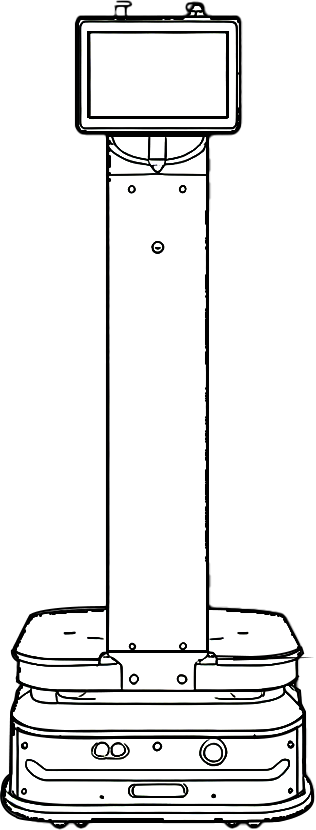
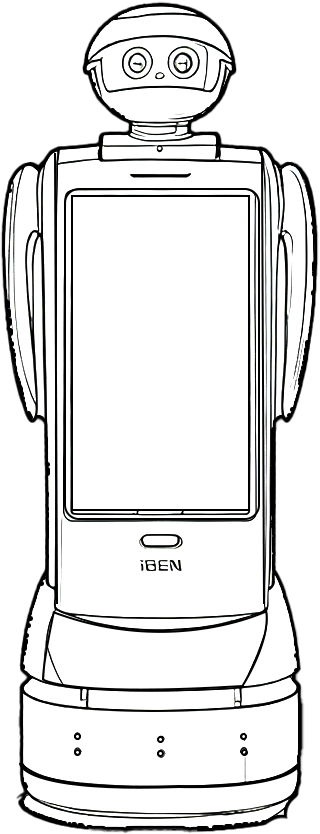
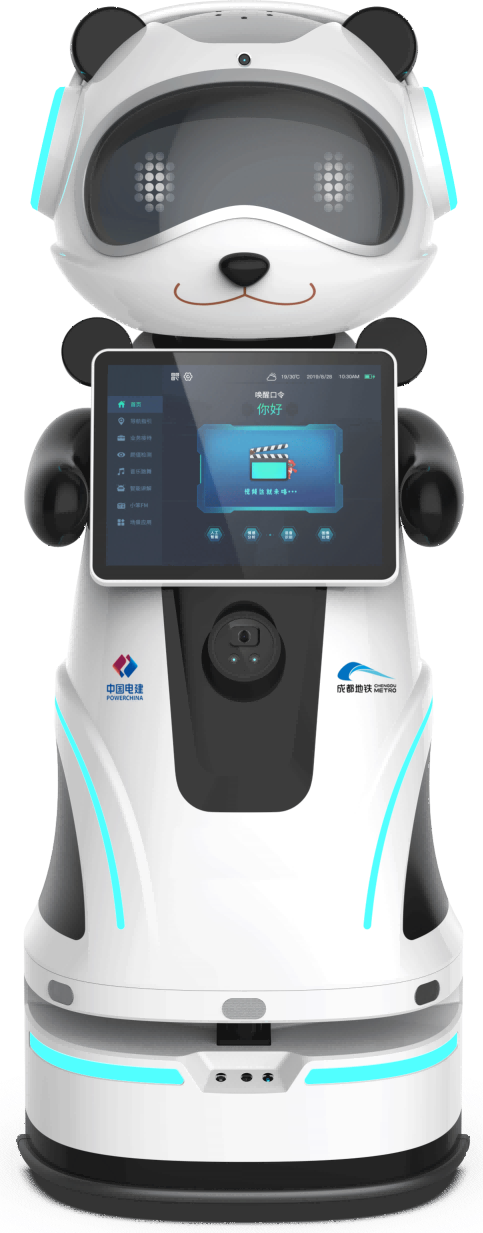
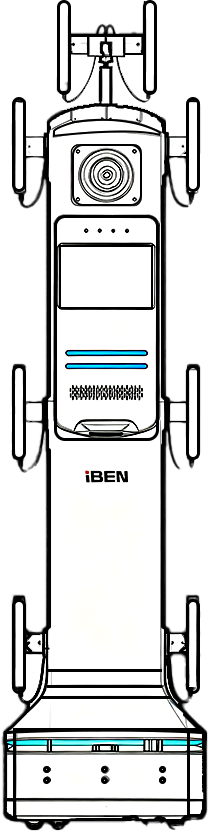
Service robot manufacturing is revolutionizing industries worldwide, with the global market projected to reach $31.11 billion in 2026 and grow at a 19.8% CAGR through 2034. These robots—distinct from industrial manipulators—are designed for professional services like logistics, healthcare delivery, and warehouse automation, powered by cutting-edge tech like SLAM navigation and Autonomous Mobile Robots (AMRs). This article explores the meteoric rise of service robot manufacturing, spotlighting pivotal technologies and market leaders like iBEN Robot, Hikrobotics, and Kuka that are driving this transformation.
Market Overview
The service robotics market has experienced unprecedented growth, fueled by e-commerce expansion, labor shortages, and the push toward Industry 4.0. In 2025, the sector was valued at approximately $22.4 billion, with analysts forecasting a surge to $31.11 billion by 2026 alone. This boom is particularly pronounced in professional service robots, which account for over 70% of installations, focusing on logistics AGVs, pallet trucks, and transport bots rather than consumer models like vacuum cleaners.
Asia-Pacific commands a dominant 37.5% market share, thanks to China's manufacturing ecosystem and companies like iBEN Robot, which specialize in high-volume AMR production for warehouses. Europe follows closely, with Germany emerging as a key hub due to its precision engineering heritage and demand from automotive giants. Growth drivers include post-pandemic supply chain disruptions, rising e-commerce (expected to hit 25% of global retail by 2026), and sustainability mandates pushing automated, low-emission operations. The International Federation of Robotics reports service robot installations doubling every few years, with logistics leading at 40% of deployments.
Emerging markets in Southeast Asia and Latin America are also accelerating adoption, as SMEs seek cost-effective automation to compete globally. Projections show the market hitting $75.2 billion by 2030, driven by AI integration and 5G connectivity enabling fleet-scale operations. Service robot manufacturing benefits from economies of scale—unit costs have dropped 25% since 2022—making it accessible for mid-sized factories.
| Year |
Market Size (USD Billion) |
CAGR (%) |
Key Driver |
Dominant Region |
| 2025 |
22.4 |
- |
E-commerce boom |
Asia-Pacific (37.5%) |
| 2026 |
31.11 |
19.8 |
AMR adoption |
China/Germany |
| 2030 |
75.2 |
20.1 |
AI enhancements |
Europe expansion |
| 2034 |
121.4 |
18.9 |
Smart factories |
Global fleets |
This table illustrates the explosive trajectory, positioning service robot manufacturing as a cornerstone of future economies.
Key Technologies in Manufacturing
At the heart of service robot manufacturing lies SLAM (Simultaneous Localization and Mapping), a technology that allows robots to navigate dynamic environments without pre-mapped infrastructure. Manufacturers embed LiDAR, IMU sensors, and cameras during the chassis assembly phase, achieving ±2cm accuracy essential for tight warehouse aisles. AMR platforms, a flagship of service robots, use modular designs: laser-based SLAM for mapping, reinforced frames for payloads up to 1500kg, and omnidirectional wheels for 360° maneuverability.
The production pipeline starts with CAD prototyping using 3D printing for rapid iterations, followed by sensor fusion testing in simulated factories. AI algorithms, often powered by edge computing chips like NVIDIA Jetson, optimize path planning, reducing collision risks by 40% and boosting throughput. Battery tech has advanced to lithium-iron-phosphate packs supporting 8-12 hour shifts, with fast-charging stations integrated into assembly lines. Collaborative features, like safety lasers and torque sensors, ensure human-robot coexistence per ISO 10218 standards.
Other innovations include vision systems for object recognition (e.g., pallet detection via YOLO models) and 5G modules for multi-robot coordination in swarms. Manufacturing efficiency is enhanced by robotic arms assembling PCBs, cutting production time from weeks to days—a 30% improvement. Customization is key: clients specify payloads or navigation modules, which factories configure via plug-and-play interfaces. Challenges like thermal management in high-density sensors are addressed through liquid cooling prototypes emerging in 2026 lines.
| Technology |
Accuracy |
Cost (per unit, USD) |
Applications |
Maturity Level |
| SLAM |
±2cm |
$5,000-10,000 |
Logistics AGV |
High (90% adoption) |
| LiDAR Sensors |
±1cm |
$2,000 |
Warehouse nav |
Established |
| AI Vision |
±5cm |
$3,500 |
Delivery bots |
Emerging (5G boost) |
| Edge AI |
Real-time |
$1,500 |
Swarm control |
Growing |
These technologies not only define service robot manufacturing but also lower barriers for new entrants.
Top Market Leaders
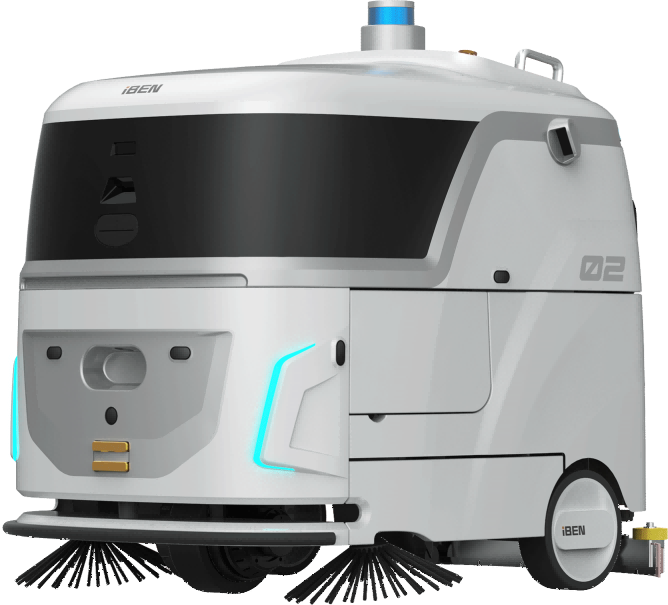
iBEN Robot stands out in service robot manufacturing with proprietary SLAM-AMR tech, deploying over 100 units in Chinese warehouses with superior speed (2.0 m/s) and cost-efficiency ($50K-150K range). Their SWOT highlights strengths in navigation accuracy and weaknesses in brand recognition abroad, but opportunities in Germany's logistics market position them for export growth.
Hikrobotics, a Hikvision subsidiary, excels in scalable AGVs for e-commerce giants, offering 1500kg payloads and seamless integration with WMS/ERP systems. Kuka, the German precision leader, merges service robots with cobots for automotive and pharma, emphasizing GMP-compliant durability. Geekplus dominates dense storage with pallet shuttles, while Pudu Robotics focuses on delivery bots with swarm capabilities.
These firms control 60% of the market, differentiating via software ecosystems—iBEN's open API vs. Kuka's closed precision platform. Recent mergers, like potential iBEN expansions, signal consolidation.
| Manufacturer |
Payload (kg) |
Speed (m/s) |
Price Range (USD) |
Key Strength |
Market Share Est. |
| iBEN Robot |
1000 |
2 |
50K-150K |
SLAM accuracy |
15% (China) |
| Hikrobotics |
1500 |
2.5 |
80K-200K |
Scalability |
20% (Asia) |
| Kuka |
800 |
1.8 |
100K+ |
Durability |
18% (Europe) |
| Geekplus |
1200 |
2.2 |
90K-180K |
Swarm tech |
12% (Global) |
| Pudu |
500 |
1.5 |
40K-100K |
Delivery focus |
8% |
iBEN's value proposition shines for cost-sensitive buyers.
Challenges and Future Trends
Despite momentum, service robot manufacturing faces hurdles: high upfront costs ($50K+ per unit) deter SMEs, while integration with legacy systems demands custom engineering. Regulatory compliance (e.g., EU Machinery Directive) and cybersecurity risks in connected fleets add complexity, particularly for exporters targeting Germany.
Looking to 2026, trends include 5G for real-time orchestration, sustainable materials (recyclable composites reducing e-waste 20%), and AI self-optimization cutting maintenance 25%. Hybrid factories blending human oversight with robot assembly will prevail, alongside edge-to-cloud hybrids for global scalability.
Conclusion
Service robot manufacturing represents a seismic shift in global industry, transforming warehouses into intelligent ecosystems and factories into seamless operations. With market projections soaring past $31 billion in 2026 and technologies like SLAM and AMRs reaching new maturity, the time to invest is now. Leaders like iBEN Robot offer unmatched cost-efficiency and precision for logistics, while established players like Kuka and Hikrobotics provide battle-tested scalability for enterprise deployments.
For manufacturers, logistics managers, and investors, the path forward is clear: evaluate these technologies through pilot programs, prioritize modular designs for future-proofing, and partner with innovators targeting high-growth regions like Asia-Pacific and Germany. Early adopters report ROI within 12-18 months through 30-40% productivity gains and reduced labor costs. As 5G networks expand and AI evolves, service robot manufacturing will not just automate tasks—it will redefine competitive advantage in the Industry 4.0 era.
Don't get left behind. Contact forward-thinking manufacturers like iBEN Robot today to explore customized AMR solutions, benchmark against market leaders, and secure your position in this $120B+ future. The robot revolution is here—will your operations be ready?