Introduction
Are you still paying warehouse workers to walk miles each day—moving pallets from receiving to storage, retrieving items for orders, and manually counting inventory with handheld scanners?
If so, you are not alone. For decades, these two tasks—material handling and inventory counting—have consumed the majority of warehouse labor budgets. But the rise of warehouse interior storage robots is changing everything.
However, when logistics managers and warehouse owners begin researching automation, they quickly encounter a confusing question: "How much does a warehouse interior storage robot actually cost?"
Prices vary wildly online. Some articles quote $15,000; others mention $100,000+. The truth is that "storage robot" is an umbrella term covering two distinct types of automation—those that move goods and those that count goods—and each comes with its own price structure, features, and ROI profile.
This comprehensive 2026 guide provides total transparency on warehouse interior storage robot pricing. We will:
-
Break down the two main categories of storage robots
-
Provide realistic 2026 price ranges for each type
-
Explain the technology that drives costs
-
Reveal hidden expenses beyond the sticker price
-
Show how IBEN's dual-product strategy—combining IBEN Material Handling Robots (AMR) and IBEN Inventory Counting Robots —delivers complete warehouse automation at an accessible price point
Whether you run a 5,000㎡ distribution center or a 50,000㎡ manufacturing warehouse, this guide will help you make an informed investment decision.
Two Types of Warehouse Storage Robots: Understanding What You're Paying For
Before discussing prices, you must understand what "
warehouse interior storage robot" actually means. In the automation industry, this term encompasses two fundamentally different machines with different functions, technologies, and business cases.
Material Handling Robots (AMR) – The "Movers"
Function: These robots are designed to transport goods within the warehouse environment. They move materials from receiving docks to storage racks, from racks to picking stations, between production lines, and to shipping areas. They replace manual forklifts, pallet jacks, and carts.
Key Capabilities to Consider:
-
Payload Capacity: How much weight can they carry? (Typically 100kg to 2,000kg+)
-
Lift Height: Can they simply transport, or can they lift and place?
-
Navigation Precision: How accurately can they position themselves for docking?
-
Speed and Throughput: How many moves per hour can they complete?
-
Battery Life: Can they run across multiple shifts?
IBEN Solution: X300 Series Material Handling Robots
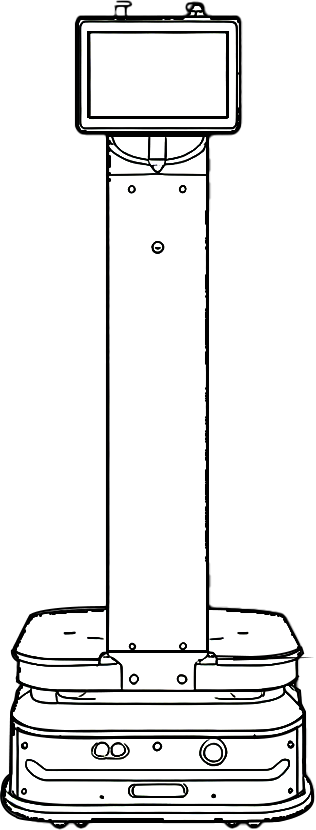
IBEN's X300 series represents the sweet spot in material handling automation. With a payload range of 100kg to 1500kg, these robots handle everything from small parts totes to full pallets. The series offers three modular configurations:
| Model |
Configuration |
Ideal Application |
| X300B-L |
Top-lifting (60mm max lift) |
Replacing manual pallet jacks, line-side feeding |
| X300B |
Flat deck |
Transporting totes, cartons, small parts |
| X300T |
Multi-layer tray |
Delivering sensitive components directly to production lines |
All X300 models feature IBEN's proprietary Laser SLAM + VSLAM fusion navigation, enabling them to operate in dynamic environments without facility modification.
Inventory Counting Robots – The "Checkers"
Function: These robots automate the tedious, error-prone process of cycle counting. They navigate warehouse aisles autonomously, scan items using RFID or computer vision, and reconcile physical counts with your Warehouse Management System (WMS). They eliminate the need for workers to spend hours pushing carts with handheld scanners.
Key Capabilities to Consider:
-
RFID Read Accuracy: Can they read hundreds of tags simultaneously with >99% accuracy?
-
Vision Capabilities: Can they also scan barcodes and QR codes for hybrid environments?
-
Navigation Stability: Can they maintain precise positioning for consistent reads?
-
Data Integration: How easily do they connect to your WMS or ERP?
-
Multi-Environment Use: Can they operate in freezers, data centers, or retail spaces?
IBEN Solution: Inventory Counting Robot
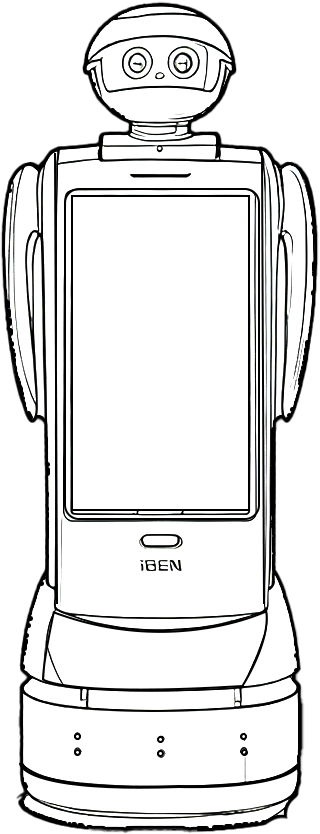
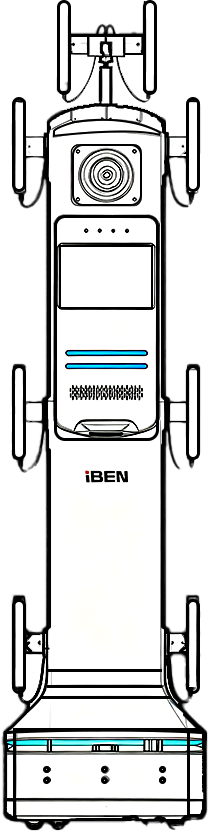
IBEN's inventory counting robot is engineered for high-accuracy RFID recognition. It features:
-
Advanced RFID array for simultaneous tag reading
-
Visual counting capabilities for barcode and QR code scanning
-
SLAM-based navigation for autonomous aisle traversal
-
Flexible deployment: local or cloud deployment options
-
Environmental monitoring sensors for temperature and humidity-sensitive storage
This robot transforms inventory management from a periodic, disruptive task into a continuous, automated process.
Warehouse Interior Storage Robot Price Breakdown (2026)
Now that you understand the two categories, let's examine realistic 2026 price ranges. These estimates are based on current market analysis and IBEN's positioning as a value-driven automation provider.
Material Handling Robot (AMR) Pricing
| Category |
2026 Price Range (USD) |
Typical Features |
| Entry-Level |
$18,000 – $30,000 |
Basic transport function, lower payload (<500kg), simple navigation (may require tape/markers), limited software |
| Mid-Range |
$30,000 – $55,000 |
Advanced SLAM navigation, modular configurations, 500kg-1500kg payload, robust safety systems, fleet management software |
| High-End |
$60,000 – $120,000+ |
Heavy payload (>1500kg), custom tooling, specialized certifications (cleanroom, explosion-proof), deep integration |
IBEN X300 Series Positioning: The X300 series sits firmly in the mid-range category, but its advanced features—laser-vision fusion navigation, distributed scheduling, IoT readiness, and modular design—deliver capabilities typically found only in high-end systems. This is where value meets performance.
Inventory Counting Robot Pricing
| Category |
2026 Price Range (USD) |
Typical Features |
| Basic |
$15,000 – $25,000 |
QR/barcode scanning only, limited navigation capability, basic reporting |
| Advanced |
$25,000 – $45,000 |
RFID + Vision hybrid scanning, SLAM navigation, WMS integration, environmental monitoring, cloud/local deployment options |
| Enterprise |
$50,000 – $80,000+ |
Multi-sensor arrays, AI-driven analytics, high-speed counting, custom software development |
IBEN Inventory Robot Positioning: IBEN's counting robot falls within the advanced category, offering enterprise-grade RFID accuracy and integration at a price point accessible to mid-sized warehouses.
Combined Solution Value
For warehouses pursuing comprehensive automation, deploying both robot types delivers maximum impact. A starter fleet might include:
Typical combined investment: $60,000 – $100,000
IBEN Advantage: Because IBEN manufactures both robot types, you benefit from:
-
Single procurement process
-
Unified support and maintenance
-
Integrated data ecosystems
-
Consistent user experience across platforms
What Drives the Price? Key Cost Factors Explained
To understand why one robot costs $25,000 and another costs $55,000, you must look under the hood. Here are the primary factors that influence warehouse storage robot pricing.
Navigation Technology: SLAM vs. Traditional
The robot's "brain" is its most expensive component—and the most critical for long-term value.
-
Traditional Navigation (Magnetic Tape / QR Code): These robots follow installed paths. They are cheaper to manufacture but require expensive facility modification. The hidden costs of tape, installation labor, and production downtime often exceed the initial price savings.
-
SLAM Navigation (LiDAR + Vision): SLAM-based robots (like all IBEN robots) create digital maps of your facility using natural landmarks. They require zero facility modification, can be redeployed instantly when layouts change, and adapt to dynamic environments.
Price Impact: SLAM navigation adds $5,000–$15,000 to upfront costs but eliminates thousands in hidden deployment expenses.
Sensing and Perception
-
Material Handling Robots: Safety is paramount in environments shared with humans. Robots equipped with 360° LiDAR, 3D vision cameras, and safety-rated sensors (like the X300's dual-laser + depth camera array) cost more but prevent accidents and downtime. The X300's full-height detection capability identifies obstacles at all levels—from low pallets to high forklift masts—ensuring safe operation.
-
Inventory Counting Robots: The difference between a basic scanner and an industrial RFID array is substantial. IBEN's counting robot uses a high-accuracy RFID recognition module that can read hundreds of tags simultaneously with near-perfect accuracy, justifying its position in the advanced price tier.
Software Intelligence
Hardware is only half the story. The software that manages robots, integrates with your systems, and provides actionable data represents significant value.
-
Fleet Management: Traditional centralized dispatching systems require expensive servers and complex setup.
-
IBEN Advantage (Material Handling): The X300 series features autonomous distributed scheduling. Robots communicate directly for local path negotiation, reducing server requirements and costs. For larger fleets, the lightweight iMS cloud dispatch provides scalable management.
-
IBEN Advantage (Inventory Counting): The counting robot integrates seamlessly with WMS and generates exception reports automatically. Its local or cloud deployment flexibility lets you choose the most cost-effective data management approach.
Battery and Charging
Lithium-ion batteries are standard in modern robots. They offer:
Robots with lead-acid batteries may appear cheaper but cost more over time due to maintenance, replacement, and downtime.
Modularity and Expandability
Can the same robot handle different tasks? Modular design adds upfront engineering cost but extends useful life.
IBEN X300 Advantage: The X300's modular top configurations (flat, lift, tray) mean you can reconfigure robots as your needs change without purchasing entirely new units. This flexibility directly impacts total cost of ownership.
Beyond the Sticker Price: The Total Cost of Ownership (TCO)
Smart buyers don't just ask "How much does it cost?" They ask "How much does it cost over 3-5 years?" This is Total Cost of Ownership (TCO), and it reveals the true value of your investment.
Deployment and Integration Costs
| Cost Factor |
Traditional Robot |
IBEN Robot |
| Facility Modification |
High (tape, reflectors, downtime) |
Zero |
| Deployment Time |
Weeks to months |
< 1 day |
| Integration Effort |
High (custom coding) |
Low (open APIs, IoT ready) |
IBEN Material Handling Advantage: "Rapid deployment" is not just a marketing phrase. The X300 series can map a 2000㎡ warehouse in 30 minutes and begin productive work the same day.
IBEN Inventory Counting Advantage: The counting robot offers both local and cloud deployment options, allowing you to choose the integration path that minimizes IT overhead.
Labor Cost Savings
This is where robots deliver their fastest return.
| Robot Type |
Labor Impact |
Annual Savings (per robot, German market) |
| X300 Material Handling Robot |
Replaces 1-2 manual forklift operators per shift |
€40,000 – €110,000 |
| Inventory Counting Robot |
Eliminates dedicated cycle counting labor |
€25,000 – €50,000 |
With average German warehouse labor costs (including benefits) ranging from €40,000–€55,000 per employee, a single X300 robot replacing one operator per shift across two shifts saves over €80,000 annually.
Accuracy and Error Reduction
-
Material Handling Robot: The X300's ±2cm navigation accuracy ensures precise put-away and retrieval, reducing product damage and misplacements that lead to costly searches or replacements.
-
Inventory Counting Robot: Manual counting typically achieves 95-98% accuracy. IBEN's RFID-based counting achieves >99% accuracy, eliminating:
-
Stockouts that cause production delays
-
Overstocking that ties up capital
-
Emergency shipping costs from inaccurate counts
-
Write-offs from expired or obsolete inventory
Maintenance and Reliability
Downtime is the enemy of ROI. Both IBEN robot lines feature:
-
Smart self-check systems: Continuous health monitoring
-
Remote diagnostics: 30-minute average response time for remote support
-
Industrial-grade components: X300's touchscreen rated for >50,000 hours of operation in dusty, oily environments
This predictive maintenance approach minimizes unplanned downtime and reduces maintenance costs compared to reactive models.
Calculating ROI: Real-World Examples
Theory is useful, but results matter. Here are real-world ROI examples based on IBEN's documented case studies.
Material Handling ROI
| Case Study |
Industry |
Robots Deployed |
Payback Period |
| Zhejiang Garment Factory |
Textile |
X300 series |
3.5 months |
| Shenzhen Optical Module Factory |
Electronics |
X300 series |
5 months |
| Wuxi Semiconductor Factory |
Semiconductor |
X300 series |
3.8 months |
| Hefei SMT Factory |
Electronics |
X300 series |
4.8 months |
Average X300 Payback: 3-6 months
These factories achieved rapid returns by:
-
Eliminating manual transport labor
-
Reducing production bottlenecks
-
Enabling 24/7 operation without shift premiums
-
Minimizing product damage through precise handling
Inventory Counting ROI
For a typical 10,000㎡ warehouse with 10,000 pallet positions:
| Cost Factor |
Manual Counting |
IBEN Counting Robot |
| Labor hours per month |
160 hours (one FTE) |
10 hours (supervision) |
| Annual labor cost |
€48,000 |
€3,000 |
| Inventory accuracy |
96% |
>99% |
| Stockout events per year |
12 |
2 |
| Emergency shipping cost |
€60,000 |
€10,000 |
Annual savings: €95,000
ROI Period: 12-18 months
And these calculations don't include the value of improved customer satisfaction, reduced safety stock requirements, or better space utilization from accurate inventory data.
Which Storage Robot Is Right for Your Warehouse?
Not every warehouse needs both robot types immediately. Here is a simple guide to help you prioritize.
You Need a Material Handling Robot (IBEN X300) IF:
-
Your workers walk kilometers each day moving materials
-
You experience bottlenecks in put-away or line-side delivery
-
You struggle to recruit or retain forklift operators
-
You want to reduce product damage from manual handling
-
Your operation runs multiple shifts and needs consistent throughput
Best for: Factories, distribution centers, manufacturing warehouses, e-commerce fulfillment
You Need an Inventory Counting Robot (IBEN) IF:
-
Your inventory accuracy is below 98%
-
Cycle counts disrupt operations and are often postponed
-
You manage high-value or regulated inventory (pharmaceuticals, aerospace, food)
-
You experience frequent stockouts or overstock situations
-
Your warehouse stores items with expiration dates requiring regular verification
Best for: Retail distribution, pharmaceutical warehouses, cold storage, archives, data centers, spare parts warehouses
You Need a Combined Solution IF:
-
You are undertaking a full warehouse digital transformation
-
You want to maximize efficiency across both material flow and inventory accuracy
-
You have the budget and organizational capacity for a phased automation rollout
-
You value working with a single partner for both robot types
IBEN Advantage: One partner, one support team, integrated data, consistent user experience. IBEN is one of the few companies offering both material handling and inventory counting robots with enterprise-grade technology at accessible price points.
Conclusion: Invest in Smarter Storage with IBEN
The question "how much does a warehouse interior storage robot cost?" has no single answer—but this guide has given you the framework to find the right answer for your specific operation.
Key Takeaways:
- Warehouse storage robots fall into two categories: material handling and inventory counting
- 2026 price ranges: Material handling robots $30,000–$55,000 (mid-range), inventory counting robots $25,000–$45,000 (advanced)
- The cheapest robot upfront is often the most expensive over time due to deployment, integration, and inflexibility
- IBEN's X300 material handling series delivers 3-6 month ROI through labor savings and zero-deployment flexibility
- IBEN's inventory counting robot delivers 12-18 month ROI through accuracy improvements and labor elimination
- Combined solutions provide comprehensive warehouse automation with simplified procurement and support
The price of a warehouse interior storage robot is not an expense—it is an investment in efficiency, accuracy, and competitiveness. In today's tight labor market and demanding customer environment, that investment is no longer optional for warehouses that want to thrive.
Ready to stop guessing and start automating?
Contact IBEN today for a personalized warehouse consultation. Our automation experts will:
- Analyze your material flow and inventory processes
- Help you determine the right mix of material handling and inventory counting robots for your facility
- Provide a transparent, customized quote with clear ROI projections
- Demonstrate how our robots can be deployed in your warehouse within days, not months
Don't just buy a robot. Invest in a smarter warehouse with IBEN.