Introduction: The Rise of Humanoid Service Robots in Healthcare
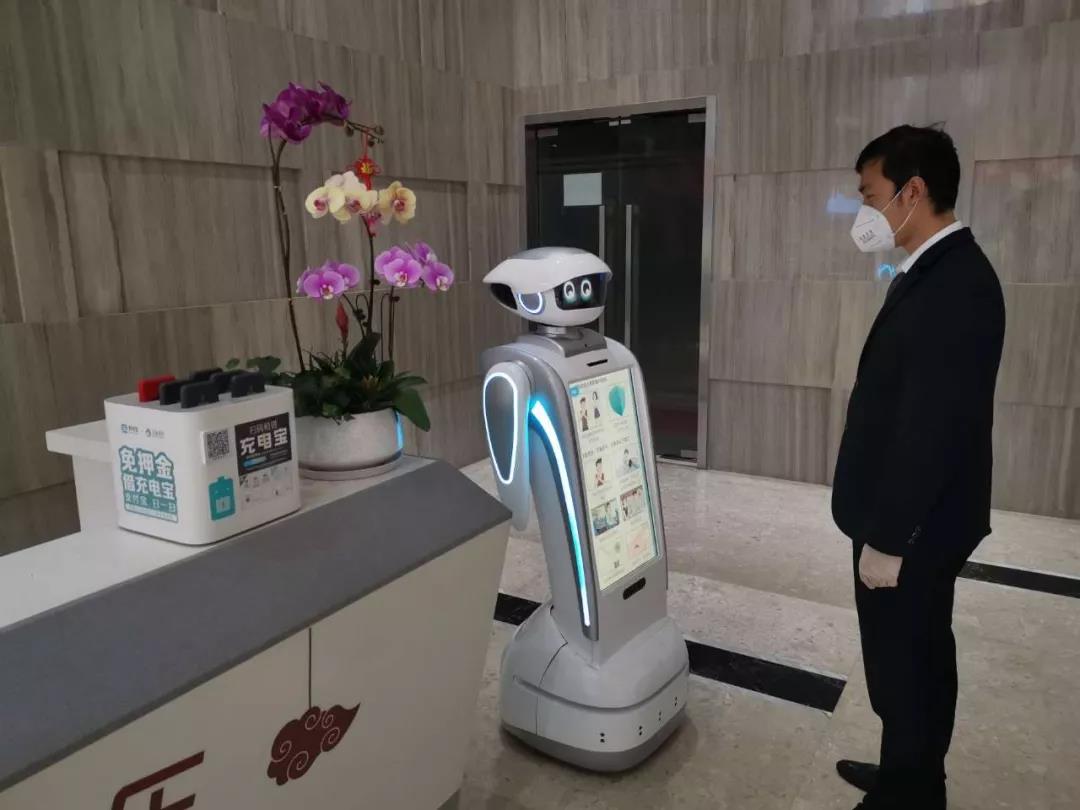
Hospitals are among the most demanding environments for service robots. Long corridors, crowded lobbies, elevators, and the constant flow of patients, visitors, and staff create unique challenges. In recent years, humanoid service robots have emerged as versatile assistants – guiding visitors to departments, delivering lab samples, providing patient information, and even offering companionship.
But for hospital administrators and financial officers, a critical question remains: What is the humanoid service robot maintenance cost, and does the investment justify the benefits?
Unlike simpler delivery robots, humanoids come with complex joints, expressive faces, multiple sensors, and sophisticated AI. These features increase both upfront price and ongoing maintenance expenses. Yet, their versatility – handling multiple tasks across different hospital areas – can replace several specialized robots or human staff.
This guide provides a transparent breakdown of maintenance costs, a comparison with labor savings, and a framework to determine whether a humanoid service robot delivers positive ROI in a hospital setting.
Understanding Humanoid Service Robot Maintenance Cost Components
To evaluate total cost of ownership, hospital administrators must understand the five main categories of maintenance expenses.
-
Preventive Maintenance
Preventive maintenance includes scheduled inspections, cleaning, lubrication of joints, sensor calibration, and software updates. For a typical humanoid service robot operating 12–16 hours per day in a hospital, preventive maintenance is recommended every 3–6 months.
Typical annual cost: €2,000 – €5,000 per robot, depending on service contract level.
-
Corrective Maintenance (Repairs)
Despite robust design, components fail. Common issues include motor or actuator wear (especially in bipedal robots with walking joints), damaged sensors (collision with carts or door frames), broken display screens, and worn battery packs. Corrective maintenance costs vary widely based on warranty coverage and part availability.
Typical annual cost: €1,000 – €8,000 (higher in first year of warranty? Actually warranty covers most, but after warranty period). Post‑warranty, budget 5–10% of robot purchase price annually for repairs.
-
Spare Parts
Critical spare parts for humanoid robots include batteries (replaced every 2–4 years), actuators/motors, wheel assemblies (for wheeled humanoids), cameras and depth sensors, and touchscreen displays.
Battery replacement: €500 – €2,000 every 2–4 years.
Actuator replacement: €200 – €800 each, with 5–20 actuators per robot.
-
Software and AI Updates
Humanoid robots rely on cloud‑based AI for natural language processing, computer vision, and task planning. Software updates may be included in a subscription (SaaS model) or charged separately. Some vendors offer annual software maintenance agreements covering bug fixes, security patches, and feature updates.
Typical annual cost: €1,000 – €4,000 per robot, or 5–10% of software license value.
-
Technical Support and Remote Monitoring
Many hospitals opt for a support contract that includes remote diagnostics, 24/7 helpdesk, and on‑site technician visits. Remote monitoring can predict failures before they happen (e.g., abnormal motor currents), reducing downtime.
Typical annual cost: €1,500 – €5,000, depending on response time SLAs.
Total Estimated Annual Maintenance Cost
Summing the components, the total annual maintenance cost for a humanoid service robot in a hospital typically ranges from €6,000 to €18,000 per robot after the warranty period (first 12–24 months often have lower costs due to warranty coverage).
| Cost Component |
Low End (€) |
High End (€) |
| Preventive maintenance |
2,000 |
5,000 |
| Corrective repairs |
1,000 |
5,000 |
| Spare parts (annualized) |
500 |
2,000 |
| Software & AI updates |
1,000 |
4,000 |
| Technical support |
1,500 |
2,000 |
| Total annual maintenance |
6,000 |
18,000 |
As a percentage of purchase price (typically €30,000 – €80,000 for a hospital‑grade humanoid), annual maintenance cost represents 8–25% of upfront investment. This is higher than simpler delivery robots (5–12%) but reflects the added complexity of humanoid form and function.
Comparing Maintenance Cost vs. Labor Savings
The justification for any service robot ultimately rests on ROI. For a humanoid robot in a hospital, labor savings come from replacing or augmenting human staff in three roles:
-
Greeter/concierge – A full‑time equivalent (FTE) salary including benefits: €35,000 – €55,000 per year in Western Europe.
-
Wayfinding guide – Often combined with greeter role, another €30,000 – €40,000 if dedicated.
-
Light delivery (lab samples, paperwork) – A porter or runner at €30,000 – €45,000 per year.
One humanoid robot can perform all three tasks, switching between roles based on time of day or patient demand. However, it cannot replace a nurse or clinical staff – only non‑clinical service roles.
Labor Replacement Scenario
Assume a hospital currently employs:
-
1 full‑time greeter/concierge at €45,000/year
-
1 part‑time wayfinding guide at €25,000/year
-
1 part‑time sample runner at €20,000/year
Total annual labor cost for these roles: €90,000
Now deploy one humanoid service robot at €50,000 purchase price, with annual maintenance cost of €12,000 (mid‑range).
Annual net savings after deployment:
-
Labor savings: €90,000
-
Less maintenance cost: €12,000
-
Less depreciation (annualized): €10,000 (assuming 5‑year life)
-
Net annual savings: €68,000
Payback period on €50,000 investment: less than 9 months
Even if the robot only replaces 70% of those labor hours (some roles still need human touch), net savings remain strongly positive.
Factors That Influence Humanoid Service Robot Maintenance Cost in Hospitals
Several hospital‑specific factors can drive maintenance costs higher or lower.
Higher Maintenance Cost Drivers
-
High operating hours – 24/7 operation (e.g., emergency department) accelerates wear on batteries, wheels, and joints. Budget 20–30% higher maintenance.
-
Aggressive cleaning chemicals – Floor waxes or disinfectants can damage sensors and paint. Choose robots with sealed IP54+ ratings.
-
Elevator and door interface failures – Integration with hospital elevators (via IoT) may require frequent recalibration, increasing support costs.
-
Patient or visitor misuse – Children pulling on robot arms, people blocking sensors. Anti‑tamper designs reduce but don't eliminate damage.
Lower Maintenance Cost Drivers
-
Wheeled humanoid vs. bipedal – Bipedal walking robots have 20+ actuators and complex balance algorithms, leading to much higher maintenance (2–3x). For hospitals, wheeled humanoids (with expressive upper bodies) are more cost‑effective.
-
Extended warranty and service contract – Some vendors offer 3‑year comprehensive coverage for €3,000–6,000 per year, capping unexpected costs.
-
Modular design – Robots with plug‑and‑play modules (e.g., swap a faulty arm in 10 minutes) reduce technician labor costs.
-
Remote diagnostics – AI‑based self‑diagnosis and automatic ticket creation reduce mean time to repair.
Is Higher Maintenance Cost Justified by Versatility and Patient Acceptance?
The central decision problem for hospital administrators is whether the additional maintenance cost of a humanoid (compared to a simpler kiosk or delivery robot) is offset by two intangible but valuable benefits: versatility and patient acceptance.
Versatility
A single humanoid robot can:
-
Greet visitors at the main entrance (morning shift)
-
Guide patients to radiology or cardiology (mid‑day)
-
Deliver lab samples to pathology (afternoon)
-
Provide after‑hours information at an empty reception desk (night)
To achieve the same coverage, a hospital would need three specialized robots: a static kiosk (limited to information), a delivery robot (no interaction), and a wayfinding tablet (no mobility). Total cost of three specialized robots: €30,000 – €60,000, plus separate maintenance contracts. The humanoid at €50,000 with higher maintenance may still be cheaper overall.
Patient Acceptance
Studies in healthcare robotics show that patients and visitors respond more positively to humanoid robots than to screen‑only kiosks or box‑like delivery bots. A humanoid face, gesturing arms, and natural voice create trust and engagement. For elderly patients, a humanoid can reduce anxiety and improve compliance with wayfinding instructions.
While difficult to quantify, improved patient experience can lead to higher hospital satisfaction scores (linked to reimbursement in some healthcare systems) and reduced staff burden (fewer lost visitors asking for directions).
Thus, even with higher maintenance cost, humanoids often deliver superior overall value in patient‑facing roles.
How to Budget for Humanoid Service Robot Maintenance Cost
For hospitals planning a pilot or full deployment, follow these budgeting guidelines:
Year 1 (under warranty): Budget only for preventive maintenance and consumables (cleaning supplies, software updates) – approximately €2,000–4,000 per robot.
Year 2–3: Budget 8–12% of purchase price annually. For a €50,000 robot, that is €4,000–6,000 per year. Include extended warranty if offered.
Year 4–5: Budget 12–18% annually as batteries and actuators near end of life. Consider replacement vs. major overhaul.
Fleet scaling: For 5+ robots, negotiate a site‑wide maintenance contract with the vendor, typically reducing per‑robot cost by 20–30%.
Self‑maintenance option: Larger hospitals with biomedical engineering teams can perform basic preventive maintenance and part swaps, reducing external service costs by 40–50%. However, this requires training and spare parts inventory.
FAQs About Humanoid Service Robot Maintenance Cost
Q1: What is the typical annual maintenance cost as a percentage of robot purchase price?
For hospital‑grade humanoid service robots, annual maintenance typically ranges from 8% to 15% of the purchase price after warranty. For example, a €50,000 robot costs €4,000–7,500 per year to maintain.
Q2: How often do humanoid robot batteries need replacement?
With daily 12–16 hour operation, batteries typically last 2–4 years. Replacement cost (including labor) ranges from €800 to €2,500, depending on battery chemistry (LiFePO4 lasts longer than standard Li‑ion).
Q3: Are maintenance costs higher for walking (bipedal) vs. wheeled humanoids?
Yes, significantly. Bipedal robots have 15–30 actuators that experience constant impact and balance forces. Annual maintenance for bipedal humanoids can be €15,000–30,000, while wheeled humanoids cost €6,000–12,000. For hospitals, wheeled humanoids are strongly recommended.
Q4: Does the maintenance contract include software updates and AI improvements?
It varies. Some vendors bundle AI updates (e.g., better language understanding, new medical vocabulary) in the annual support fee. Others charge separately. Always clarify what is included before signing.
Q5: Can hospital biomed technicians perform maintenance themselves?
Many vendors allow trained in‑house technicians to perform preventive maintenance (cleaning, calibration, battery swaps) and simple repairs, reducing external service costs. However, complex actuator or mainboard repairs typically require vendor intervention. Request training as part of the purchase.
Q6: What is the average lifespan of a humanoid service robot in a hospital?
With proper maintenance, 5–8 years is typical. After 5 years, maintenance costs often rise as components age. Some hospitals lease robots on 3‑year cycles to avoid end‑of‑life repair costs.
Q7: How does humanoid maintenance cost compare to employing a human worker?
Annual maintenance (€6k–18k) is far lower than a full‑time employee salary (€40k–60k). Even adding depreciation (€10k/year), the robot costs less than half a human worker. However, robots cannot perform clinical tasks, so they complement rather than fully replace staff.
Q8: Where can I get a customized maintenance cost estimate for my hospital? Visit
https://en.ibenrobot.com/ to request a consultation. IBEN provides detailed total cost of ownership analyses based on your hospital’s operating hours, environment, and task mix.
Conclusion: Making the Right Investment Decision
Humanoid service robots bring undeniable value to hospitals – guiding patients, delivering samples, and enhancing visitor experience. However, the humanoid service robot maintenance cost is higher than simpler robots due to complex joints, sensors, and AI systems. Hospital administrators must budget 8–15% of purchase price annually for upkeep.
Yet, when compared to the labor costs of the multiple roles a humanoid can fulfill (greeter, guide, delivery runner), the ROI remains strongly positive – often with payback under 12 months. Versatility and patient acceptance further tilt the scale in favor of humanoids for patient‑facing applications.
The key to cost‑effective deployment is choosing a wheeled humanoid (not bipedal) for hospital environments, negotiating a comprehensive maintenance contract, and training in‑house staff for basic preventive care. With these strategies, humanoid service robots become not just affordable but highly profitable assets.
Ready to Explore Humanoid Robots for Your Hospital?
IBEN offers hospital‑ready humanoid service robots with transparent maintenance cost projections and flexible service plans. Visit
https://en.ibenrobot.com/ to schedule a demo or request a customized ROI analysis for your facility.