Introduction: Why Robot Selection Matters
Choosing the right industrial robot is a long‑term strategic decision that influences your factory’s cost structure, flexibility and competitiveness for years. The market in 2026 offers more options than ever before, from six‑axis arms and SCARA robots to autonomous mobile robots (AMRs) for material handling. Without a structured approach, it is easy to over‑ or under‑specify the system and end up with a solution that looks impressive on paper but does not fit real‑world needs.
This guide walks you through the critical steps of choosing an industrial robot: clarifying applications, defining technical requirements, comparing robot types, understanding cost and finally selecting the right wholesaler or solution provider. It is designed for plant managers, industrial engineers and procurement teams who are planning their first robot project or expanding existing automation.
Start from Applications, Not from Robots
The first rule in industrial robot selection is simple: start from your application, not from robot brochures. Robots are tools, and different tools are optimized for very different jobs. Before looking at brands or models, you should describe in detail what you want the robot to do and where it will work.
Common industrial applications include palletizing and depalletizing, machine tending, welding, assembly, painting, inspection and internal material handling. Each application comes with its own requirements in terms of payload, reach, speed, precision, work envelope and environmental protection. For example, a high‑speed pick‑and‑place task with small parts may be best handled by a SCARA or delta robot, while heavy palletizing at the end of a packaging line will require a more powerful six‑axis arm.
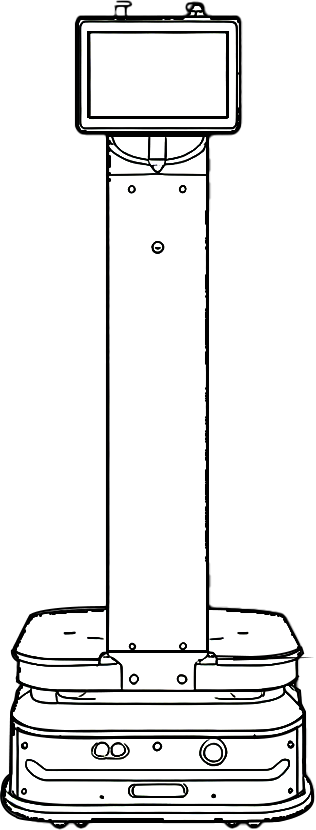
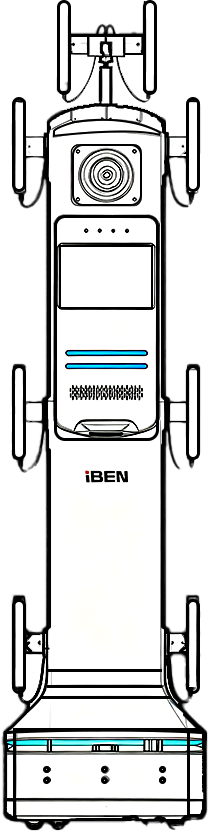
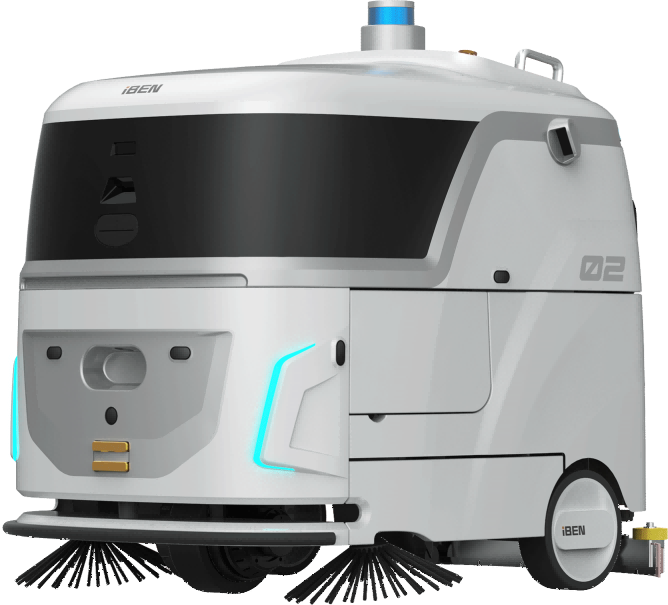
If your main need is to move materials between workstations, warehouses and production lines, consider industrial AMRs such as iBEN’s X300, which are optimized for indoor transport in manufacturing and warehouse environments. For a focused guide on matching robot types to different industrial tasks, see IBEN’s article
“How to Choose Automatic Industrial Robot”.
Map the Process and Define Performance Targets
Once you have clarified the application, the next step is to map the process and define performance targets. This goes beyond “we need a palletizing robot” to detailed questions such as:
-
How many parts or pallets per hour must the robot handle?
-
Over how many hours per day and how many days per week will it operate?
-
What are the takt time and buffer limits for upstream and downstream processes?
-
What is the acceptable error rate for placement or handling?
By quantifying throughput and quality targets, you can distinguish between robots that are technically capable but overspecified and those that fall short. For example, a robot that can achieve 1,000 cycles per hour may be more expensive than one rated at 600 cycles, even though your process only requires 400 cycles with some margin. In such a case, paying for peak performance you never use might not be cost‑effective.
Process mapping also reveals constraints such as available floor space, access points, guarding requirements and interaction with human workers. These factors will later influence the choice between articulated, SCARA, gantry or collaborative robots.
Choose the Right Robot Type
With your applications and performance targets defined, you can now choose the appropriate robot type. The main categories in industrial environments are:
-
Articulated robots (6‑axis or more) Highly flexible and capable of complex movements, suited for welding, palletizing, complex assembly and handling tasks that require multiple orientations.
-
SCARA and delta robots Ideal for high‑speed pick‑and‑place, small‑part assembly and packaging where payload is low but speed and precision are critical.
-
Cartesian and gantry robots Good for large work envelopes with relatively simple, linear motions, such as machine loading, inspection and some material handling tasks.
-
Collaborative robots (cobots) Designed for safe operation near people with lower payload and speed, often used for light assembly, small‑batch production and flexible tasks.
-
Industrial AMRs and AGVs Used for internal logistics and material transport rather than direct manipulation of parts.
The best choice depends on your combination of payload, reach, speed, motion complexity and interaction with people. For instance, if you need to automate case palletizing in a confined space near human operators, a compact six‑axis robot with appropriate safety measures may be preferable to a large traditional palletizer. If your priority is moving pallets between different areas of the plant, AMRs are likely more suitable than fixed arms.
Define Key Technical Specifications
After selecting a robot type, you need to specify key technical parameters.
-
Payload Payload is the maximum weight the robot can handle, including the part and end‑of‑arm tooling. Underspecifying payload risks overload and reduced lifespan, while overspecifying can lead to unnecessary cost.
-
Reach and work envelope Reach describes how far the robot can extend vertically and horizontally. You must consider not only the part positions but also fixture locations, safety guards and clearance for maintenance.
-
Accuracy and repeatability Precision requirements differ greatly between tasks like welding, assembly and palletizing. Repeatability is often more important than absolute accuracy for placing parts in jigs or stacking boxes on pallets.
-
Speed and cycle time The robot must perform each step quickly enough to meet your takt time with safety margins. Higher speed may require additional safety measures and more robust tooling.
-
Environment and protection Harsh conditions such as dust, moisture, heat, chemicals or clean‑room requirements demand appropriate IP ratings and protective measures. Failing to match the robot to the environment can lead to premature failures.
Factor in Integration, Controls and Software
Robot hardware is only one part of the automation equation. Integration, controls and software often account for a large share of project cost and risk.
You should check how the robot controller communicates with existing PLCs, conveyors, sensors and safety systems. Supported fieldbuses, I/O options and programming environments all influence project complexity. If you plan to connect robots with MES or WMS, you will need open interfaces or middleware for higher‑level integration.
Programming and ease of use also matter. Some suppliers offer graphical programming environments, template‑based palletizing apps or standard libraries for common tasks, which can reduce engineering time and make future changes easier. Evaluate whether your internal team can handle programming or whether you will depend heavily on external integrators.
For factories that want to combine industrial AMRs and fixed robots into a single ecosystem, paying attention to software compatibility and fleet‑management integration from the start will avoid later roadblocks.
Understand Cost, Budget and ROI
Cost is a central concern in any robot project, but looking only at unit price can be misleading. A realistic budget needs to include hardware, software, integration, safety, training and long‑term maintenance.
IBEN’s “Average Cost of Industrial Robot Quotation” guide explains that a typical palletizing cell budget includes the robot body, controller, end‑of‑arm tooling, safety fencing or scanners, programming, commissioning and possible conveyor interfaces. Depending on payload and complexity, this often leads to investment in the tens‑of‑thousands of euros per cell.
To decide whether a project is attractive, you should build an ROI model that compares investment with expected savings and gains. Key inputs include current labor cost, staffing levels, overtime, scrap and damage rates, throughput constraints and safety incidents. Many successful projects achieve payback in one to three years, especially when robots support multiple shifts.
When collecting quotations from suppliers, ask for a clear breakdown of hardware, software, engineering and optional services rather than a single lump‑sum figure. This makes it easier to compare offers and see where different vendors add value.
Select the Right Industrial Robot Wholesaler or Integrator
Even the best robot hardware will fail to deliver results if the implementation partner lacks experience or support capabilities. Choosing the right industrial robot wholesaler or integrator is therefore just as important as selecting the robot model itself.
Key evaluation criteria include:
-
Breadth and depth of the robot portfolio.
-
Experience with similar applications and industries.
-
Engineering capacity for system design, simulation and commissioning.
-
Availability of local service, spare parts and remote support.
-
Transparency of pricing and project scope definitions.
IBEN’s dedicated guide
“Choose Industrial Robot Wholesaler” outlines a systematic framework for assessing potential partners across these dimensions. It emphasizes the importance of site surveys, scenario validation and realistic performance commitments rather than pure marketing promises.
A strong partner will help you refine requirements, avoid over‑engineering, design for scalability and support your team during ramp‑up and beyond. Over the system’s lifetime, this can be more valuable than small differences in hardware price.
Build a Phased Industrial Robot Roadmap
Instead of trying to automate everything at once, most successful factories build a phased robot roadmap. They start with one or two high‑ROI applications, gain experience and then expand coverage to additional processes and plants.
A typical roadmap may look like this:
-
Pilot a single palletizing or handling cell in one workshop.
-
Add more robots to cover similar processes in other lines if the pilot meets KPIs.
-
Integrate mobile robots for internal logistics once core production steps are stable.
-
Extend automation to upstream and downstream steps with consistent software and data standards.
This step‑by‑step approach reduces technical and organizational risk while moving steadily toward a smarter, more flexible factory.
Conclusion
Choosing an industrial robot is not about finding a universal “best” model but about matching the right technology to your specific processes, performance targets and constraints. By starting from applications, defining clear technical requirements, comparing robot types carefully and partnering with a capable wholesaler or integrator, you can build a robot system that delivers strong ROI and forms the foundation of your long‑term automation strategy.