Introduction: From Service Counters to Intelligent Public Service Robots
In many countries, governments are investing heavily in digital transformation to make public services faster, more transparent and more convenient for citizens. Yet even as online portals expand, large numbers of people still visit government service centers, hospitals and transport hubs for in‑person assistance. Traditional service counters often struggle with long queues, inconsistent answers and limited operating hours, which can undermine citizen satisfaction.
Public service robots are emerging as an important tool to bridge this gap between online platforms and physical service points. Equipped with AI voice interaction, natural language understanding, multimodal interfaces and autonomous navigation, they can greet visitors, answer questions, guide people through procedures and connect to back‑end systems in real time. For digital governments, these robots provide a tangible, citizen‑facing embodiment of smart services and data‑driven governance.
As a specialist in intelligent service robots,
iBEN Robot has developed public service robot solutions that integrate AI, big data and knowledge bases to support government departments, hospitals and transport hubs in delivering high‑quality digital services.
What Is a Public Service Robot?
A public service robot is an intelligent service robot deployed in public environments such as government halls, hospitals, courts, exhibition centers and transport hubs to assist citizens and visitors. It typically combines four core capabilities:
-
Autonomous navigation – SLAM‑based movement and obstacle avoidance in crowded, dynamic public spaces.
-
Multimodal interaction – voice recognition, natural language processing, touch screens and sometimes facial recognition, allowing intuitive human‑robot communication.
-
Knowledge access – integration with government knowledge bases, policy databases and service guidelines so that robots can answer complex queries accurately.
-
Back‑end connectivity – connection to appointment, queuing, ticketing or case‑handling systems to complete parts of processes or hand off information to human staff.
iBEN’s commercial and public service robots are built around a scenario‑oriented product matrix: robot hardware serves as the carrier, while AI and big data provide the intelligence for different verticals such as government, healthcare, finance and transport.
Public Service Robots in Smart Government Halls
Government service halls are a primary deployment scenario for public service robots. Citizens frequently visit these halls for business registration, social security, taxation, permits and a wide range of other procedures. Service demand is often uneven, with peak times creating queues and frustrations, while off‑peak periods see underutilized counters.
iBEN’s
Smart Government solution describes how public service robots act as intelligent front‑desk assistants in government service centers. Using AI recognition and real‑time synchronization with the government knowledge base, robots can:
-
Proactively greet visitors and ask what service they need.
-
Provide policy explanations, procedure steps and required documents based on updated regulations.
-
Guide citizens to the correct counter, floor or area using voice prompts and on‑screen maps.
-
Assist with self‑service terminals by explaining how to fill in forms or select options.
By handling routine “where do I go?” and “what documents do I need?” questions, public service robots free human staff to focus on complex cases and exceptions. This improves overall service efficiency and reduces the perceived waiting time for citizens.
AI, Big Data and Knowledge Graphs Behind Public Service Robots
The intelligence of public service robots comes from their tight integration with AI technologies and government data assets. iBEN’s robots leverage voice recognition, natural language processing, knowledge mapping and big data analytics to understand questions and deliver accurate answers.
In practice, this involves building large knowledge graphs that encode policies, regulations, service procedures and frequently asked questions from different departments. The robot’s AI engine connects to these knowledge bases and can interpret citizens’ free‑form questions, identify the relevant policy or process and respond in natural language. Because the knowledge base is centrally maintained, updates to laws or procedures are reflected across all deployed robots, ensuring consistency.
Robots can also log anonymized interaction data – such as which topics citizens ask about most often, at what times and with what level of satisfaction – providing valuable analytics for government decision‑makers. This feedback loop supports continuous improvement of both robot content and core policies or processes.
Improving Citizen Experience and Service Efficiency
Public service robots directly impact the citizen experience and operational efficiency in government service halls.
From the citizen’s perspective, robots shorten the time needed to find information and navigate procedures. Instead of waiting in line to ask basic questions at a counter, citizens can approach a robot, speak in natural language and receive immediate answers or navigation guidance. Multilingual capabilities and accessible screen designs help serve diverse groups, including elderly users and visitors with limited literacy.
For government staff, robots reduce repetitive tasks and provide a buffer during peak periods. Front‑line employees can focus on handling complex cases, error resolution and human‑centered problem solving instead of answering the same questions over and over. Management can use robot analytics to adjust staffing, opening hours and process design based on real demand patterns.
According to iBEN’s smart government materials, this combination of AI‑enhanced consultation and data‑driven management helps create a new, more intelligent public service experience that aligns with “Internet Plus Government Services” initiatives.
Public Service Robots in Hospitals and Healthcare
Beyond government halls, public service robots also play an important role in hospitals and healthcare facilities. Hospitals face constant pressure to handle high patient volumes, provide accurate information, and ensure infection control, all while managing limited staff.
iBEN’s commercial service robot solutions demonstrate how reception and guidance robots can:
-
Welcome patients and visitors at hospital lobbies or outpatient areas.
-
Provide department information, clinic schedules and basic triage questions.
-
Guide visitors to registration counters, diagnostic rooms or wards using maps and route instructions.
-
Support queue management by displaying waiting numbers and calling patients when it is their turn.
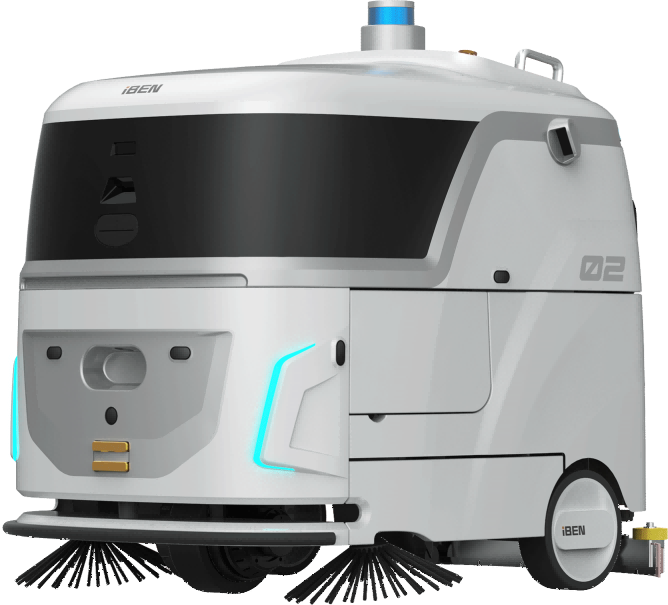
In addition, specialized cleaning and disinfection robots can be deployed in corridors, waiting areas and wards to perform automated cleaning cycles, reducing staff exposure to pathogens and lowering infection risk. Maintenance cost and ROI analyses for humanoid service robots in hospitals indicate that, when properly integrated into workflows, they can reduce routine labor hours while improving patient satisfaction and public perception of hospital modernization.
Public service robots in healthcare thus help hospitals meet both operational and communication challenges in a scalable way.
Public Service Robots in Transport Hubs and Large Public Venues
Transport hubs such as airports, railway stations and metro interchanges are natural environments for public service robots. Passengers frequently need information about routes, platforms, security checks and facilities, often in multiple languages and under time pressure.
iBEN’s customer service robot portfolio includes models specifically designed for high‑traffic public spaces. These robots provide:
-
Wayfinding and navigation assistance to gates, platforms, exits and transfer points.
-
Real‑time information about schedules, delays and service changes by connecting to transport data systems.
-
Multilingual support for international passengers, including English and other widely used languages.
-
Support for emergency communication, such as guiding people during evacuations or providing instructions during disruptions.
The same public service robot technologies can also be deployed in museums, exhibition halls and public security facilities, where they handle reception, guided tours and interactive education. For transport operators and venue managers, robots help handle peaks in visitor demand and provide a consistent, branded service experience.
How Public Service Robots Support Digital Government Strategies
Public service robots are not just front‑end gadgets; they are strategic components in broader digital government initiatives. In iBEN’s participation in Digital China forums, the company highlights how service robots support goals like “run immediately, run online and run once” by integrating processes across departments.
By connecting with back‑end government systems, robots can help achieve:
-
One notification – Citizens can get a single, clear list of required documents and steps for a service.
-
One form – Robots and self‑service kiosks can guide users through unified digital forms that serve multiple departments.
-
One acceptance and one handling – Case information collected through robots can be shared across agencies so that citizens do not need to provide the same data repeatedly.
These capabilities align with “Internet Plus Government Services” models and integrated government service platforms, where online and offline channels share data and processes. Public service robots serve as the offline, physical interface of these digital platforms, helping citizens access services without needing to navigate complex websites or apps.
Solutions like
iBEN Smart Government are designed to support this integration, leveraging AI, cloud computing and government knowledge bases to deliver consistent digital services across multiple touchpoints.
Security, Privacy and Governance Considerations
Deploying public service robots in government and public environments raises important questions about security, privacy and governance. Robots handle queries that may involve personal information, policy interpretations and, in some cases, identity verification.
Best practices include:
-
Ensuring that robots authenticate securely with back‑end systems and only access necessary data.
-
Applying data minimization and anonymization for analytics, to protect citizen privacy.
-
Providing clear policies and notices so citizens understand what data is collected and how it is used.
-
Designing escalation paths so that sensitive questions or edge cases are handed off to human staff.
Vendors like iBEN emphasize deep customization and close collaboration with government IT and security teams, so that public service robot deployments comply with local regulations and internal standards. This allows governments to leverage the efficiency and convenience of robots while maintaining trust and legal compliance.
Implementation Roadmap for Public Service Robot Projects
Implementing public service robots in government and public institutions is typically a phased process.
-
Needs Assessment and Scenario Design – Identify high‑volume, repetitive tasks and citizen pain points in service halls, hospitals or transport hubs.
-
Pilot Deployment – Start with one location or service type (e.g., reception and guidance in a main government hall) to test interaction flows, knowledge coverage and staff collaboration.
-
Integration and Scaling – Connect robots to more back‑end systems, expand to additional departments or sites, and refine knowledge bases based on interaction logs.
-
Continuous Optimization – Use analytics to improve content, dialog flows, navigation routes and scheduling, while training staff to work effectively alongside robots.
By working with experienced providers such as
iBEN Robot, governments and public institutions can accelerate this roadmap, leveraging mature platforms for intelligent interaction, knowledge management and fleet operation.
Conclusion: Public Service Robots as a Cornerstone of Citizen-Centric Smart Government
Public service robots are becoming a cornerstone of citizen‑centric smart government strategies. They bring together AI, knowledge bases and autonomous navigation to deliver 24/7, consistent and accessible services in government halls, hospitals, transport hubs and other public venues.
With solutions like
iBEN Smart Government and a full range of commercial and public service robots, institutions can upgrade their service models, reduce repetitive workloads for staff and collect data that supports better policy and process design. In an era where citizens expect digital convenience and human‑centered service, public service robots offer a practical way to deliver both.