Introduction: Beyond Single Robots on the Shop Floor
For many years, factories introduced automation in a piecemeal way: a standalone robot arm here, a conveyor there, an AGV added to move pallets. Each project helped, but these isolated islands of automation struggled to respond to growing demands for flexibility, short product lifecycles and mixed‑model production. To truly support modern manufacturing, plants now need automatic factory robot solutions that cover the whole process – from internal logistics to machine tending, cleaning and inspection – and that work together as one system.
An automatic factory robot solution is therefore not just a single robot type, but an integrated ecosystem of mobile robots, industrial robots and supporting platforms. These robots sense the environment, make local decisions and connect to factory IT systems so they can respond to real‑time production needs without constant human intervention.
Industrial automation providers such as
iBEN Robot build on their strengths in mobile robotics, AI and service robots to deliver holistic automatic factory robot solutions for manufacturing customers. Their systems move beyond “islands of automation” toward fully coordinated, full‑process smart factories.
What Do We Mean by “Automatic Factory Robot”?
The term “automatic factory robot” covers a broad set of robots that operate with a high degree of autonomy inside manufacturing plants. It includes:
-
Autonomous mobile robots (AMRs) and AGVs for material handling and internal logistics.
-
Industrial robots and robot arms for tasks like loading/unloading, palletizing, welding, assembly and inspection.
-
Specialized robots for cleaning, disinfection, inventory and facility services that support the core production environment.
What makes these robots “automatic” is the ability to operate with minimal human intervention, using sensors, navigation algorithms, AI and integration with IT systems to perceive, decide and execute. Instead of manually programmed cycles that work only under fixed conditions, automatic factory robots can adapt to changing layouts, product mixes and schedules.
According to
iBEN industrial robot solutions, this evolution reflects a broader move from fixed, high‑volume automation to flexible, scenario‑driven automation capable of handling complex and dynamic production demands.
Multi-Layer Architecture of Automatic Factory Robot Solutions
Effective automatic factory robot solutions are built on a multi‑layer technology architecture that integrates hardware, navigation, intelligence, connectivity and applications.
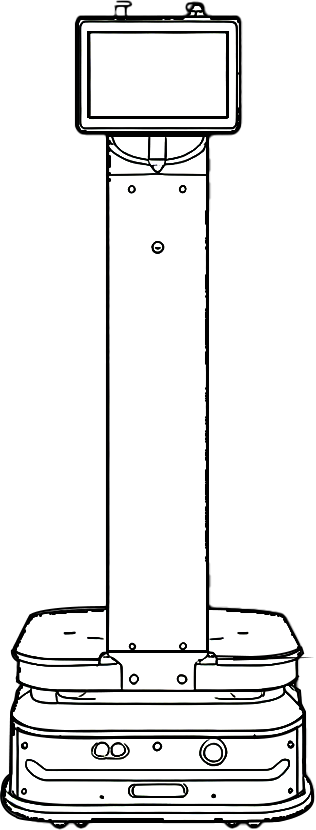
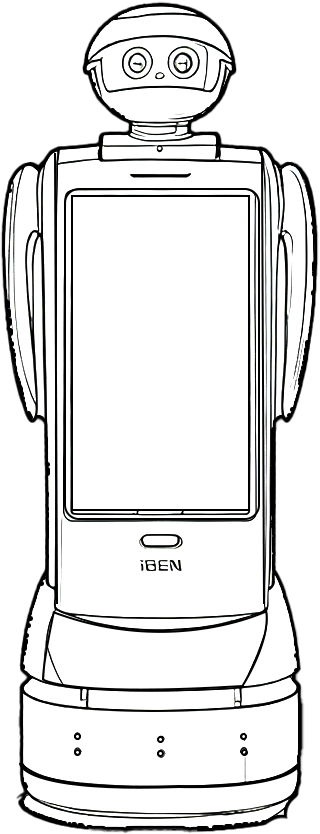
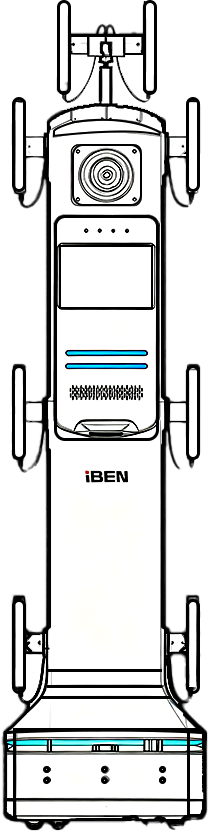
At the hardware layer, different robot platforms provide physical capabilities: transport robots with load capacities from around 100 kg to over 500 kg; industrial robot arms with varying payloads and reaches; specialized cleaning and inventory robots for large floor areas and shelves. iBEN’s X300 smart transport robot and iBen‑S01 inventory robot exemplify this variety, covering both internal logistics and warehouse inventory scenarios.
The navigation and motion layer enables robots to move safely and accurately. Mobile platforms use beacon‑free fusion navigation that combines laser SLAM with visual SLAM, allowing them to operate without magnetic strips or reflectors and still achieve ±5 cm positioning accuracy. This allows rapid deployment without facility modification and supports dynamic path planning around obstacles and congestion.
The intelligence layer adds AI‑driven decision‑making. iBEN integrates AI and machine learning to analyze historical robot data, identify patterns and automatically improve behaviors over time. This includes optimizing routes, predicting congestion, anticipating maintenance needs and adjusting behaviors based on production patterns.
The connectivity layer links robots with IT systems and IoT devices. Automatic factory robots connect to MES, WMS, ERP and production equipment, forming “Perception–Decision–Execution” loops in which robots dispatch autonomously based on material requests, equipment signals and work order updates.
Finally, the
application layer defines concrete scenarios such as line‑side feeding, machine tending, palletizing, floor cleaning and inventory, combining multiple robot types into end‑to‑end workflows. Scenario‑based design is central to
iBEN manufacturing solutions, which package robots and software around real factory needs rather than individual devices.
Key Roles of Automatic Factory Robots Across the Production Chain
Automatic factory robots take on different roles along the production chain, enabling full‑process automation.
-
Internal Logistics and Material Handling Mobile robots (AMRs and AGVs) handle raw material delivery, WIP transfers and finished goods transport between warehouses, lines and shipping docks. With dual‑SLAM navigation and self‑organizing scheduling, robots like the X300 can be deployed in about 30 minutes in typical 3,000 m² environments and increase handling efficiency by up to 40% compared to manual operations.
-
Machine Tending and Workstation Automation Industrial robot arms load and unload CNC machines, presses, injection molding machines and other equipment. When integrated with mobile platforms, they can form flexible cells that move between machines or reconfigure as product mixes change. This reduces manual handling and enables around‑the‑clock operation for key processes.
-
Assembly, Palletizing and Packaging Automatic factory robots assemble components, screw fasteners, insert parts, palletize boxes and stack products. They maintain consistent quality and speed, and can switch recipes more quickly than traditional fixed automation when driven by digital work orders.
-
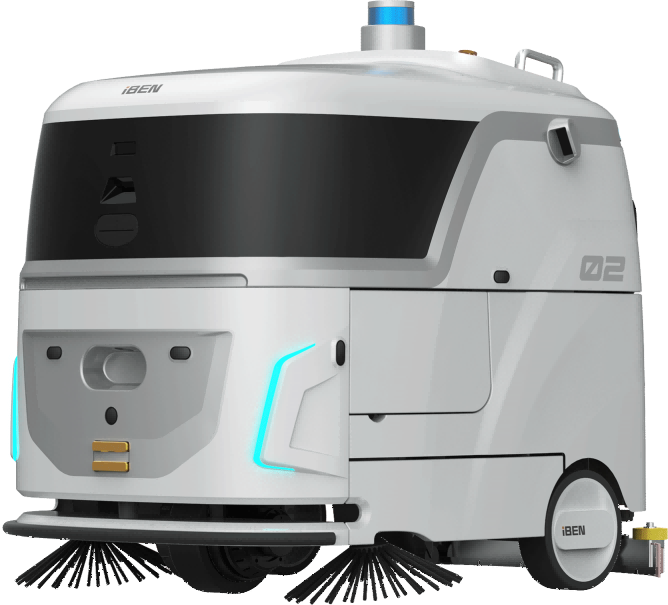
Cleaning, Inspection and Inventory Support Automatic cleaning robots deliver scrubbing, drying and sweeping of large factory and warehouse floor areas, using large solution tanks and smart path planning to minimize human cleaning effort. Inventory robots like iBen‑S01 use RFID and visual scanning to perform automatic counting and inspection of shelves, providing real‑time inventory data to backend systems.
By distributing these roles across multiple robot types running on unified platforms, factories can automate not just a few isolated tasks, but a large portion of their operational chain.
From Standalone Robots to Integrated Industrial Robot Solutions
The evolution from standalone robots to integrated automatic factory robot solutions is driven by the complexity of modern manufacturing. Traditional fixed automation excels in high‑volume, low‑mix production, but struggles with increasing product variety and frequent changeovers.
Integrated industrial robot solutions combine mobile robots, stationary robots and intelligent control systems into flexible systems that can be reconfigured quickly. Robots become modular building blocks in dynamic manufacturing lines rather than bolted‑down fixtures.
iBEN’s industrial robot solutions illustrate this shift. Mobile platforms provide flexible transport capacity, while AI‑enhanced control layers orchestrate multi‑robot collaboration across processes. Robots are connected to production lines and IT systems so they can respond automatically to equipment signals, material requests and work order changes. This approach supports the flexible manufacturing models that many industries now require.
AI-Powered Optimization in Automatic Factory Robot Fleets
AI and machine learning are becoming central to the effectiveness of automatic factory robots. Instead of relying solely on fixed rules and static programming, modern robot platforms analyze historical data to improve performance over time.
Automatic industrial robot solutions from iBEN incorporate AI models that learn from operational data: travel times, waiting times, congestion patterns, error incidents and more. These models can, for example, identify routes that regularly produce bottlenecks, detect underutilized robots or stations, or highlight tasks that frequently cause delays.
Based on these insights, scheduling strategies and robot behaviors can be automatically adjusted. Over months of operation, the fleet effectively “self‑tunes” to the specific characteristics of each plant, discovering optimization opportunities that would be difficult to find with manual analysis alone. This continuous learning is particularly important in plants with frequent product or layout changes, where static configurations quickly become outdated.
Integration with Manufacturing Systems: Perception–Decision–Execution Loops
True automatic factory robot solutions cannot exist in isolation from manufacturing systems. To achieve end‑to‑end automation, robots must be tightly integrated with MES, WMS, ERP and machine controllers.
In iBEN’s architecture, robots form Perception–Decision–Execution loops:
-
Perception – Robots and connected sensors perceive conditions: inventory levels, equipment states, buffer statuses, environmental data.
-
Decision – Control systems and AI models decide which robot should do what, when and how, based on production plans, priorities and constraints.
-
Execution – Robots carry out tasks, then feed back status information and performance data to IT systems.
This integration allows robots to dispatch autonomously based on production needs without manual coordination. For example, a machine can signal when it needs a new batch of parts; the MES creates a material request; the robot fleet receives the task and executes it; and completion is reported back automatically.
Benefits of Automatic Factory Robot Solutions for Manufacturers
Manufacturers adopting integrated automatic factory robot solutions report benefits that span productivity, quality, flexibility and safety.
-
Higher Throughput and OEE – Robots reduce waiting time and unplanned stops by ensuring materials, tools and WIP arrive on time and in the right sequence. Machine‑tending robots keep equipment running for more hours per day with consistent cycle times.
-
Improved Quality and Consistency – Automated handling and assembly reduce variability and human error, leading to more stable product quality.
-
Greater Flexibility – Mobile robots and modular robot cells allow plants to reconfigure lines and introduce new products more quickly than with rigid automation.
-
Enhanced Safety and Working Conditions – Robots take over heavy, dirty, repetitive and hazardous tasks such as pallet handling, floor cleaning and disinfection, improving safety and freeing workers for higher‑value responsibilities.
With integrated solutions from
iBEN manufacturing automation, these benefits can be realized across multiple processes in a coordinated way rather than only in isolated cells.
Cost and ROI Considerations for Automatic Factory Robot Projects
Investment in automatic factory robots spans hardware, software, integration and long‑term operation. Costs vary widely depending on the mix of mobile platforms, industrial robots and specialized units involved.
Mobile robots and AGVs are often sold in the tens of thousands of dollars per unit, with forklift‑style AGVs generally costing more than low‑profile transport units due to higher payload and safety requirements. Industrial robot arms can range from similar price levels up to several hundred thousand dollars for high‑precision or large‑payload models. Specialized cleaning or inventory robots add further cost but can replace significant manual labor and improve quality.
System‑level expenses include fleet management platforms, integration with MES/WMS, network upgrades and commissioning services. However, ROI calculations must balance these against savings from reduced labor, lower scrap and rework, fewer accidents and higher throughput. In many documented cases, payback periods of two to four years are achievable, especially in multi‑shift plants with high labor and quality costs.
To maximize ROI, plants must prioritize high‑impact scenarios first and design equipment mixes that match real requirements instead of over‑ or under‑specifying robots.
Implementation Roadmap: From Pilot Cells to Fully Automatic Factories
Transitioning to an automatic factory robot solution is best approached as a step‑by‑step journey.
-
Assessment and Vision – Analyze current processes, identify pain points and define a vision for full‑process automation covering logistics, production and support functions.
-
Pilot Projects – Implement focused pilots, such as a robotized material loop or a machine‑tending cell, to validate technology and gather performance data.
-
Scaling and Integration – Gradually expand robots to more processes, connect them to MES/WMS and unify them under integrated control and analytics platforms.
-
Continuous Optimization – Use data and AI tools to refine scheduling, routes, workflows and maintenance strategies.
Vendors like
iBEN Robot support this roadmap with scenario‑based manufacturing solutions that combine mobile robots, industrial robots and service robots on unified platforms. This enables plants to move from isolated automation projects to truly automatic factory robot systems that span the entire production chain.