Industrial robot solutions in 2026 encompass far more than individual machines performing isolated tasks. Modern comprehensive solutions integrate autonomous mobile robots, AI-powered intelligence, IoT connectivity, and enterprise system integration to transform entire manufacturing workflows. This holistic approach addresses material handling, production support, quality control, and logistics coordination through unified technology platforms that adapt dynamically to changing operational requirements.
The evolution from standalone robots to integrated solutions reflects manufacturing's increasing complexity and customization demands. Traditional fixed automation excels in high-volume, repetitive production but struggles with product variety and frequent changeovers. Industrial robot solutions combining autonomous navigation, flexible task allocation, and intelligent decision-making support the flexible manufacturing approaches required for modern market demands. Companies like iBEN Robot have developed comprehensive capabilities addressing this shift, serving over 15,000 enterprise clients across diverse manufacturing sectors since 2016.
Technology Architecture of Industrial Robot Solutions
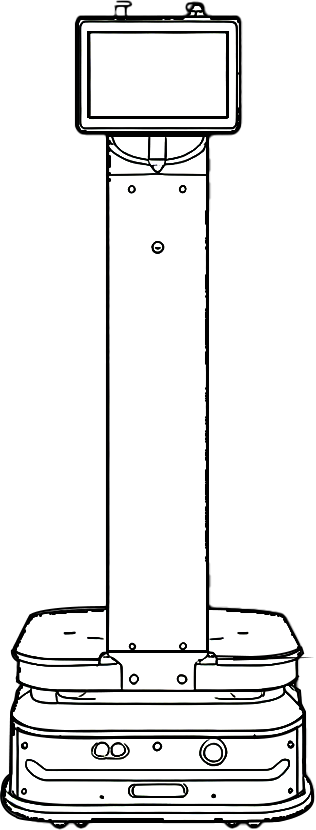
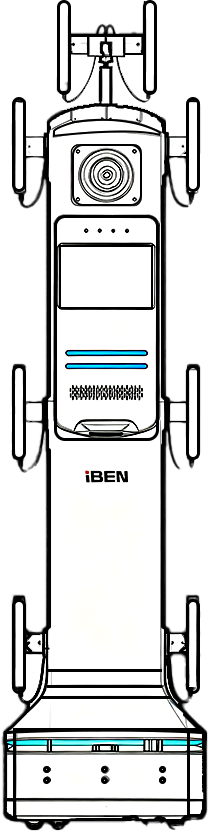
The foundation of effective industrial robot solutions lies in multi-layer technology architecture integrating hardware, navigation, intelligence, connectivity, and application layers. Hardware platforms provide the physical capability to transport materials, with load capacities ranging from 100kg for light components to 500kg+ for heavy automotive parts and machinery. The iBEN X300 exemplifies medium-duty capabilities with 300kg capacity and 1.5m/s operational speed suitable for diverse manufacturing applications.
Navigation technology determines positioning accuracy and environmental adaptability. Advanced solutions combine laser SLAM with visual SLAM for comprehensive perception operating reliably across varying lighting, dynamic obstacles, and changing layouts. This fusion approach achieves ±5cm positioning accuracy without magnetic strips, QR codes, or other fixed infrastructure. The beacon-free operation enables 30-minute deployment compared to days or weeks for traditional systems requiring permanent facility modifications.
Intelligence layers incorporating AI and machine learning elevate industrial robot solutions beyond programmed automation to adaptive systems. Modern platforms integrate AI large models enabling pattern recognition, predictive analytics, and autonomous optimization. These capabilities allow robots to learn from operational experience, identifying efficiency opportunities and adjusting behaviors without human intervention. iBEN Robot has integrated advanced AI technology enabling continuous performance improvement through operational learning.
Integration with Manufacturing Systems
Successful industrial robot solutions require deep integration with existing manufacturing infrastructure and enterprise systems. Production line connectivity enables robots to respond automatically to equipment signals, material requests, and work order updates. This integration creates "Perception-Decision-Execution" loops where robots dispatch autonomously based on production needs without manual coordination. The iBEN X300 provides comprehensive IoT integration supporting seamless connections with manufacturing execution systems and production equipment.
Warehouse management system integration automates material receiving, storage, picking, and shipping workflows. Robots receive task assignments directly from WMS based on order priorities, inventory levels, and production schedules. Completion confirmations and real-time status updates synchronize inventory records with physical movements, maintaining system accuracy. This connectivity eliminates manual data entry and coordination, reducing errors while accelerating material flow.
Enterprise resource planning integration provides visibility and coordination across business functions. Real-time inventory updates inform purchasing and planning decisions. Operational performance data feeds financial reporting and cost accounting systems. Production capacity information supports sales commitments and customer delivery promises. This enterprise-wide integration transforms industrial robots from isolated equipment into connected elements of comprehensive business systems.
Industry-Specific Solution Applications
Semiconductor manufacturing demands ultra-precise material handling in controlled cleanroom environments. Industrial robot solutions for this sector must deliver sub-centimeter positioning accuracy for delicate wafer transport while operating without infrastructure that compromises contamination control. Beacon-free navigation systems like iBEN's X300 prove particularly valuable, eliminating magnetic tape and adhesive markers that generate particles. Integration with automated material handling systems and stocker interfaces enables lights-out operation supporting 24/7 fab utilization targets.
Automotive parts manufacturing requires robust solutions handling heavy components while synchronizing with just-in-time production rhythms. Industrial robots must transport engine blocks, transmissions, and body panels weighing 300kg or more with precise timing aligned to assembly line takt times. Manufacturing execution system integration enables automatic material delivery triggered by production consumption and work order progression. iBEN Robot serves automotive manufacturers through X300 platforms integrated with iMES systems for production-synchronized logistics.
Electronics assembly operations demand high-speed, accurate material delivery supporting rapid production cycles. Industrial robot solutions must navigate congested production floors delivering small components to multiple assembly stations with minimal delay. Quick reconfiguration capabilities prove essential as product transitions occur frequently in electronics manufacturing. The 30-minute deployment time of advanced solutions enables rapid layout changes supporting product variety without extended downtime.
Implementation Methodology and Best Practices
Industrial robot solution deployment succeeds through structured implementation methodology beginning with comprehensive discovery. Facility assessment documents layouts, material flows, and physical constraints while process analysis identifies bottlenecks and improvement opportunities. Requirements definition establishes technical specifications for load capacity, speed, accuracy, and integration needs. This discovery phase produces detailed solution architecture including robot routes, fleet sizing, integration points, and deployment timelines.
Pilot deployments validate solution designs before full-scale commitment. Selecting representative workflows showcasing typical operational challenges provides meaningful validation data. Deploying 2-3 robots with comprehensive monitoring tracks throughput, accuracy, integration reliability, and user acceptance over 4-8 weeks. The rapid setup capabilities of modern industrial robot solutions enable quick pilot initiation with minimal investment. iBEN's 30-minute deployment allows pilot testing to begin immediately rather than waiting weeks for infrastructure installation.
Full-scale deployment proceeds in phased waves targeting high-ROI areas first. Initial waves focus on core production support and primary material flows demonstrating clear value. Subsequent phases expand to supporting processes and optimization initiatives. Self-organizing network architectures simplify scaling as additional robots integrate automatically without complex reprogramming. This phased approach manages implementation risk while delivering progressive business value justifying continued investment.
Performance Metrics and Business Outcomes
Industrial robot solutions deliver measurable improvements across productivity, quality, cost, and flexibility dimensions. Throughput enhancements of 30-50% result from optimized routing, continuous 24/7 operation, and elimination of manual handling delays. Production capacity increases without facility expansion, creating revenue growth opportunities or capacity for product variety. These productivity gains compound over time as operational learning and optimization further improve performance.
Quality improvements manifest through dramatically reduced material handling errors and product damage. Manual picking and transport typically achieve 92-96% accuracy rates. Industrial robot solutions with precise navigation deliver 99%+ accuracy, preventing costly mistakes, rework, and customer dissatisfaction. Consistent, controlled handling minimizes product damage from drops, collisions, and rough treatment. The quality enhancements protect profit margins while strengthening customer relationships.
Labor cost reductions provide immediate, measurable returns. Industrial robot solutions operating continuously replace multiple shifts of manual material handlers. A typical deployment might eliminate 4-8 full-time positions per shift, generating $300,000-$500,000 in annual labor savings for multi-shift operations. These savings exclude turnover costs, training expenses, benefits overhead, and productivity losses from absenteeism that further increase total labor cost reduction. Leading solutions achieve 3-6 month payback periods through combined productivity, quality, and cost benefits.
Selecting Industrial Robot Solution Providers
Choosing industrial robot solution partners requires evaluating comprehensive capabilities beyond hardware specifications. Technology maturity assessment should verify proprietary development rather than third-party component assembly. Companies mastering core technologies including navigation algorithms, AI models, and sensor integration can customize solutions and provide long-term innovation. iBEN Robot's mastery of complete technology stack from navigation through AI enables tailored solutions addressing unique customer requirements.
Industry expertise significantly impacts implementation success. Suppliers with proven deployments in your sector understand specific challenges and bring tested solutions rather than experimental approaches. Customer references in similar applications provide insight into actual performance versus marketing claims. iBEN serves diverse sectors including automotive, semiconductors, electronics, and new energy industries with demonstrated success across demanding applications.
Service infrastructure and support capabilities determine long-term operational success. Comprehensive service networks with local presence enable rapid response when issues arise. Training programs should address operator, maintenance, and administrator roles ensuring teams can effectively manage systems. Software update policies and continuous improvement commitment indicate whether suppliers provide ongoing value or abandon products after sale.
iBEN Robot delivers comprehensive industrial robot solutions combining advanced fusion navigation, AI-powered intelligence, rapid deployment, and extensive support infrastructure. With R&D headquarters in Beijing, operations center in Shenzhen, and smart manufacturing facility in Anhui, they provide full-chain capabilities from technology development through production, deployment, and ongoing optimization. Serving 15,000+ enterprise clients across 50+ countries demonstrates proven reliability and scalability. Visit
https://en.ibenrobot.com/ to explore their industrial robot solutions and request a customized assessment for your manufacturing operations.