Modern manufacturing is under constant pressure to increase efficiency, reduce costs, and maintain safety while remaining flexible. As factory floors grow larger and production cycles shorten, traditional pallet handling methods often fail to support stable and predictable material flow. Manual transport, reliance on fixed routes, and labor constraints create bottlenecks that can slow production, increase risk, and limit scalability.
Pallet yard handling robots have emerged as a practical solution for optimizing factory floor logistics. By automating the movement of palletized goods across indoor production areas, outdoor yards, and storage zones, these robots help manufacturers maintain consistent throughput, enhance safety, and adapt quickly to changes in factory layout or production demand. This article explores how pallet yard handling robots optimize factory floor logistics, the technologies enabling them, real-world applications, and how iBEN robots provide scalable solutions for industrial automation.
Understanding Pallet Yard Handling Robots on Factory Floors
Definition of a Pallet Yard Handling Robot
A pallet yard handling robot is an autonomous mobile robot (AMR) designed to transport palletized goods across factory floors and yard environments without human intervention. These robots use onboard navigation systems, sensors, and intelligent control software to handle pallets safely and accurately across diverse factory conditions.
On factory floors, pallet yard handling robots manage repetitive logistics tasks, such as moving raw materials to production lines, transferring work-in-progress pallets between processes, and delivering finished goods to storage or shipping areas. Their autonomous operation allows for continuous work, reducing dependency on human operators and providing consistent throughput, even during peak production hours. Over time, this capability reduces production delays, optimizes equipment utilization, and contributes to leaner, more predictable factory operations.
Difference Between Yard Handling and Intralogistics Robots
Intralogistics robots generally operate in controlled indoor environments such as warehouses or distribution centers, where lighting, floor conditions, and traffic are relatively stable. Yard handling robots, however, are designed for more complex and variable conditions, including outdoor yards, loading docks, and transitions between multiple buildings within a factory campus.
This difference is particularly significant for factories with multi-building layouts or semi-structured yard areas. Pallet yard handling robots provide seamless transport between indoor and outdoor zones, bridging logistical gaps that traditionally required human coordination. By connecting these areas autonomously, factories reduce idle time, minimize misrouting, and maintain a continuous flow of materials, supporting higher productivity and faster response to production needs.
Typical Factory Floor Environments for Pallet Handling
Factory floors are dynamic environments with narrow aisles, mixed pedestrian and vehicle traffic, uneven surfaces, and variable lighting. Pallet yard handling robots are engineered to operate reliably across these diverse conditions using advanced sensors and navigation technologies.
They are typically deployed in manufacturing workshops, raw material staging areas, finished goods zones, and semi-outdoor logistics yards. Their ability to adapt to changes in floor layouts, unexpected obstacles, or temporary infrastructure modifications makes them highly versatile. By integrating seamlessly with both indoor production areas and adjacent outdoor yards, these robots ensure consistent pallet transport and material availability, even in complex multi-zone factory operations.
Key Logistics Challenges on Traditional Factory Floors
Manual Pallet Transport Bottlenecks
Manual pallet handling is heavily reliant on forklifts and human operators. Transport efficiency fluctuates with operator skill, availability, and shift schedules, leading to potential bottlenecks during peak production periods. Delays in moving pallets to production lines or storage areas can slow down entire workflows, creating a ripple effect that reduces overall throughput.
In addition to production delays, reliance on manual transport can increase labor costs, raise the risk of human error, and limit scalability. Factories attempting to expand operations face growing challenges in maintaining consistent logistics performance. Pallet yard handling robots alleviate these bottlenecks by automating routine transport tasks, maintaining predictable flow, and freeing human operators to focus on higher-value activities.
Safety Risks in Mixed Human-Vehicle Environments
Factory floors are high-risk environments where humans and vehicles often share the same space. Limited visibility, blind spots, and unpredictable movements of workers or equipment can increase the likelihood of accidents and near-misses during pallet transport.
Pallet yard handling robots address these risks through real-time obstacle detection, controlled speed adjustments, and predictable movement patterns. They maintain safe distances from workers and other vehicles while transporting heavy loads, effectively reducing the potential for collisions. Implementing autonomous robots enhances safety compliance, minimizes injury risks, and allows production to continue smoothly without compromising worker protection.
Inefficient Yard-to-Production Material Flow
In many factories, outdoor pallet yards, warehouses, and production areas operate independently, resulting in fragmented material flow. Manual coordination between these zones often causes idle pallets, repeated handling, and limited visibility into material status. This inefficiency not only wastes time but also increases operational costs and inventory holding requirements.
Automation via pallet yard handling robots creates a continuous logistics loop across these zones. Robots follow predefined or dynamically assigned routes to move pallets efficiently, ensuring raw materials reach production lines promptly and finished goods are delivered to storage or shipping without delay. This streamlined flow improves factory responsiveness, reduces unnecessary inventory handling, and supports just-in-time manufacturing practices.
Limited Flexibility in Changing Production Layouts
Traditional material handling systems, including fixed conveyors or guided vehicles, often require substantial infrastructure modifications when production lines are rearranged or expanded. This rigidity limits a factory’s ability to implement continuous improvement initiatives, adapt to new product lines, or optimize layouts.
Pallet yard handling robots, however, are software-driven and can be reprogrammed quickly to accommodate new layouts. This flexibility enables factories to adjust logistics operations in real-time without major downtime, ensuring that material transport remains aligned with changing production requirements. As a result, automation becomes an enabler of operational agility rather than a limiting factor.
How Pallet Yard Handling Robots Improve Factory Floor Efficiency
Automated Pallet Transport Across Production Zones
By automating pallet transport, robots ensure that materials move seamlessly across production zones, yards, and storage areas. They can operate according to predefined schedules, production triggers, or real-time task assignments from integrated systems such as MES or WMS.
This automation eliminates manual handling delays, reduces the risk of misplaced or mishandled pallets, and maintains a steady flow of materials. It also supports more consistent production output, helping factories achieve better cycle time performance and reduced lead times across multiple production lines.
Continuous 24/7 Operation Without Fatigue
Unlike human operators, pallet yard handling robots maintain constant performance without fatigue or attention lapses. They can work continuously across multiple shifts, supporting 24/7 operations without decline in efficiency or precision.
Continuous operation ensures that pallet transport keeps pace with production demands, even during high-volume periods or urgent orders. This capability improves throughput, reduces delays in material availability, and helps factories meet tight delivery schedules without increasing labor costs.
Precision Movement in Narrow Factory Aisles
Factory floors often have space constraints that limit the maneuverability of forklifts or conventional vehicles. Pallet yard handling robots employ precise localization and motion control, enabling safe navigation in narrow aisles and around obstacles.
Accurate movement reduces the likelihood of collisions with equipment, infrastructure, or pallets. It also allows factories to optimize floor layouts by minimizing aisle widths and maximizing production or storage area utilization. This precision supports higher throughput while preserving safety and operational efficiency.
Dynamic Path Planning and Obstacle Avoidance
Modern pallet yard handling robots continuously monitor their surroundings and dynamically adjust routes to avoid obstacles or congestion. This enables them to maintain optimal travel paths in real time, even in busy, mixed-use factory environments.
Dynamic path planning reduces idle time and ensures that pallets reach their destinations efficiently. By responding to changing conditions automatically, robots prevent delays caused by temporary blockages, human movement, or equipment relocation, thereby maintaining smooth logistics flow across the factory floor.
Core Technologies Behind Modern Pallet Yard Handling Robots
SLAM-Based Navigation for Complex Factory Floors
Simultaneous Localization and Mapping (SLAM) allows robots to map their environment and determine their position in real time without relying on physical markers. This technology is essential for factory floors that frequently change layouts or include complex indoor-outdoor transitions.
SLAM enables robots to operate autonomously while accurately navigating around obstacles, tight corners, and multi-level layouts. This flexibility reduces setup time and eliminates costly infrastructure modifications, allowing factories to implement automation quickly and efficiently.
Multi-Sensor Fusion for Safe Pallet Handling
Pallet yard handling robots integrate multiple sensors, including lidar, vision cameras, and proximity detectors, to achieve comprehensive situational awareness. This multi-sensor fusion allows them to detect obstacles, recognize pallet positions, and adjust movement with high precision.
Such advanced perception enhances safety in mixed human-robot environments and ensures reliable pallet handling even on uneven floors, low-light areas, or semi-outdoor yards. It also supports high-frequency operations by minimizing errors and reducing operational downtime.
Intelligent Fleet Management and Multi-Robot Coordination
Factories often deploy multiple robots simultaneously. Intelligent fleet management systems allocate tasks efficiently, schedule routes, and prevent collisions, ensuring optimal traffic flow across the facility.
This coordination allows scalable automation, enabling factories to expand logistics capacity by adding more robots without creating congestion or bottlenecks. By optimizing fleet operations, factories can improve throughput and maximize the return on automation investments.
Open Interfaces for WMS, MES, and ERP Integration
Integration with enterprise systems allows robots to receive transport tasks automatically and update inventory or production status in real time. Robots can synchronize with WMS, MES, and ERP platforms to align pallet movement with production schedules and storage operations.
This connectivity provides full traceability of materials, supports data-driven decision-making, and enhances overall operational transparency, helping factories optimize workflow, reduce waste, and maintain better control over logistics processes.
Pallet Yard Handling Robot vs Forklifts on Factory Floors
| Aspect |
Pallet Yard Handling Robot |
Traditional Forklift |
| Operation |
Autonomous |
Operator-driven |
| Safety |
Sensor-based control |
Skill-dependent |
| Scalability |
Software-driven |
Labor-based |
| Layout Flexibility |
High |
Limited |
| Continuous Operation |
High |
Limited to operator shifts |
Robots provide stable throughput independent of operator availability, reduce human error, improve safety, and allow tighter space utilization. In contrast, forklifts require skilled operators, face fatigue issues, and are limited by floor layout constraints. Factories deploying pallet yard handling robots achieve higher consistency, safety, and long-term scalability.
How iBEN Pallet Yard Handling Robots Support Factory Floor Optimization
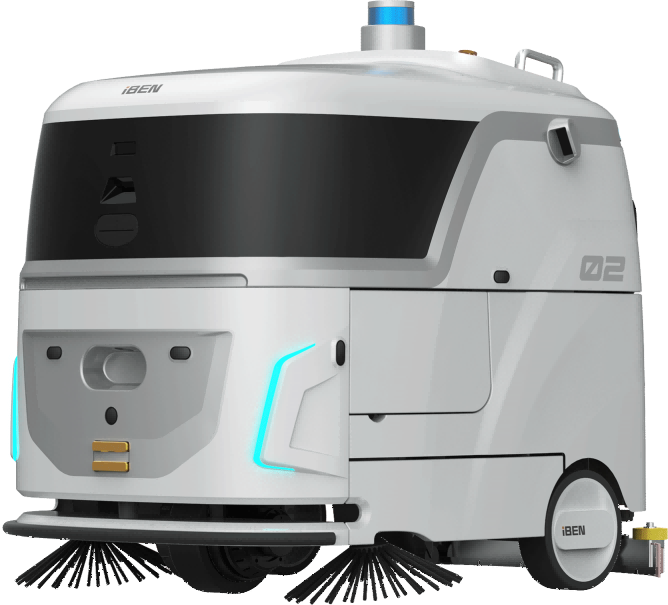
iBEN develops pallet yard handling robots tailored for complex industrial environments. They focus on adaptability, safety, and intelligent coordination.
- Flexible AMR Platforms: iBEN robots handle multiple load capacities and pallet formats, allowing standardization across production areas.
- High-Precision Navigation: Laser and vision-based SLAM ensures reliable operation across indoor and outdoor zones.
- Distributed Scheduling: Multi-robot collaboration is optimized without centralized bottlenecks.
- Real-World Deployments: iBEN robots are used in manufacturing, logistics, and warehousing scenarios, proving reliable performance in high-volume environments.
These capabilities make iBEN robots ideal for factories looking to modernize logistics without expensive infrastructure changes.
Conclusion: Building a More Efficient Factory Floor with Pallet Yard Handling Robots
Pallet yard handling robots offer a scalable, flexible solution for modern factory floor logistics. They enhance pallet movement efficiency, improve safety, and adapt to changing layouts or production requirements. By integrating advanced navigation, multi-sensor fusion, fleet coordination, and enterprise system connectivity, these robots support reliable and continuous material flow, enabling factories to achieve higher productivity and operational resilience.
For manufacturers seeking smarter, safer, and more efficient logistics, pallet yard handling robots represent a practical step toward fully automated, future-ready factory floors.