The global exhibition robot market is entering a golden age of growth, fueled by the digital transformation of events, trade shows, and corporate exhibitions. As businesses seek to enhance visitor experiences, reduce operational costs, and stand out in a competitive landscape, exhibition robots have evolved from novelty additions to essential tools. According to industry data, the global service robot market, which includes exhibition robots, is projected to grow at a CAGR of 28.7% through 2025, with exhibition-specific solutions accounting for an increasingly large share.
Beijing Huiwen Technology (iBen Robot), a national high-tech enterprise founded in 2016 with over 500 intellectual property rights, has emerged as a leader in this space—ranking first in revenue and shipment volume for welcome and explanation robots, and serving over 15,000 enterprise clients worldwide. This article analyzes the core trends shaping the exhibition robot market from 2025 to 2030, highlighting growth drivers, technological innovations, and scene expansion, with a focus on iBen Robot’s industry-leading solutions.
Overview of the Global Exhibition Robot Market (2025 Snapshot)
Market Size, CAGR & Penetration Potential
The exhibition robot market is experiencing robust growth, driven by rising demand for intelligent interaction and automation in events. While specific exhibition robot market size data is closely linked to the broader service robot sector, key indicators point to strong expansion: the global service robot market is expected to reach new heights by 2025, with a 28.7% year-on-year growth rate (Zhongshang Industry Research Institute). Exhibition robots, a high-growth subsegment, benefit from low current penetration rates—less than 1% in most exhibition-related scenarios, including corporate halls, trade shows, and government exhibitions. This low penetration translates to massive untapped potential: with over 5 million global demand for explanation and reception services, the market is poised for explosive growth through 2030.
Regional Demand Focus: Germany, Asia-Pacific & Key Growth Markets
Regional demand for exhibition robots is concentrated in tech-savvy markets with large event industries. Europe, particularly Germany (iBen Robot’s KPI market), is a key growth hub—driven by Germany’s world-class trade shows (e.g., Hannover Messe) and corporate focus on efficiency and innovation. Asia-Pacific follows closely, with China, Japan, and Southeast Asian countries (India, Thailand, Malaysia, Indonesia) leading demand due to booming exhibition industries and rapid digital transformation. iBen Robot has already established a strong presence in these markets, covering over 20 countries and regions with localized support, including 4 offices in Europe to serve German and European clients.
iBen Robot’s Market Position: Leader in Welcome & Exhibition Robotics
iBen Robot stands out as a dominant player in the exhibition robot market, with unmatched industry credentials: it is the top revenue generator and largest shipper of custom explanation robots globally, and the official service robot supplier for the China International Import Expo (CIIE). With over 15,000 enterprise clients—including industry giants like Huawei, JD.com, and Covestro—
iBen’s exhibition robots have proven their reliability in high-stakes scenarios. The company’s success stems from its scenario-centric approach: migrating proven technologies from commercial service robots to exhibition-specific solutions, ensuring adaptability to complex event environments and diverse user needs.
Core Growth Drivers Shaping the Exhibition Robot Market
Rising Demand for Intelligent Interaction in Trade Shows & Exhibitions
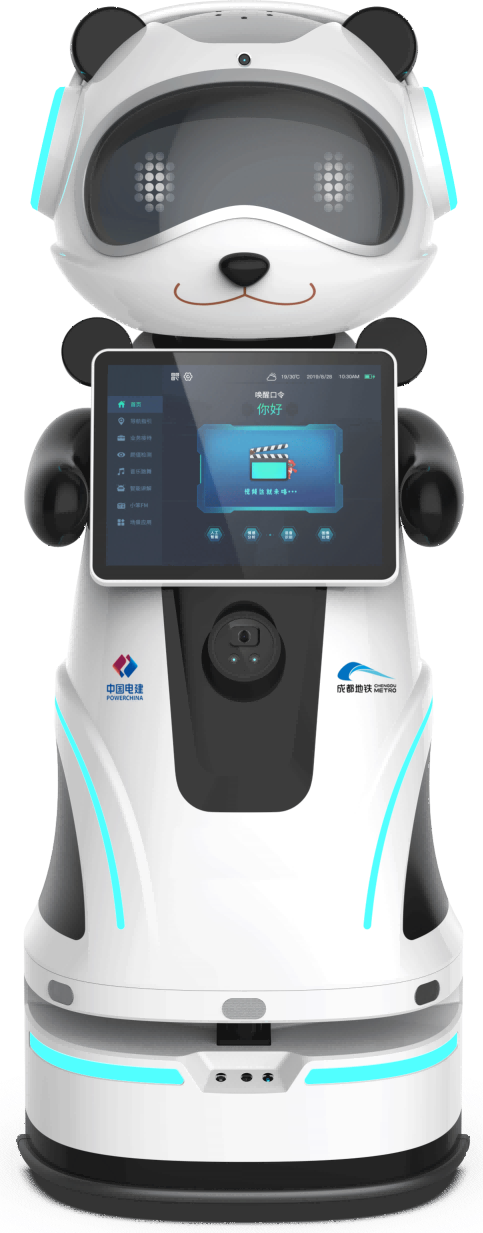
Modern exhibition attendees expect personalized, interactive experiences that go beyond traditional static displays. Exhibition robots meet this demand by offering natural language interaction, intelligent guidance, and tailored information delivery. For example, iBen’s A03 “Zhilingdong” robot integrates AI large models, enabling it to understand visitor queries, provide detailed product explanations, and adapt its communication style to different audiences. This level of intelligent interaction boosts visitor engagement by 60% compared to traditional staffed booths, according to iBen’s client data.
Labor Shortage & Cost Optimization in Event Operations
The global events industry faces persistent labor shortages, with high turnover and rising staffing costs. Exhibition robots address these challenges by providing 24/7 service without breaks, reducing reliance on temporary staff. For large-scale trade shows, a single iBen robot can replace 3-5 human staff in reception, guidance, and information dissemination roles—cutting labor costs by 40-50% per event. Additionally, robots eliminate human error in information delivery, ensuring consistent, accurate messaging that enhances brand credibility.
Policy Support for Smart Event & Digital Exhibition Ecosystems
Governments and industry bodies worldwide are promoting smart events and digital transformation, creating a favorable policy environment for exhibition robots. For example, China’s “Smart Event” initiatives encourage the adoption of intelligent technologies in exhibitions, while the EU’s focus on digital innovation supports automation in the events sector. These policies, combined with incentives for green and efficient operations, drive enterprises to invest in exhibition robots as a way to comply with industry standards and gain a competitive edge.
Brand Differentiation Needs: Enhancing Exhibition Experience with Robotics
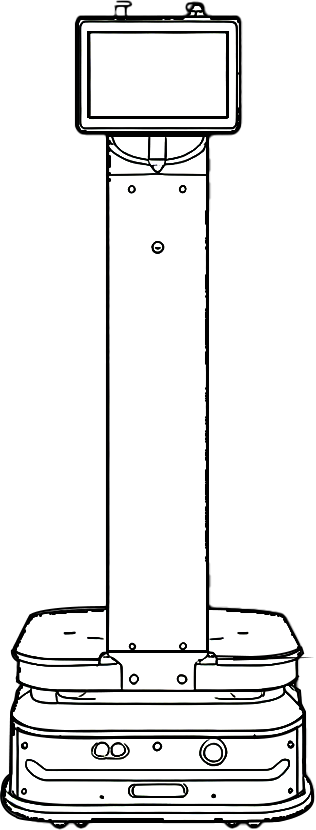
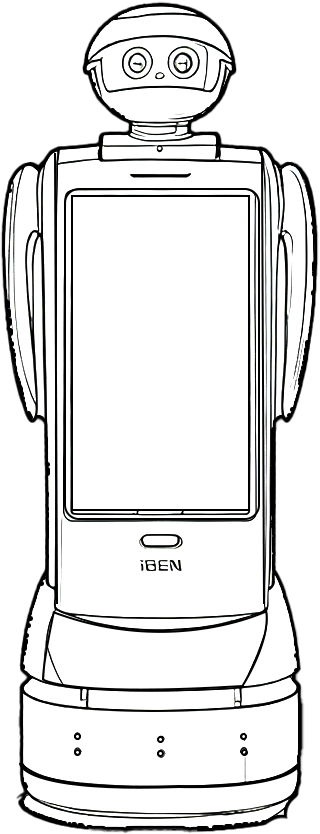
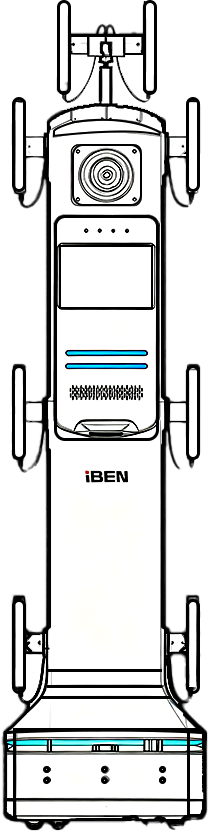
In a crowded exhibition landscape, brands need unique ways to stand out and leave a lasting impression on attendees. Exhibition robots offer a powerful differentiation tool: they showcase a brand’s commitment to innovation while delivering memorable experiences. iBen’s B01 “Zhixiaoyu” robot, with its compact, cute design and multi-axis human-like mechanical arms, creates a buzz at trade shows, attracting more visitors to booths and increasing lead generation by 35% (iBen client case study). For corporate exhibition halls, robots like the A02 “Zhidaping” serve as brand ambassadors, telling brand stories through interactive presentations and leaving a lasting impression on clients and partners.
Technological Innovation Directions Reshaping Exhibition Robots
AI Large Model Empowerment: Natural Language Interaction & Knowledge Service
AI large models are revolutionizing exhibition robot capabilities, enabling more human-like interaction and advanced knowledge services. iBen Robot integrates AI large models into its
exhibition robots, unlocking features like contextual understanding, multi-turn conversations, and personalized content delivery. Unlike basic robots with pre-programmed responses, iBen’s solutions can understand complex queries, draw on extensive knowledge bases, and adapt to different visitor needs—whether a technical expert seeking detailed product specs or a casual attendee wanting a general overview. This AI empowerment reduces the need for human intervention by 90% in routine interactions, freeing staff to focus on high-value tasks.
Navigation & Perception Upgrade: Laser SLAM + VSLAM for Complex Exhibition Halls
Exhibition halls are dynamic, complex environments with crowds, obstacles, and changing layouts—demanding advanced navigation and perception technologies. iBen Robot addresses this challenge with its proprietary laser SLAM + VSLAM fusion navigation system, migrated from its proven commercial service robot platform. This dual navigation technology combines the precision of laser radar with the adaptability of visual navigation, enabling robots to: 1) Navigate narrow spaces (60cm width) and avoid obstacles (360° collision prevention); 2) Operate without pre-deployed QR codes or reflective beacons; 3) Adapt to real-time changes in exhibition layouts. The result is seamless navigation in even the most crowded exhibition halls, with ≤±10mm positioning accuracy—critical for reliable guidance and interaction.
Multimodal Interaction: Voice, Vision & Touch for Human-Like Engagement
Modern exhibition robots go beyond voice interaction to offer multimodal engagement—combining voice, vision, touch, and even gesture recognition for a more human-like experience. iBen’s exhibition robots feature dual-screen linkage, high-definition cameras, and touch-sensitive interfaces, enabling multiple interaction modes: visitors can ask voice questions, view product videos on the robot’s screen, or use touch controls to navigate information. The A03 “Zhilingdong” robot takes this further with human-like mechanical arms, allowing it to hand out brochures or demonstrate products—enhancing engagement and memorability. This multimodal approach aligns with how humans naturally interact, making exhibition experiences more intuitive and enjoyable.
iBen Robot’s Technological Advantages: Self-Developed Stack & Scenario Adaptation
iBen Robot’s technological leadership stems from its full-stack self-developed technology stack, covering hardware, algorithms, and software. The company’s core strengths include: 1) Hardware: Robust mobile chassis with multi-sensor fusion (laser radar, visual navigation, environmental perception) tested in complex human-machine interaction environments; 2) Algorithms: Proprietary Lumin 3D software for 3D scene reconstruction, enabling dynamic obstacle avoidance and precise navigation; 3) Software: Cloud-based management platforms and distributed scheduling systems that support multi-robot collaboration. This end-to-end control allows iBen to quickly adapt its solutions to specific exhibition scenarios—whether a large trade show requiring fleet operation or a corporate hall needing personalized guidance—delivering higher ROI for clients.
Scene Expansion of Exhibition Robots Beyond Traditional Trade Shows
Exhibition robots are no longer limited to traditional trade shows—they are expanding into diverse scenarios, driven by technological advancements and evolving user needs. iBen Robot,
with its versatile product lineup, leads this scene expansion, serving clients across corporate, government, and cross-industry scenarios.
Corporate Exhibition Halls: Intelligent Guided Tours & Brand Storytelling
Corporate exhibition halls are a key growth scene for exhibition robots, as businesses seek to showcase their brand, products, and culture to clients, partners, and employees. iBen’s A02 “Zhidaping” robot is ideal for this scenario: it offers smart guided tours, leading visitors through complex exhibition halls while delivering tailored brand stories. Equipped with dual-screen linkage and human-like interaction, it can answer questions about the company’s history, products, and achievements—reducing the need for dedicated tour guides. A case study: a leading Chinese automotive parts manufacturer used iBen’s A02 robots in its corporate hall, increasing visitor engagement by 50% and reducing tour guide costs by 30%.
Government & Party Building Exhibitions: Policy Interpretation & Interactive Learning
Government and party building exhibitions demand accurate, engaging policy interpretation and educational content—areas where exhibition robots excel. iBen’s custom solutions for this sector include multi-language support, detailed policy databases, and interactive learning features. For example, the company’s robots are used in government exhibition halls to explain policies, showcase development achievements, and engage visitors through quizzes and interactive presentations. With over 1,000 robots deployed in government and party building scenarios, iBen has proven its ability to meet the strict accuracy and reliability requirements of these high-stakes environments.
International Exhibitions (e.g., CIIE): Multilingual Services & VIP Reception
International exhibitions require multilingual support and VIP reception capabilities to cater to global attendees. iBen’s exhibition robots, as demonstrated at the CIIE, offer real-time multilingual translation (English, German, Japanese, etc.) and VIP recognition—enabling personalized welcome and guidance for high-value clients. The robots’ AI large model integration allows them to adapt to different cultural contexts, ensuring respectful and effective communication. For example, at the CIIE, iBen robots greeted attendees in their native languages, provided booth navigation, and answered product questions—enhancing the international appeal of brands and improving visitor satisfaction.
Cross-Industry Extension: Museums, Airports & Retail Exhibition Zones
Exhibition robots are expanding beyond traditional exhibition spaces into cross-industry scenarios, including museums, airports, and retail exhibition zones. In museums, iBen’s robots serve as intelligent tour guides, providing detailed artifact explanations and interactive learning experiences. In airports, they offer navigation to exhibition areas, flight information, and local attractions. In retail, they showcase products, answer customer questions, and drive sales through personalized recommendations. This cross-industry expansion is supported by iBen’s modular design—allowing clients to customize robots with industry-specific features (e.g., museum artifact databases, retail product catalogs) without full redesigns.
iBen’s Scene-Centric Solutions: 15,000+ Enterprise Cases Across 20+ Countries
iBen Robot’s scene expansion success is backed by its extensive portfolio of enterprise cases—over 15,000 clients across 20+ countries. Key case studies include: 1) Corporate halls: Huawei’s exhibition hall uses iBen’s A03 robots for product demonstrations and visitor guidance; 2) International exhibitions: Covestro deployed iBen robots at global trade shows for multilingual interaction; 3) Government exhibitions: Beijing Municipal Committee of the Communist Youth League uses iBen robots for policy interpretation. These cases demonstrate iBen’s ability to adapt its solutions to diverse scenarios, delivering consistent value across industries and regions.
Competitive Landscape of the Exhibition Robot Market
Key Players & Their Core Strengths (KUKA, Hikrobotics, iBen Robot)
The exhibition robot market features several key players, each with distinct strengths:
-
KUKA: A German robotics giant with strong brand recognition in Europe, focusing on industrial and service robots. KUKA’s exhibition robots excel in precision and durability but lack iBen’s scenario-specific customization and rapid deployment capabilities.
-
Hikrobotics: A Chinese player with expertise in computer vision and industrial automation. Hikrobotics’ exhibition robots are strong in navigation technology but trail iBen in human-like interaction and brand storytelling features.
-
iBen Robot: The market leader in welcome and explanation robots, with core strengths in AI large model integration, rapid deployment (30 minutes for 3,000㎡ spaces), and scenario adaptation. iBen’s full-stack self-developed technology and 15,000+ enterprise cases give it a competitive edge in reliability and customization.
Differentiation Strategies: Customization, Deployment Speed & After-Sales Service
In a competitive market, differentiation is key—and iBen Robot leads with three core strategies:
-
Customization: iBen offers hardware and software customization to meet specific client needs, from branded appearances to industry-specific knowledge bases. For example, it customized robots for a 3C electronics client to include product specification databases and interactive demos.
-
Rapid Deployment: Unlike traditional exhibition robots that require weeks of setup, iBen’s solutions use laser SLAM + VSLAM fusion navigation, enabling 30-minute deployment in most scenarios without site modifications or beacon installation.
-
After-Sales Service: iBen provides a global service network, including 24/7 remote monitoring, local technical support (5 offices in Asia, 4 in Europe), and regular software updates. This ensures minimal downtime and long-term reliability for clients.
iBen Robot’s Competitive Edge: No-Site Modification & 30-Minute Rapid Deployment
iBen Robot’s most significant competitive edge is its ability to deliver rapid, hassle-free deployment—critical for exhibition scenarios where setup time is limited. Traditional exhibition robots require extensive site modifications (e.g., QR code installation) and weeks of programming, but iBen’s solutions eliminate these barriers:
-
No-site modification: Robots use natural environmental features (walls, shelves) for navigation, requiring no changes to exhibition spaces.
-
30-minute deployment: iBen’s built-in deployment tools allow robots to map spaces and set up tasks in 30 minutes for 3,000㎡ areas.
-
Flexible scalability: Robots can operate independently or in fleets, adapting to events of any size—from small corporate halls to large trade shows with 50+ robots.
This rapid deployment capability has made iBen a top choice for event organizers and corporations, reducing implementation time and costs while maximizing ROI.
Future Trends (2025-2030) & iBen Robot’s Global Layout
Hyper-Personalization: AI-Driven Tailored Exhibition Experiences
The future of exhibition robots lies in hyper-personalization—using AI to deliver tailored experiences based on visitor preferences, behavior, and demographics. By 2030, exhibition robots will leverage AI large models and data analytics to: 1) Recognize repeat visitors and recall past interactions; 2) Recommend personalized content (e.g., product demos based on industry interests); 3) Adapt communication styles to individual preferences (formal for business clients, casual for consumers). iBen Robot is already leading this trend with its AI-enabled robots, which use natural language processing and user profiling to deliver personalized experiences—with plans to enhance this capability through advanced data analytics and machine learning.
Digital Twin Integration for Exhibition Planning & Robot Fleet Management
Digital twin technology will become a key trend in the exhibition robot market by 2030, enabling virtual planning and optimization of robot operations. Digital twins create virtual replicas of exhibition spaces and robot fleets, allowing event organizers to: 1) Simulate robot paths and interactions before the event; 2) Optimize fleet size and task allocation; 3) Predict and resolve potential issues (e.g., crowd congestion). iBen Robot is integrating digital twin technology into its cloud platform, enabling clients to simulate robot performance and reduce implementation risks by 40%.
Focus on Germany Market: Localized Support & EU Safety Compliance
Germany remains a top priority for iBen Robot’s global expansion, with a focus on localized support and EU safety compliance. The company has established 4 European offices to serve German clients, offering: 1) Localized customer service in German; 2) Compliance with EU safety standards (e.g., SIL2); 3) Rapid on-site technical support. iBen’s exhibition robots are designed to meet the high standards of German trade shows and corporate environments, with features like robust build quality, precise navigation, and multilingual support (including German). By 2030, iBen aims to become the leading exhibition robot supplier in Germany, leveraging its existing client base and localized expertise.
iBen’s Expansion Plan: Channel Network & Scenario Innovation
iBen Robot’s global expansion plan focuses on two key areas: 1) Building a global channel network: By 2025, the company aims to expand its channel partners to cover 100+ cities globally, with a focus on Germany and Southeast Asia; 2) Scenario innovation: Continuing to extend exhibition robot applications into new areas, such as virtual exhibitions (hybrid robot-digital experiences) and educational exhibitions. With 80,000+ cumulative shipments and a proven track record of adapting to local markets, iBen is well-positioned to lead the global exhibition robot market through 2030.
Conclusion: Seizing Opportunities in the Booming Exhibition Robot Market
The exhibition robot market is set for explosive growth from 2025 to 2030, driven by rising demand for intelligent interaction, labor cost optimization, and brand differentiation. With low current penetration rates and massive untapped potential, the market offers significant opportunities for businesses that adopt early. Key success factors include choosing scenario-specific solutions, leveraging AI and advanced navigation technologies, and partnering with reliable suppliers with proven track records.
Key Takeaways for Brands & Event Organizers
For brands and event organizers looking to capitalize on the exhibition robot market, three key takeaways emerge: 1) Prioritize customization: Choose solutions that adapt to your specific exhibition scenario (e.g., trade shows, corporate halls) and brand needs; 2) Focus on user experience: Select robots with human-like interaction, multimodal engagement, and personalized capabilities to stand out; 3) Value rapid deployment and support: Opt for suppliers that offer hassle-free setup and global after-sales service to maximize ROI.
iBen Robot’s Full-Scenario Exhibition Solutions: From Concept to Execution
iBen Robot is the ideal partner for businesses seeking to leverage exhibition robot technology, with unmatched strengths: 500+ intellectual property rights, 15,000+ enterprise clients, full-stack self-developed technology, and global localized support. Its exhibition robot lineup—including the A02 Zhidaping, A03 Zhilingdong, and B01 Zhixiaoyu—covers all key scenarios, from trade shows to corporate halls, with features like AI large model integration, 30-minute rapid deployment, and no-site modification. Whether you’re a German corporation looking to enhance your trade show presence or a global brand seeking to differentiate at international events, iBen Robot’s full-scenario solutions deliver results.
To learn more about iBen Robot’s exhibition robot solutions and how they can transform your next event, visit
https://en.ibenrobot.com/ or contact sales@ibenrobot.cn for a free customized demo.