Introduction
Customer service is undergoing a fundamental transformation. As digital technologies reshape how people interact with brands, businesses are under increasing pressure to deliver faster responses, more accurate information, and consistently engaging experiences. At the same time, organizations must manage rising labor costs, staffing limitations, and growing service complexity.
Within this evolving landscape, interactive service robotics has shifted from being a novelty to becoming a practical operational strategy. Companies are no longer adopting robots simply for innovation branding. Instead, they are partnering with an
interactive Customer Service Robot supplier to address real business challenges related to efficiency, scalability, and customer engagement.
Across industries, intelligent robots are redefining how businesses interact with customers, visitors, and patients. From retail environments to corporate lobbies, hospitals, exhibition venues, and public service spaces, interactive robots are rapidly becoming part of modern service infrastructure.
The Evolution of Customer Service in the Intelligent Era
Changing Customer Expectations
Modern customers expect immediate, accurate, and seamless interactions. The demand for instant responses and personalized experiences continues to rise, placing significant pressure on traditional service models. Human-only systems, while valuable, often struggle to maintain consistent performance during peak periods or across multiple service locations.
Interactive customer service robots are designed to meet these evolving expectations by offering immediate engagement, reliable information delivery, and uninterrupted service availability. Unlike human staff, robots do not experience fatigue or performance variability, allowing businesses to maintain a stable service standard.
Limitations of Traditional Service Models
Traditional customer service structures introduce inherent constraints that limit scalability and consistency. Staffing availability, training variability, and operational scheduling all influence service quality. Expanding service capacity through workforce growth alone results in proportional cost increases, making long-term scaling financially challenging.
These structural limitations have encouraged businesses to explore automation technologies capable of delivering consistent, repeatable, and scalable service performance.
Emergence of Interactive Service Robotics
Interactive service robots represent the integration of artificial intelligence, natural language processing, autonomous navigation, and multimodal communication technologies. Modern robots function not merely as static information tools but as intelligent, mobile interaction systems capable of understanding user intent, navigating complex environments, and providing contextual responses.
This technological maturity has fundamentally changed how businesses evaluate robotic solutions. Rather than purchasing standalone devices, organizations increasingly seek specialized suppliers capable of delivering complete, integrated systems.
What an Interactive Customer Service Robot Supplier Actually Provides
Beyond Hardware Supply
A qualified interactive Customer Service Robot supplier provides far more than robotic hardware. Effective solutions combine robot platforms, AI interaction systems, navigation technologies, deployment services, and long-term operational support. Robots must function as integrated components within real business workflows rather than isolated technologies.
Suppliers therefore play a critical role in ensuring that robots deliver measurable operational value rather than simply serving as visual enhancements.
Core Capabilities Businesses Look For
When evaluating suppliers, businesses focus on several critical capability areas:
| Capability Area |
Business Importance |
| Interaction Quality |
Determines user trust and engagement |
| Navigation Intelligence |
Enables operation in dynamic environments |
| System Integration |
Ensures compatibility with existing platforms |
| Operational Stability |
Supports long-term reliability |
| Scalability |
Allows multi-robot expansion |
Interaction quality is particularly important because the effectiveness of a service robot depends heavily on how naturally it communicates. Robots that deliver rigid or unnatural conversations undermine user confidence and reduce operational effectiveness.
IBEN’s Integrated Solution Approach
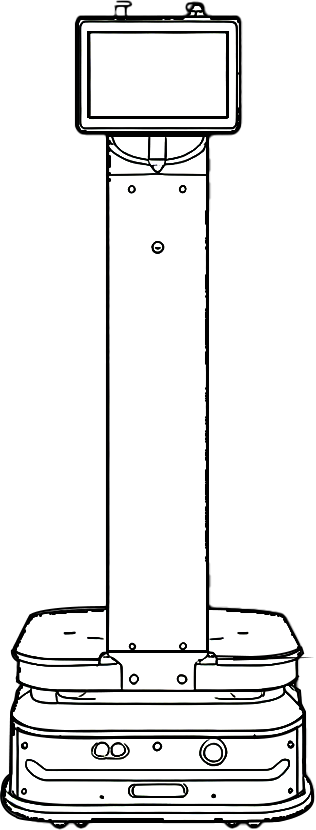
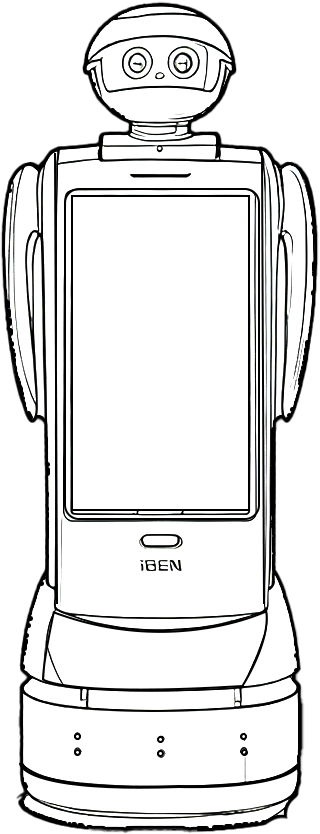
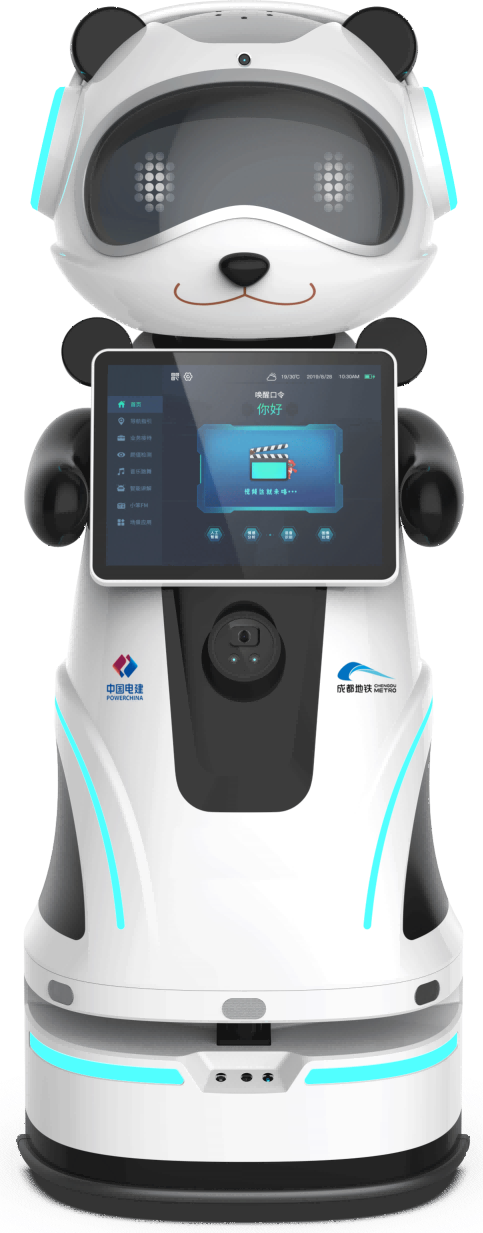
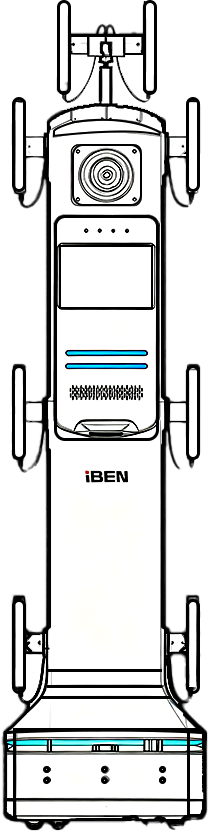
IBEN represents a modern supplier model by delivering fully integrated robotic solutions supported by a self-developed technology stack. By combining AI-powered interaction engines with laser SLAM and Visual SLAM navigation technologies, IBEN robots operate reliably within complex, real-world environments.
Vertical integration allows IBEN to maintain consistency across hardware systems, navigation behavior, interaction intelligence, and scheduling logic. This system-level coherence significantly improves reliability, flexibility, and long-term performance.
Key Industries Driving Adoption
Retail & Shopping Centers
Retail environments demand both operational efficiency and engaging customer interaction. Interactive robots assist with store navigation, product inquiries, and promotional engagement while helping businesses manage customer traffic flow. Unlike static signage, mobile robots actively interact with visitors, enhancing both customer experience and brand perception.
Corporate & Exhibition Spaces
In corporate lobbies and exhibition venues, interactive robots function as intelligent reception and guidance systems. They enhance visitor engagement, provide information support, and reinforce brand identity. Their ability to deliver multilingual interaction further increases their value in globally oriented business environments.
Healthcare & Medical Institutions
Healthcare facilities often present complex layouts that can create confusion for patients and visitors. Interactive robots provide navigation assistance, department guidance, and information support, helping reduce congestion and improve operational efficiency. By streamlining communication, robots contribute to a smoother patient experience.
Hospitality & Public Service Environments
Hotels, airports, government facilities, and other high-traffic environments increasingly adopt robotic assistants to manage fluctuating service demands. Robots enhance visitor interaction, improve service consistency, and support extended operational hours without introducing proportional labor costs.
Why Businesses Prefer Robots Over Traditional Expansion
Scalability Without Linear Labor Costs
Expanding service capacity through workforce growth alone results in proportional increases in operational expenses. Robots, however, enable businesses to scale service capability while maintaining predictable cost structures. This scalability is particularly valuable in industries experiencing fluctuating demand patterns.
Consistent Service Delivery
Human service quality naturally varies depending on experience, workload, and environmental factors. Robots deliver standardized interaction performance, ensuring consistency across locations and operational periods. Consistency directly influences customer satisfaction and brand reliability.
Continuous Availability
Interactive robots operate continuously, supporting extended service hours and peak-period stability. Their uninterrupted availability improves operational efficiency and enhances the overall customer experience.
Data-Driven Service Optimization
Interactive robots generate valuable operational data related to customer inquiries, traffic patterns, and service demand trends. Businesses can use this data to refine workflows, optimize staffing strategies, and improve service design.
Strategic Advantages of Partnering With the Right Supplier
Deployment Flexibility
Modern business environments require systems capable of adapting to layout changes and multi-location deployment. Suppliers offering SLAM-based navigation solutions eliminate heavy infrastructure dependencies, reducing deployment friction.
Customization & Integration
Effective suppliers enable knowledge base integration, custom interaction design, and compatibility with enterprise systems. Flexibility ensures long-term operational relevance.
Maintenance & Lifecycle Support
Long-term robotic performance depends heavily on system stability and efficient maintenance frameworks. Suppliers must provide remote diagnostics, software upgrades, and lifecycle management support.
Future Upgrade Path
Technology evolves rapidly, making future-proof system architecture essential. Businesses prioritize suppliers capable of delivering ongoing enhancements without requiring complete system replacement.
Key Evaluation Criteria for Selecting a Supplier
Selecting the right supplier requires balancing technology maturity, interaction quality, integration capability, operational stability, and lifecycle value. Robotic investments represent infrastructure decisions rather than short-term experiments, making supplier selection strategically critical.
Why Businesses Choose IBEN
Businesses partner with IBEN because its solutions combine technological maturity with operational practicality. IBEN’s fully self-developed technology stack ensures system-level coherence, while AI-powered interaction systems deliver natural, intuitive communication. The company’s lightweight deployment model reduces implementation complexity, and its global commercial experience supports diverse industry scenarios.
Conclusion
Interactive customer service robots have evolved into essential components of modern service strategy. Partnering with a qualified interactive Customer Service Robot supplier allows businesses to enhance operational efficiency, maintain service consistency, and scale customer engagement capabilities.
As industries continue to advance, intelligent robotics will play an increasingly central role in service delivery. IBEN’s integrated, flexible solutions enable businesses to adopt this transformation with confidence.
In the intelligent service era, robotics is no longer optional innovation — it is strategic infrastructure.