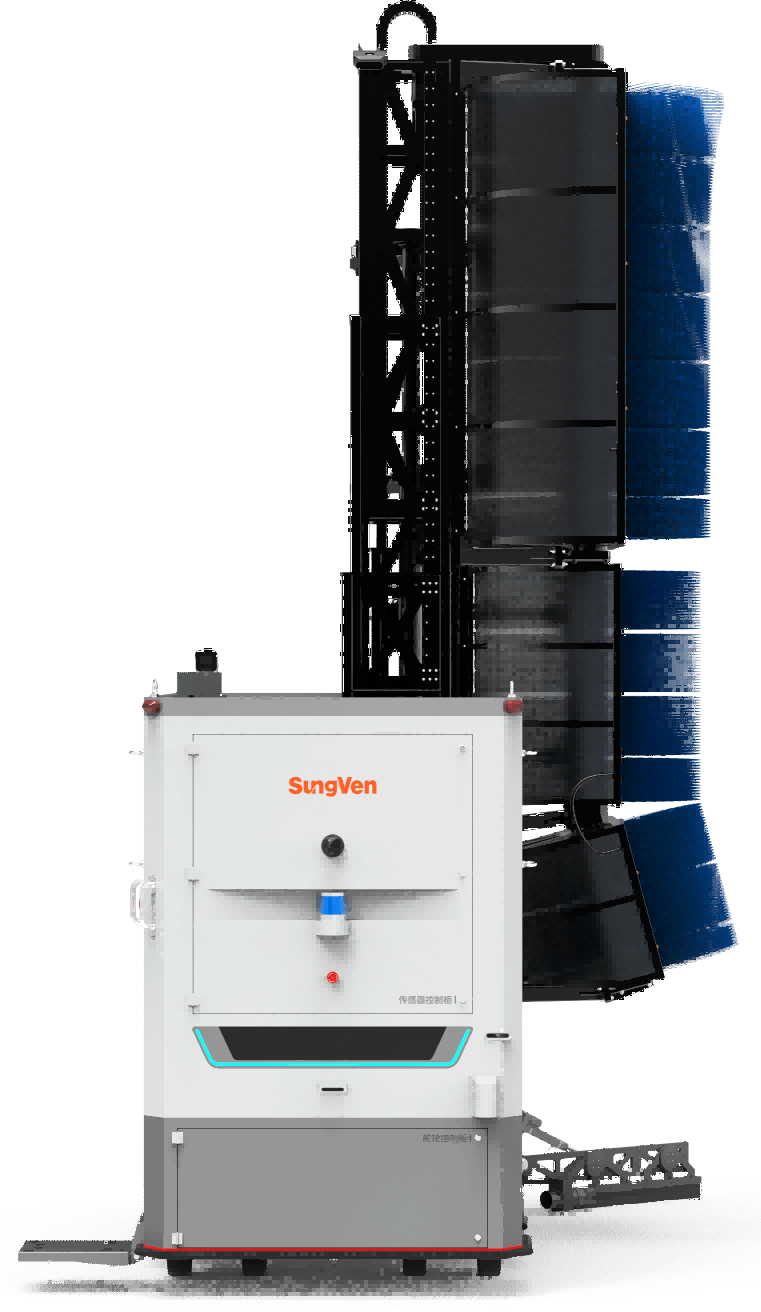
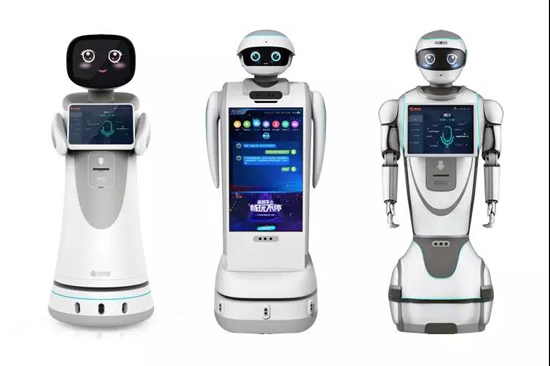
The global service robot market has evolved from a niche tech segment to a mainstream automation solution, entering an era of large-scale commercialization. Fuelled by technological innovation and unmet industrial demand, the global mobile robot market—a core service robot sub-segment—hit $58.5 billion in 2023 and is projected to surge to $200 billion by 2030. Yet this robust growth is accompanied by technical bottlenecks, fierce competition and low market penetration, all of which shape the industry’s development trajectory. As a leading player in the sector, IBEN (
https://en.ibenrobot.com/) has navigated these hurdles with customer-centric innovation and strategic layout, setting a benchmark for businesses looking to seize global market opportunities. This article delves into the core drivers propelling the service robot market forward, the critical challenges it faces, and the untapped potential across regions and segments.
Core Growth Drivers Shaping the Service Robot Market
The service robot market’s rapid expansion stems from three interconnected and powerful drivers: technological breakthroughs that break application boundaries, universal industry demand for automation and labor replacement, and tangible commercial value that democratizes automation for businesses of all sizes.
Technological Iteration: Reimagining Scenario Adaptability
Technological advancement is the foundational driver of market growth, with laser SLAM + VSLAM fusion navigation revolutionizing the industry by replacing rigid magnetic and QR code navigation. This technology enables beacon-free, zero-renovation deployment, a transformative shift for both industrial and commercial use cases. IBEN’s mastery of this core technology lets its robots autonomously build environmental maps, navigate 60cm narrow spaces, cross 2cm steps and detect obstacles in 360°, adapting seamlessly to factory floors, crowded exhibition halls and retail spaces alike.
AI large model integration has further elevated human-robot interaction from basic voice commands to personalized, context-aware service. IBEN’s greeting and guiding robots feature facial recognition for VIP customized greetings and natural language processing for answering industry-specific queries, while the company’s self-developed distributed scheduling system boosts multi-robot collaboration efficiency by 40%. An end-to-end self-developed tech stack—spanning hardware (sensors, chassis, motors) and software (3D reconstruction, real-time environmental modeling)—enhances product stability and dynamic obstacle avoidance, laying a solid foundation for cross-scenario application.
Industry Rigid Demand: Labor Replacement Across All Sectors
Global labor shortages, rising labor costs and the need for standardized, high-efficiency service have created an urgent and universal demand for service robots across industrial, commercial and public service sectors. In the industrial field, the global demand for AMR handling robots exceeds 20 million units, solving longstanding pain points such as low manual handling efficiency (200 pieces per day on average), an 8% error rate and safety risks in heavy material transport. IBEN’s industrial robots have lifted this benchmark to 500 pieces per day with 100% accuracy, delivering production efficiency gains of up to 32% for manufacturing clients.
Commercial demand is equally strong: over 5 million greeting and guiding robots and 10 million material inventory robots are needed to fill gaps for repetitive, low-value tasks in retail, government offices, data centers and exhibition halls. Public services have also emerged as a key demand driver, with disinfection, patrol and healthcare robots addressing aging population challenges and public safety needs. Critically, all core service robot segments currently have a penetration rate of less than 1%, meaning the market is still in its early growth phase with massive untapped potential worldwide.
Commercial Value: Low-Cost Deployment & Fast ROI
For businesses, the most compelling appeal of modern service robots is their exceptional cost efficiency and short return on investment (ROI). Traditional AGV/AMR solutions required upfront investments of $500,000 or more, with deployment cycles ranging from 3 months to 2 years and an ROI of over 2 years—making them inaccessible to small and medium-sized enterprises (SMEs), the largest customer base in the global market.
Today, innovative solutions like IBEN’s X300 series have transformed this landscape: cutting deployment costs by 80%, requiring no site renovation or complex system construction, and delivering an average ROI of just 3-6 months. Modular design and intelligent operation and maintenance further lower long-term costs: fault self-diagnosis, 30-minute remote technical support and modular components reduce upkeep costs by 40%, opening the door to automation for SMEs and driving large-scale market expansion.
Critical Challenges Facing the Service Robot Market
Despite its promising growth trajectory, the service robot market faces four core challenges that limit its full potential, spanning technical barriers, intense competition, low market penetration and industrial chain mismatches.
Technical Barriers: Cross-Scenario Adaptability Hurdles
The most pressing technical challenge is the vast gap between commercial and industrial operating requirements. Industrial robots must withstand harsh factory environments—including extreme temperatures, dust and oil contamination—and deliver ±10mm millimetric precision docking with MES, WMS and ERP systems, far stricter than the mild operating conditions of commercial robots. Industrial sectors also require strict safety certifications such as SIL2, while there is no unified technical standard for cross-scenario service robots, driving up R&D costs for enterprises.
IBEN overcame these hurdles by developing a 100KG-1500KG full-load hardware platform, adding multiple sensor protections for industrial durability, and opening flexible API interfaces for seamless integration with enterprise management systems—proving that targeted R&D can break cross-scenario technical barriers.
Intense Market Competition: First-Mover Advantages & Cross-Industry Disruption
The service robot market has become increasingly crowded, with two major competitive forces creating significant pressure for market players: established professional AMR manufacturers and cross-industry entrants. Leading professional players such as Geek+ and Hikrobot have built deep moats through years of technical accumulation, large-scale R&D investment and a global service network, making it difficult for new entrants to gain customer trust in high-value segments like automotive manufacturing and semiconductors.
Cross-industry entrants have further intensified competition: forklift giants such as Heli and Hangcha leverage their mechanical and channel advantages to launch unmanned forklifts, while logistics integrators like Daifuku offer one-stop smart logistics solutions including AMRs. This has triggered a hardware price rationalization trend, with new entrants facing shrinking gross profit margins unless they can quickly achieve scale effects and technological differentiation.
Low Market Penetration: Cognitive Barriers & Scenario Fragmentation
The persistently low penetration rate (less than 1% in core segments) stems from two key factors: cognitive barriers among SMEs and severe scenario fragmentation. Many SMEs hold misconceptions about service robots, viewing them as expensive, difficult to operate and unsuitable for small-scale production—creating a reluctance to trial new technology. Scenario fragmentation exacerbates this issue: different industries (3C electronics, new energy, textiles) and even different factories within the same industry have unique automation needs, making it impossible for a single standardized product to meet all requirements. This forces enterprises to invest in customized R&D, increasing costs and slowing market popularization.
Industrial Chain Mismatches: Core Component Shortages & Talent Gaps
The service robot industry relies on a sophisticated and global supply chain, and core component supply concentration and a shortage of compound talents have become key development bottlenecks. Key components such as laser radars and high-precision sensors are dominated by a small number of global suppliers, leading to price fluctuations and supply chain risks that impact product costs and delivery times. Additionally, the industry lacks professionals with a combination of expertise in robotics, AI algorithms and industry scenario knowledge—slowing R&D progress and on-site deployment efficiency for many enterprises.
The table below summarizes the core challenges in the service robot market and the targeted coping strategies adopted by IBEN as an industry benchmark:
| Core Challenges |
IBEN’s Key Coping Strategies |
| Cross-scenario technical barriers (industrial durability, precision docking) |
End-to-end self-developed tech stack; laser SLAM+VSLAM fusion navigation; open API interfaces |
| Intense market competition (first-mover advantages, cross-industry disruption) |
Commercial + industrial dual-track product layout; technological differentiation; global channel construction |
| Low market penetration (SME cognitive barriers, scenario fragmentation) |
SME-focused lightweight products; customized hardware/software services; market education via real cases |
| Industrial chain mismatches (core components, talent gaps) |
Strategic partnerships with component suppliers; internal R&D team training; 50% workforce allocated to R&D |
Key Opportunities in the Global Service Robot Market
The service robot market is a classic “high-growth, low-penetration” track, and while challenges exist, the untapped opportunities far outweigh them. These opportunities span regional market expansion, niche segment growth, technological fusion and market sinking into the SME sector—creating multiple growth engines for enterprises with the right strategy and technology.
Regional Market Potential: Asia-Pacific as the Core, Europe & Southeast Asia as New Blue Oceans
The global service robot market exhibits distinct regional characteristics, with each region offering unique growth opportunities driven by local industrial and social trends:
-
Asia-Pacific: The undisputed global growth engine, accounting for 52.71% of the global mobile robot market, with China alone holding 39.69% of the global share. China’s smart logistics market is expected to reach nearly $215 billion by 2025, with mobile automation equipment as the fastest-growing segment. Southeast Asia (India, Thailand, Malaysia) is another key growth area, with manufacturing transfer driving industrial robot demand and rising consumer spending boosting commercial service robot adoption.
-
Europe: A high-end industrial robot hub, with Germany leading demand for high-precision, reliable industrial AMRs for the automotive, aerospace and precision engineering sectors. European enterprises prioritize workplace safety and environmental adaptability, creating opportunities for players with robust industrial robot technology such as IBEN.
-
Americas: Driven by e-commerce logistics automation, the U.S. and Canada have strong demand for warehouse AMRs and commercial service robots for healthcare and public services—with a focus on cloud-connected, scalable solutions that integrate with existing enterprise systems.
IBEN already operates in over 20 countries and regions worldwide, with localized solutions tailored to each market’s unique needs, laying a solid foundation for capturing regional growth opportunities.
Niche Segment & Technological Fusion Opportunities
Nearly all service robot segments offer explosive growth potential, with latent lifting and roller-type AMRs (58.4% market share) emerging as the most universal industrial robot type, with explosive demand in 3C electronics, new energy and automotive parts for line-side material transport and process transfer. RFID + visual fusion inventory robots are another high-growth segment, solving the pain points of low manual inventory efficiency and high misreading rates in retail, data centers and archives—IBEN’s inventory robots achieve 0% error rates and 50% efficiency gains, making them a popular choice for global enterprises.
Technological fusion is the next frontier for market growth, with three core trends redefining product capabilities: AI large models + service robots enabling active, context-aware service; IOT full-scenario linkage connecting robots to elevators, access control and production lines for unmanned automation loops; and embodied AI robots (featuring 40+ degrees of freedom and human-like configurations) set to become the core R&D track by 2026. IBEN has already announced its plan to launch an embodied AI robot in 2026, positioning itself at the forefront of this new technological trend.
Market Sinking: SME Lightweight Demand as a New Growth Engine
SMEs are the largest customer base in the global manufacturing and commercial sectors, and their unmet lightweight automation demand is the biggest untapped opportunity in the service robot market. Traditional automation solutions are too expensive and complex for SMEs, but modern service robots—such as IBEN’s X300 series—are designed specifically for this market: featuring one-click deployment, no complex system integration required and a low upfront investment. The “plug-and-play” nature of these lightweight robots has broken the SME automation barrier, and as more enterprises adopt this technology, it will become the core driver of global market scale expansion.
IBEN’s Practice: Addressing Challenges and Seizing Opportunities
As a market leader—with over 80,000 cumulative shipments, 15,000+ enterprise customers and the #1 position in the greeting and guiding robot segment—IBEN has successfully navigated the service robot market’s challenges and seized emerging opportunities through four strategic pillars:
-
Technological innovation: 50% of the company’s workforce is allocated to R&D, with over 500 intellectual property rights and an end-to-end self-developed tech stack that enables cross-scenario adaptability and technological differentiation.
-
Dual-track product layout: Balancing commercial service robots (greeting/guiding) for government, airport and exhibition hall use with industrial AMR robots (X300 series: lifting, flatbed, multi-layer pallet) for manufacturing and logistics, with 30-minute deployment and a 3-6 month ROI.
-
Global market expansion: Building a network of 100+ domestic channels in China and expanding to over 20 global markets, with a 2025 focus on building localized channel networks in Germany, the Americas and Japan/Korea.
-
Open ecosystem construction: Offering multi-dimensional API interfaces for secondary development and customized hardware/software services (e.g., sterile handling for the medical industry, high-precision docking for semiconductors) to solve scenario fragmentation and meet diverse customer needs.
Conclusion
The global service robot market is in a golden era of growth, driven by technological innovation, universal industry demand and improved commercial value, with the global mobile robot segment set to reach $200 billion by 2030. While the market faces significant challenges including technical barriers, intense competition and low penetration, these hurdles are far outweighed by untapped opportunities in regional expansion, niche segment growth, technological fusion and SME market sinking. The core trends shaping the market are clear: intelligentization, lightweight design, scenario diversification and globalization, with embodied AI robots set to become the next core growth track.
IBEN’s success in the market proves that a customer-centric focus on technological innovation, strategic product layout and global localization is the key to navigating challenges and seizing opportunities. For businesses looking to leverage the service robot market’s massive growth potential, partnering with innovative players such as IBEN or adopting a similar technology-and-customer-focused strategy is essential. To explore IBEN’s full range of service robot solutions and how they can transform your business’s automation journey, visit the official website at
https://en.ibenrobot.com/.