The global service robot market is experiencing unprecedented growth. According to recent industry data, the global mobile robot market reached approximately $5.85 billion in 2023, with China playing a dominant role. By 2030, the global market is expected to hit $20 billion. But for businesses considering automation, one critical question remains: how much does a service robot actually cost?
In this comprehensive 2026 guide, we break down service robot pricing, cost components, ROI calculations, and how to choose the right solution for your budget—with real-world examples from iBEN, a leading manufacturer of service and industrial robots.
Understanding Service Robot Types and Functions
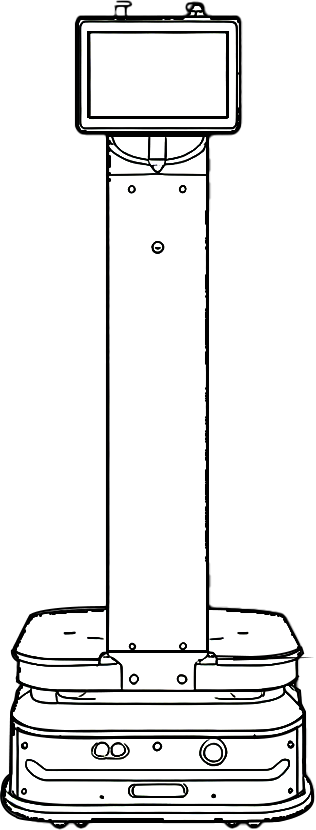
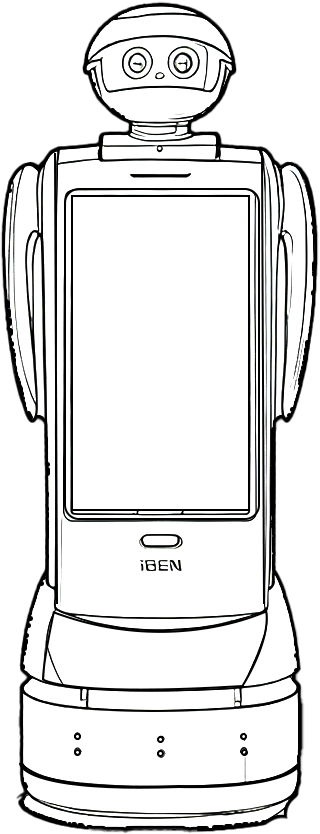
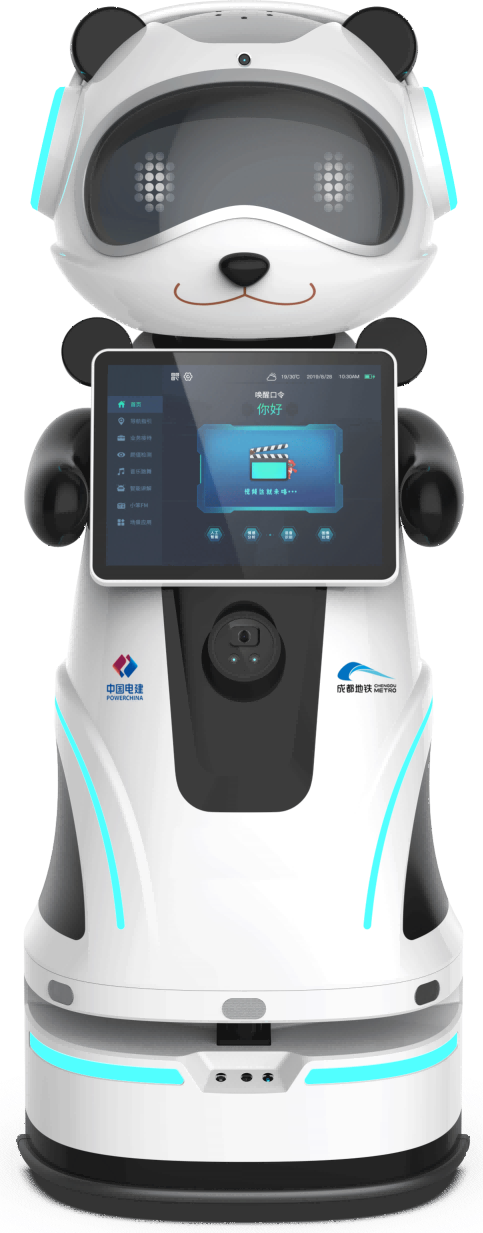
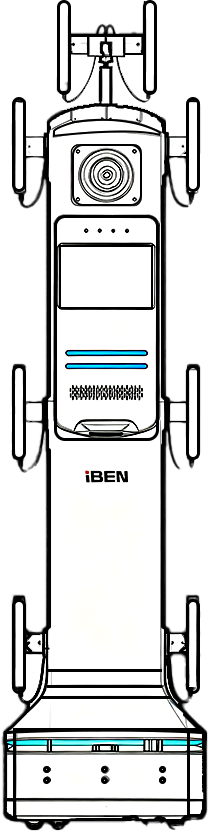
Before discussing costs, it's essential to understand what service robots do. Based on iBEN's product portfolio, service robots generally fall into three main categories:
| Robot Type |
Primary Functions |
Typical Applications |
| Reception & Guidance Robots |
Visitor greeting, navigation, Q&A, multi-language support |
Hotels, hospitals, airports, exhibition halls, corporate lobbies |
| Inventory Management Robots |
RFID scanning, visual recognition, stocktaking, environmental monitoring |
Warehouses, retail stores, archives, data centers |
| AMR Transport Robots |
Material handling, pallet movement, autonomous delivery |
Factories, logistics centers, 3C electronics, automotive plants |
Each type has different cost structures based on hardware complexity, software capabilities, and deployment requirements.
Service Robot Cost Components
The price of a service robot isn't just about the hardware. Here's what you're actually paying for:
Hardware Costs
-
Chassis and Mobility System: Motors, wheels, suspension, and durable frames designed for 24/7 operation
-
Sensor Suite: LiDAR (2D/3D), depth cameras, ultrasonic sensors, RGB cameras, and RFID modules
-
Battery and Power Management: Long-life lithium batteries with fast-charging capabilities
-
End Effectors: Lifting mechanisms, conveyor belts, trays, or robotic arms depending on the application
-
Human-Machine Interface: Touchscreens, speakers, LED indicators, and emergency stop buttons
iBEN's robots feature dual LiDAR + visual SLAM integration, 360° perception, and modular hardware designs that allow for cost-effective customization.
Software and AI Stack
-
Navigation Algorithms: SLAM (Simultaneous Localization and Mapping) technology for autonomous movement without infrastructure modification
-
Fleet Management Systems: Cloud-based or on-premise platforms for multi-robot coordination
-
AI Capabilities: Large language models for natural interaction, computer vision for obstacle detection, and predictive analytics
-
Security and Updates: Regular software updates, cybersecurity features, and remote monitoring tools
iBEN's proprietary technologies include iBEN Navigation for flexible path planning and Lumin 3D for real-time 3D reconstruction.
Deployment and Integration
-
Site Survey and Mapping: Initial environment learning and map creation
-
System Integration: Connecting with existing systems like WMS, ERP, MES, access control, and elevators
-
Customization: Tailoring hardware or software for specific industry requirements
-
Training: Staff training on robot operation and maintenance
One of iBEN's key advantages is rapid deployment. According to the X300 series documentation, mapping a 2,000㎡ factory takes approximately 30 minutes, with same-day delivery in most scenarios.
Maintenance and Support
-
Warranty and Repairs: Coverage periods and spare parts availability
-
Remote Monitoring: 24/7 diagnostics and troubleshooting
-
On-site Service: Field technician visits when needed
-
Software Upgrades: Ongoing improvements and new feature releases
iBEN offers remote response with average 30-minute resolution times and comprehensive after-sales support.
2026 Service Robot Price Ranges
Based on market analysis and iBEN's product lineup, here are estimated price ranges for different types of service robots in 2026:
| Robot Category |
Features |
Price Range (USD) |
Typical ROI Period |
| Basic Reception Robot |
Voice interaction, facial recognition, autonomous navigation, 10" display |
$3,000 – $6,000 |
6–12 months |
| Advanced Guidance Robot |
Multi-language AI, VIP recognition, multi-floor navigation, IoT integration |
$6,000 – $10,000 |
8–15 months |
| Inventory Management Robot |
RFID scanning (99.9% accuracy), 3D vision, lift-type inventory counting, environmental sensors |
$15,000 – $25,000 |
12–18 months |
| Light-Duty AMR (100-500kg) |
SLAM navigation, 1.2-1.5m/s speed, ±10mm accuracy, IOT connectivity |
$12,000 – $20,000 |
3–8 months |
| Medium-Duty AMR (500-1000kg) |
Dual LiDAR + vision fusion, multi-shift operation, distributed scheduling |
$20,000 – $35,000 |
4–10 months |
| Heavy-Duty AMR (1000-1500kg) |
Industrial-grade durability, pallet handling, WMS/MES integration |
$35,000 – $55,000+ |
6–15 months |
Note: Prices vary based on volume discounts, customization requirements, and regional factors. The data above incorporates information from iBEN's product documentation and industry benchmarks.
The Real Cost Question: ROI Analysis
A service robot's true value isn't its upfront price—it's the return on investment. Let's examine real ROI calculations based on iBEN's case studies.
Case Study 1: Garment Factory in Zhejiang
Case Study 2: Semiconductor Factory in Wuxi
Case Study 3: SMT Factory in Hefei
These examples demonstrate that while service robots require upfront investment, the payback period can be remarkably short—often under six months for well-matched applications.
Factors That Affect Service Robot Pricing
Payload Capacity
Higher payload requires stronger motors, more robust chassis, and advanced safety features. iBEN offers robots from 100kg to 1500kg, with prices scaling accordingly.
Navigation Technology
-
2D LiDAR SLAM: Lower cost, suitable for structured environments
-
3D LiDAR + VSLAM: Higher cost but essential for dynamic, changing environments
-
Fusion Systems: iBEN's dual laser + vision SLAM provides maximum adaptability at a competitive price point
Battery Life and Charging
Robots requiring 24/7 operation need fast-charging capabilities and hot-swappable batteries, which increase upfront costs but reduce total ownership costs.
Software Capabilities
-
Single robot operation: Lower software cost
-
Multi-robot scheduling: Requires fleet management software
-
AI integration: Large language models add value but increase costs
iBEN's approach includes:
-
Distributed scheduling for small fleets (no central server needed)
-
Cloud-based scheduling for medium deployments
-
Full integration with enterprise systems for large-scale automation
Environmental Adaptability
Robots that need to operate in extreme temperatures, dusty environments, or wet conditions require additional protection and certifications, increasing costs.
iBEN's robots feature:
-
IP ratings suitable for industrial environments
-
2cm step climbing capability
-
3.5cm gap crossing
-
60cm narrow passage navigation
Customization Requirements
Standard robots cost less than heavily customized solutions. iBEN's modular design allows for cost-effective customization through:
-
Interchangeable top modules (lift, flat, pallet)
-
Open API interfaces
-
Pre-reserved mechanical mounting points
How to Budget for Your First Service Robot
Step 1: Define Your Use Case
Start with a clear problem statement. Are you looking to:
-
Reduce labor costs?
-
Increase operational efficiency?
-
Improve accuracy and reduce errors?
-
Handle dangerous or repetitive tasks?
Step 2: Calculate Your Current Costs
Document what you're currently spending on:
-
Labor (wages, benefits, training, turnover)
-
Errors (waste, rework, customer dissatisfaction)
-
Inefficiencies (downtime, delays, bottlenecks)
Step 3: Match Requirements to Robot Capabilities
Use iBEN's product matrix to identify suitable robots:
-
X300B-L (Lift-type): For warehouse and line-side material handling
-
X300B (Flat): For bins and package transport
-
X300T (Multi-layer pallet): For precision electronic components and multi-level delivery
Step 4: Consider Total Cost of Ownership
Include:
Step 5: Calculate ROI
ROI = (Annual Savings - Annual Operating Costs) / Initial Investment × 100%
Based on iBEN's customer data, typical annual savings include:
-
2-4 FTEs replaced per robot in suitable applications
-
20-40% efficiency improvement
-
90%+ reduction in material handling errors
Why iBEN Offers Competitive Service Robot Pricing
iBEN's approach to service robot development ensures cost-effectiveness without compromising quality:
Proven Technology Platform
With nearly a decade of experience since 2016, iBEN has refined its technology across thousands of deployments. The same navigation stack used in 8,000+ delivered units powers their industrial AMRs, spreading R&D costs across a large installed base.
Modular Design Philosophy
iBEN's "1-2-N-X" core concept means:
This approach reduces manufacturing costs while maintaining flexibility.
Rapid Deployment = Lower Integration Costs
Traditional AGV deployments can take 3 months to 2 years and cost $50,000+ just for integration. iBEN's robots:
-
Require no facility modification
-
Map 2,000㎡ in 30 minutes
-
Can be operational same day
-
Reduce deployment costs by up to 80%
Distributed Scheduling Eliminates Server Costs
For small to medium deployments, iBEN's distributed scheduling allows robots to communicate directly without expensive central servers. This can save $10,000+ in infrastructure costs.
pen Interfaces Protect Your Investment
iBEN robots feature open API, allowing integration with existing systems and third-party robots. This future-proofs your investment and avoids vendor lock-in.
Service Robot Cost Comparison: iBEN vs. Traditional Solutions
| Cost Factor |
Traditional AGV Solutions |
iBEN Service Robots |
| Facility Modification |
High ($10,000-$50,000) |
Zero |
| Deployment Time |
3-24 months |
Same day |
| Integration Cost |
$20,000-$100,000 |
Minimal (open APIs) |
| Server Infrastructure |
Required ($5,000-$15,000) |
Optional (distributed scheduling) |
| Training Time |
Weeks |
30 minutes |
| ROI Period |
2+ years |
3-8 months |
| Scalability Cost |
High (per-robot license fees) |
Low (modular design) |
Frequently Asked Questions About Service Robot Costs
Q: What's the cheapest service robot I can buy?
A: Basic reception robots start around $3,000. However, consider whether a low-cost robot meets your operational requirements. iBEN offers entry-level solutions that can be upgraded as your needs grow.
Q: Do I need to modify my facility for service robots?
A: Not with iBEN's dual SLAM technology. Their robots navigate using natural features, requiring no beacons, magnetic tapes, or facility modifications.
Q: How many robots do I need to start?
A: You can start with one. iBEN's robots work standalone or in fleets. Many customers begin with a pilot unit, then scale based on proven ROI.
Q: What ongoing costs should I expect?
A: Typical ongoing costs include maintenance (1-3% of purchase price annually), software updates, and occasional spare parts. iBEN's remote diagnostics minimize downtime and service costs.
Q: Can I lease service robots instead of buying?
A: Many manufacturers, including iBEN partners, offer leasing or robot-as-a-service (RaaS) options. This can reduce upfront costs to $500-$2,000/month per robot.
Conclusion: Service Robot Cost vs. Value
In 2026, service robots are more accessible and affordable than ever. With prices ranging from $3,000 for basic models to $55,000+ for heavy-duty industrial units, there's a solution for virtually every budget and application.
But the real story isn't cost—it's value. As demonstrated by iBEN's customers across 3C electronics, automotive, semiconductors, textiles, and healthcare, service robots deliver:
The question isn't whether you can afford a service robot—it's whether you can afford to operate without one.