Introduction
If you are researching delivery robots for your business, the first question on your mind is almost certainly: "How much does this cost?"
It is a fair question—and a frustrating one to answer with a simple Google search. A quick look online reveals prices ranging from $10,000 to well over $100,000. Some articles quote $15,000 for a "delivery robot," while others discuss six-figure investments for autonomous mobile platforms.
The confusion stems from one simple fact: "Delivery robot" is an umbrella term. It covers machines as different as a compact service robot greeting visitors in a lobby, a rugged transport robot moving pallets in a warehouse, and an advanced embodied AI robot representing a brand at an exhibition.
Each type serves a different purpose, incorporates different technology, and carries a different price tag. Understanding these differences is the key to making a smart investment.
This comprehensive 2026 guide provides a transparent, categorized breakdown of delivery robot costs. We will explore:
-
Average price ranges for each major robot type
-
The technology and features that drive costs
-
Hidden expenses beyond the initial purchase
-
Real-world ROI calculations
-
How IBEN's comprehensive robot portfolio delivers value across every category
Whether you are automating a factory floor, enhancing customer service, or modernizing inventory management, this guide will help you navigate the pricing landscape with confidence.
What is a "Delivery Robot"? Defining the Categories
Before examining prices, we must establish clear definitions. In the robotics industry, "delivery robot" encompasses several distinct machine categories, each designed for specific tasks and environments.
Material Transport Robots (Indoor/Industrial)
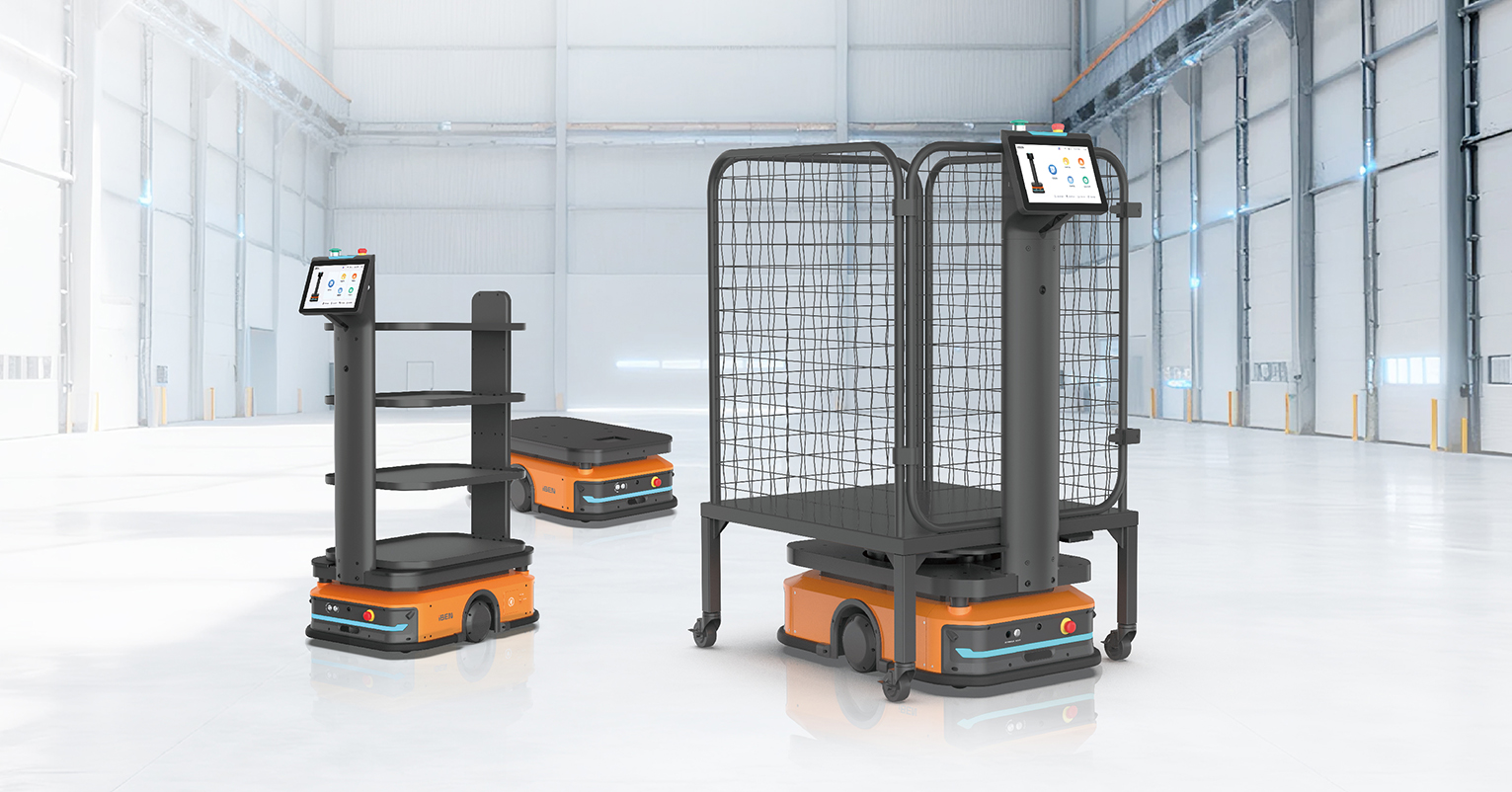
These robots are the workhorses of factories, warehouses, and distribution centers. Their primary function is moving goods—pallets, totes, bins, or raw materials—from one location to another. They replace manual forklifts, pallet jacks, and carts.
Key Characteristics:
-
Focus on payload capacity (typically 100kg to 600kg+)
-
Prioritize navigation precision and safety in dynamic environments
-
Often operate alongside human workers
-
Require robust battery systems for multi-shift operation
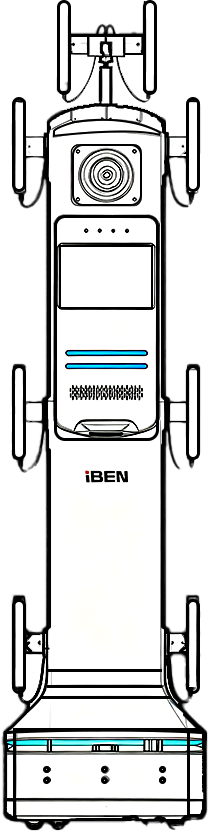
IBEN Example: The AMR Transport Robot series offers multiple load options (100kg, 300kg, 600kg) for diverse industrial scenarios. Key features include Rapid Deployment, Laser SLAM + VSLAM fusion navigation, and Self-Organizing Network & Distributed Scheduling.
Service Delivery Robots (Customer-Facing)
These robots interact directly with people. They deliver information, provide guidance, answer questions, and enhance customer experiences in public-facing environments like lobbies, exhibition halls, airports, and government centers.
Key Characteristics:
-
Emphasize human interaction and communication
-
Feature AI-powered conversation and multimodal interfaces
-
Often include customized branding and appearances
-
Prioritize aesthetics and user experience
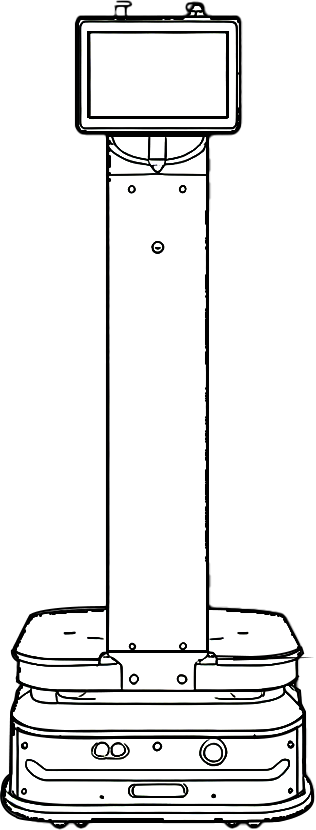
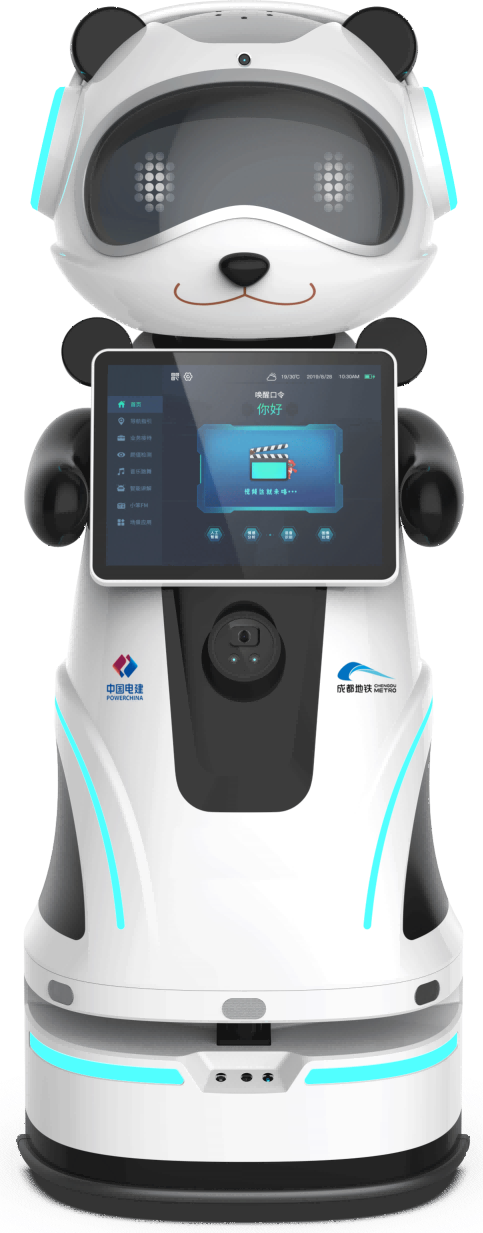
IBEN Example: The Intelligent Service Robot line leverages SLAM navigation and AI LLM technology for multimodal interaction. It supports reception, guided tours, consultations, and more, enhancing service efficiency for government and enterprise clients. Custom versions like "Jinbao" at CIIE and "Lulu" at Beijing Public Transport demonstrate the power of branding.
Specialized Delivery Robots (Niche Applications)
Some robots are designed for very specific tasks that involve "delivering" a service rather than a physical object. These include inventory counting, cleaning, disinfection, and maintenance.
Key Characteristics:
-
Purpose-built for a single, high-value function
-
Incorporate specialized sensors and tools (RFID arrays, cleaning mechanisms)
-
Often operate autonomously after hours
-
Deliver accuracy and consistency beyond human capability
IBEN Examples:
-
Intelligent Inventory Robot (iBen-S01): Achieves batch inventory via RFID with over 95% accuracy, integrating seamlessly with warehouse systems.
-
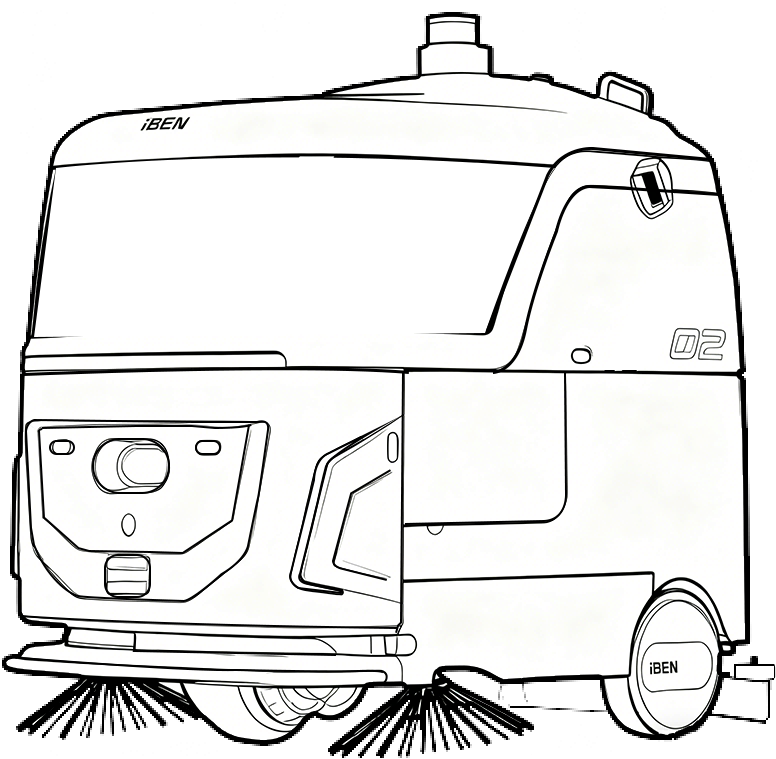
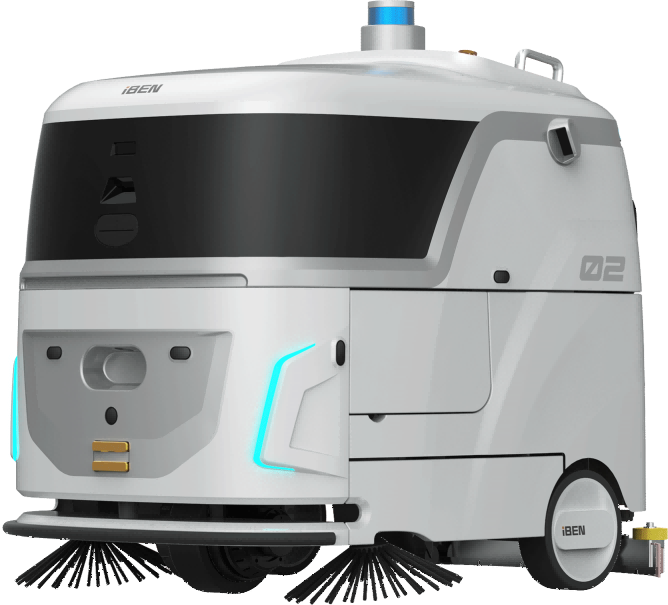
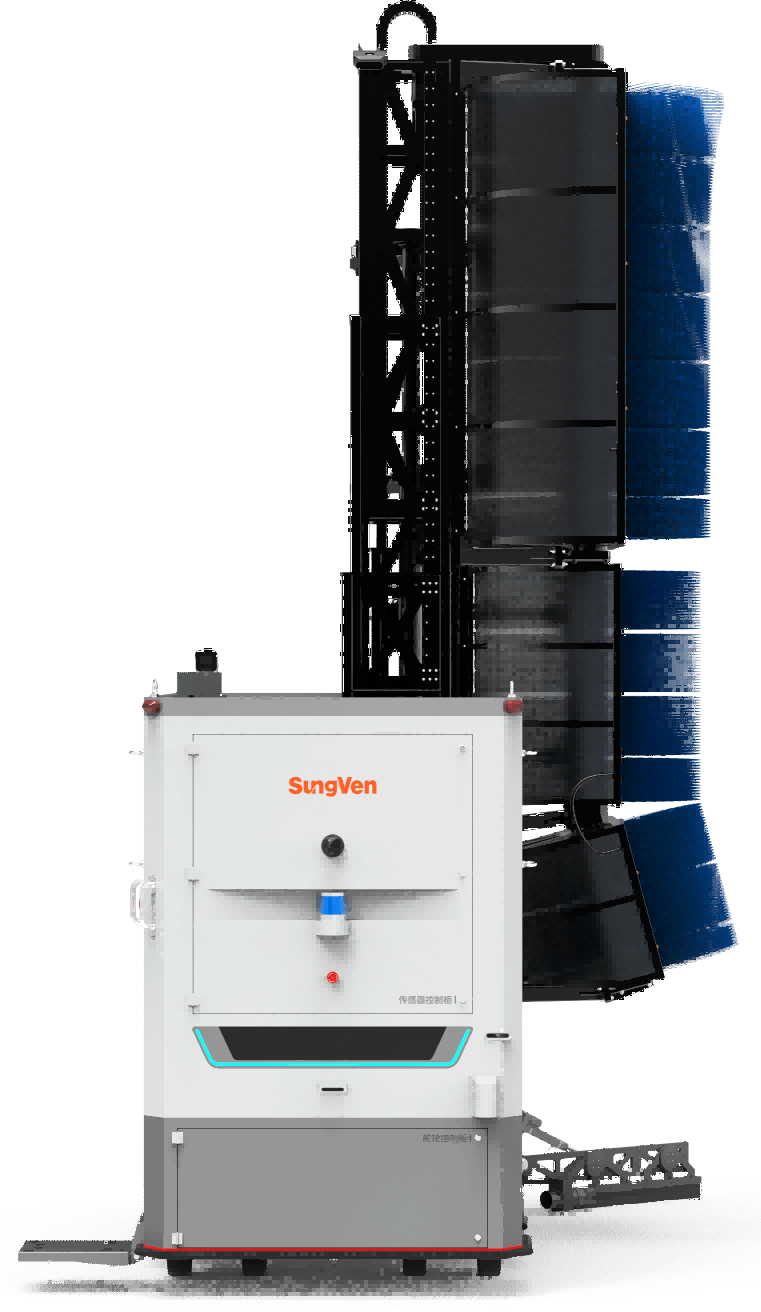
Intelligent Tool Robot Series: Includes cleaning, high-speed train washing, and disinfection robots, deeply customized for commercial and transportation scenarios.
Embodied AI Robots (Advanced Interaction)
At the cutting edge of robotics, embodied AI robots combine advanced mobility with human-like interaction capabilities. They are designed to represent brands, engage customers, and perform complex communicative tasks.
Key Characteristics:
-
Highly anthropomorphic design for natural interaction
-
Advanced AI for context-aware conversation
-
Suitable for premium marketing and VIP engagement
-
Represent the pinnacle of robotics technology
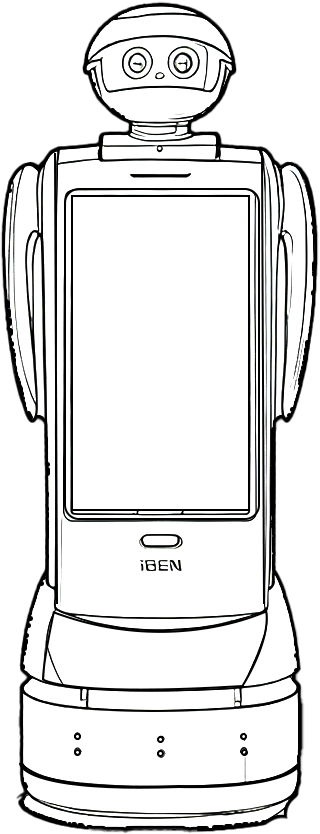
IBEN Example: The Embodied AI Robot iBen-One integrates ergonomic principles for a highly anthropomorphic form, offering service closer to natural human interaction. It is ideal for marketing, customer service, exhibition tours, and retail guidance, creating a tech-forward brand image.
Average Cost of Delivery Robots by Type (2026 Market Update)
With categories established, let us examine realistic 2026 price ranges for each robot type. These estimates reflect current market analysis and IBEN's positioning as a value-driven manufacturer.
Material Transport Robots (AMR)
| Category |
2026 Price Range (USD) |
Typical Features |
| Entry-Level |
$15,000 – $25,000 |
Basic transport, lower payload (<100kg), simple navigation (may require tape/markers), limited software |
| Mid-Range |
$25,000 – $45,000 |
Advanced SLAM navigation, 100kg-600kg payload, fleet management software, robust safety systems |
| High-End |
$50,000 – $80,000+ |
Heavy payload (>600kg), specialized configurations, custom tooling, deep integration |
IBEN Positioning: IBEN's AMR Transport Robots sit firmly in the mid-range category, offering premium features like Laser SLAM+VSLAM fusion and distributed scheduling at accessible price points. The multiple load options (100kg, 300kg, 600kg) let customers pay only for the capacity they need.
Service Delivery Robots
| Category |
2026 Price Range (USD) |
Typical Features |
| Basic |
$8,000 – $15,000 |
Limited interaction, fixed routes, basic programming, minimal AI |
| Advanced |
$15,000 – $35,000 |
AI LLM technology, multimodal interaction, autonomous navigation, customization options |
| Premium |
$40,000 – $70,000+ |
Full customization, enterprise integration, advanced AI, white-labeling |
IBEN Positioning: IBEN's Intelligent Service Robots occupy the advanced category, delivering enterprise-grade AI interaction and proven reliability across hundreds of deployments (CIIE, Beijing Public Transport, CGN, government centers). Custom branding capabilities add significant value without breaking budgets.
Specialized Delivery Robots
| Category |
2026 Price Range (USD) |
Typical Features |
| Inventory Robots |
$20,000 – $40,000 |
RFID arrays (>95% accuracy), WMS integration, autonomous navigation |
| Cleaning/Disinfection Robots |
$25,000 – $55,000 |
Specialized cleaning mechanisms, autonomous operation, safety certifications |
IBEN Positioning: The iBen-S01 Intelligent Inventory Robot delivers exceptional value in the $20,000–$40,000 range, combining high-accuracy RFID with seamless system integration. IBEN's Tool Robot series offers competitive pricing for specialized applications.
Embodied AI Robots
| Category |
2026 Price Range (USD) |
Typical Features |
| Advanced Humanoid Interaction |
$50,000 – $100,000+ |
Anthropomorphic design, natural conversation, brand ambassadorship, premium materials |
IBEN Positioning: The iBen-One Embodied AI Robot represents the forefront of robotics technology. Its highly anthropomorphic design and natural interaction capabilities justify its position in the premium segment, delivering unique marketing and engagement value for flagship deployments.
What Determines the Price? Key Cost Drivers Explained
Why does one delivery robot cost $15,000 while another costs $60,000? Understanding the factors behind the price helps you make informed trade-offs.
Navigation and Intelligence
The robot's "brain" is often its most expensive component—and the most critical for long-term value.
-
Basic Navigation: Simple line-following or beacon-based systems are cheaper to manufacture but require facility modification and offer limited flexibility.
-
Advanced SLAM Navigation: SLAM (Simultaneous Localization and Mapping) uses LiDAR and cameras to navigate dynamically without infrastructure. IBEN's Laser SLAM + VSLAM fusion represents premium navigation technology, enabling robots to operate in complex, changing environments with zero facility modification.
Price Impact: Advanced navigation adds $5,000–$15,000 to upfront costs but eliminates thousands in deployment expenses over the robot's lifetime.
Payload and Hardware
Physical capabilities directly affect manufacturing costs.
-
Payload Capacity: Heavier payloads require stronger motors, robust frames, and more powerful batteries. IBEN's multiple load options (100kg, 300kg, 600kg) let customers match capacity to needs.
-
Battery Systems: Lithium-ion batteries with fast-charging capabilities cost more than lead-acid but deliver longer life and 24/7 operation.
-
Sensors and Safety: 360° LiDAR, 3D vision cameras, and safety-rated components add cost but enable safe operation alongside humans.
Customization and Branding
Robots that represent your brand cost more to produce—but deliver unique marketing value.
IBEN's custom robots demonstrate this powerfully:
-
"Jinbao" at CIIE: Designed around the expo mascot with bilingual capabilities
-
"Lulu" at Beijing Public Transport: Branded for major transport hubs
-
"Hebao" at CGN: Modeled on the company's IP for engaging exhibitions
Customization includes physical design, branded interfaces, tailored content, and specialized features—each adding value and cost.
Software and Integration
Hardware is only half the story. The software that manages robots, connects to your systems, and provides actionable insights represents significant value.
-
Fleet Management: IBEN's Self-Organizing Network & Distributed Scheduling enables coordinated multi-robot operations without expensive central servers.
-
System Integration: Seamless connections to WMS, ERP, or custom databases require development but deliver transformative efficiency. The iBen-S01's WMS integration is a prime example.
-
AI Capabilities: Advanced AI (like IBEN's LLM-powered interaction) requires sophisticated development and computing resources.
Beyond the Sticker Price: Total Cost of Ownership (TCO)
Smart buyers evaluate more than the initial purchase price. Total Cost of Ownership over 3-5 years reveals the true value of your investment.
Deployment and Installation
| Cost Factor |
Traditional Robots |
IBEN Robots |
| Facility Modification |
High (tape, reflectors, downtime) |
Zero |
| Network Setup |
Complex, often required |
Not required |
| Deployment Time |
Weeks to months |
Rapid (often same day) |
IBEN Advantage: IBEN robots require "no site modification or network setup" —a direct quote from the X300 case study. This eliminates thousands in hidden deployment costs and gets robots working immediately.
Maintenance and Support
Downtime is the enemy of ROI. Consider:
-
Warranty coverage
-
Response times for technical support
-
Availability of spare parts
-
Remote diagnostic capabilities
IBEN Advantage: With 3*11 hour after-sales response and a global presence in 24+ countries, IBEN minimizes downtime. Remote diagnostics and smart self-check systems further reduce maintenance costs.
Training and Operations
User-friendly interfaces reduce training time and operational friction. IBEN's intuitive design, proven across 7050+ clients, gets staff comfortable quickly.
Scalability
Can you add more robots easily as your needs grow? IBEN's distributed scheduling and fleet management make scaling cost-effective—adding robots doesn't require re-architecting your control system.
Calculating ROI: When Does a Delivery Robot Pay for Itself?
The ultimate question: How quickly will your robot investment generate returns?
Labor Cost Savings
| Robot Type |
Labor Impact |
Annual Savings (per robot, developed market) |
| Material Transport Robot |
Replaces 1-2 manual operators per shift |
€35,000 – €80,000 |
| Service Robot |
Reduces front-desk/staffing needs |
€25,000 – €50,000 |
| Inventory Robot |
Eliminates dedicated counting labor |
€30,000 – €60,000 |
With average labor costs in developed markets ranging from €35,000–€55,000 per employee, a mid-range robot priced at $30,000 can pay for itself in under 12 months.
Efficiency Gains
Robots work 24/7 without breaks, sick days, or shift differentials. The IBEN X300 case study at a leading optoelectronics company demonstrates seamless integration with production rhythms, eliminating bottlenecks and increasing throughput.
Accuracy and Error Reduction
-
Transport Robots: Precise placement (±2cm) reduces product damage and misplacements.
-
Inventory Robots: The iBen-S01 achieves >95% RFID accuracy, eliminating costly stock discrepancies, preventing stockouts, and reducing emergency shipping costs.
-
Service Robots: Consistent, accurate information delivery enhances customer satisfaction and reduces human error.
Brand and Experience Value
Custom service robots create memorable brand moments. The "Jinbao" robot at CIIE became a popular attraction, generating positive media coverage and enhancing the expo experience. This marketing value, while harder to quantify, delivers real business benefits.
Real-World Examples: IBEN Delivery Robots in Action
Theory is valuable, but proof is persuasive. IBEN's extensive deployment history demonstrates real-world value across industries.
X300 AMR Transport Robot at Optoelectronics Company
A leading domestic optoelectronics company deployed the iBen X300 smart transport robot to transform precision manufacturing logistics. Key outcomes:
-
No facility modification required—robots navigated using natural features
-
Zero network setup—distributed scheduling handled communication
-
Seamless integration with existing production rhythms
-
Immediate productivity gains in material flow
This case exemplifies how IBEN's technology delivers rapid, cost-effective automation.
Custom Service Robots Across Major Institutions
IBEN service robots have been deployed in an impressive array of high-profile environments:
| Client/Event |
Location |
Robot Role |
| CIIE (China International Import Expo) |
Shanghai |
Bilingual inquiry, venue guidance |
| Beijing Public Transport |
Beijing |
Route inquiries, safety promotion |
| CGN Nuclear Power Base |
Guangdong |
Exhibition hall tours, company introduction |
| CRCC 14th Bureau Party Building Hall |
- |
Intelligent consultation, visitor support |
| Tianjin Border Inspection Station |
Tianjin |
Multilingual consultation, passenger navigation |
| Three Gorges Corporation |
- |
Exhibition hall tours, project introduction |
| Beijing Government Service Center |
Beijing |
Government service consultation |
| People's Online Party Building Hall |
- |
Interactive education, visitor engagement |
These deployments prove IBEN robots perform reliably in demanding, high-stakes environments—from international expos to government facilities to critical infrastructure.
How to Choose the Right Delivery Robot for Your Budget
With clear categories and price ranges established, here is practical guidance for your purchasing decision.
Step 1: Define Your Primary Use Case
Be specific about what you need the robot to do:
-
Move materials between points? → Material Transport Robot
-
Greet visitors and answer questions? → Service Robot
-
Count inventory accurately? → Inventory Robot
-
Clean or disinfect facilities? → Tool Robot
-
Create a high-impact brand experience? → Embodied AI Robot
Step 2: Match Features to Needs
Avoid overpaying for capabilities you don't require:
-
Payload: IBEN's 100kg, 300kg, and 600kg options let you choose appropriately.
-
AI Complexity: Basic information delivery may not require full LLM capabilities.
-
Customization: Off-the-shelf models work for many applications; save custom designs for flagship deployments.
Step 3: Consider Total Cost of Ownership
Look beyond upfront price to:
-
Deployment costs (IBEN's zero-modification advantage)
-
Maintenance and support (IBEN's 3*11 hour response)
-
Scalability (IBEN's distributed scheduling)
-
Expected lifespan and upgrade paths
Step 4: Request a Consultation
Every deployment is unique. Engage with manufacturers to discuss your specific needs.
IBEN invites you to connect: Their experts can help match the right robot to your requirements and budget, providing transparent quotes and ROI projections.
Conclusion: Invest Smartly with IBEN
The question "What is the average cost of a delivery robot?" has no single answer—but this guide has given you the framework to find the right answer for your specific needs.
Key Takeaways:
-
Delivery robots fall into five main categories: Material Transport, Service, Inventory, Tool, and Embodied AI
-
2026 price ranges vary widely: from $15,000 for basic service robots to $100,000+ for advanced embodied AI
-
The cheapest robot upfront is often the most expensive over time due to deployment, maintenance, and inflexibility
-
Advanced navigation (SLAM), payload capacity, customization, and software integration are key cost drivers
-
Total Cost of Ownership—including deployment, support, and scalability—matters more than initial price
-
IBEN offers comprehensive solutions across all categories with proven performance and global support
The price of a delivery robot is not merely an expense—it is an investment in efficiency, accuracy, customer experience, and competitive advantage. In today's tight labor market and demanding operational environment, that investment increasingly delivers returns measured in months, not years.
Ready to find the perfect delivery robot for your business?
Contact IBEN today for a personalized consultation. Our automation experts will:
-
Analyze your specific use case and requirements
-
Match you with the right robot type and configuration
-
Provide transparent pricing and ROI projections
-
Demonstrate how IBEN's robots can be deployed rapidly with zero facility modification