Introduction: Why Hospitals Are Turning to Service Robots
Healthcare systems worldwide are under increasing pressure to improve operational efficiency, enhance patient experience, and reduce labor costs. Hospitals, in particular, face challenges such as staff shortages, rising patient expectations, and the need for stricter hygiene standards.
As a result, the adoption of commercial service robots in hospitals has accelerated significantly. These robots are designed to automate repetitive tasks, assist medical staff, and improve overall workflow efficiency. From guiding visitors to delivering medical supplies, service robots are becoming an essential part of modern healthcare environments.
For hospital administrators and procurement teams, selecting the right solution is critical. A well-chosen robot not only enhances efficiency but also delivers long-term value and return on investment.
Key Applications of Commercial Service Robots in Hospitals
Patient Reception and Guidance
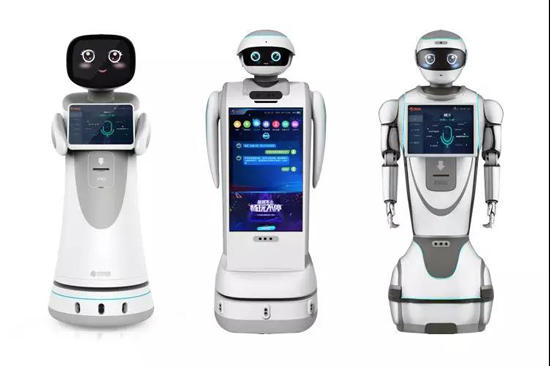
One of the most visible applications of service robots in hospitals is at the front desk. Reception robots can greet patients, provide directions, and answer frequently asked questions.
With AI-powered interaction systems, these robots can communicate naturally with users, reducing the workload of front desk staff. Their ability to navigate autonomously allows them to guide patients to specific departments, improving overall hospital experience.
Medical Delivery and Logistics
Hospitals require constant movement of supplies, including medications, lab samples, and equipment. Manual transportation is time-consuming and prone to inefficiencies.
Commercial service robots streamline internal logistics by:
This automation allows medical staff to focus more on patient care rather than routine logistics.
Disinfection and Sanitation Support
Maintaining a sterile environment is critical in hospitals. Service robots can assist in sanitation tasks by supporting disinfection processes and minimizing human exposure to hazardous environments.
These robots contribute to infection control strategies, especially in high-risk areas such as operating rooms and isolation wards.
Core Factors to Consider When Choosing a Hospital Service Robot
Navigation and Environmental Adaptability
Hospitals are complex environments with constant movement, narrow corridors, and dynamic obstacles. A robot must be able to navigate safely and efficiently.
Advanced solutions use multi-sensor fusion technologies, combining laser and visual navigation systems. This ensures precise positioning and smooth movement even in crowded environments.
Robots equipped with adaptive navigation can operate across various hospital scenarios without requiring major infrastructure changes.
Human-Robot Interaction Capabilities
A hospital service robot must be user-friendly and capable of interacting with both patients and staff.
Key interaction features include:
These capabilities improve accessibility and enhance user experience, especially for first-time visitors or elderly patients.
Deployment Flexibility and Integration
Ease of deployment is a major factor when selecting a robot. Hospitals cannot afford long installation times or complex infrastructure modifications.
Modern service robots are designed for:
-
Quick deployment without environment reconstruction
-
Seamless integration with hospital systems
-
Compatibility with IoT devices
Flexible deployment ensures minimal disruption to daily operations.
Safety and Reliability
Safety is non-negotiable in healthcare environments. Robots must operate reliably without posing risks to patients or staff.
Important safety features include:
-
Real-time obstacle detection
-
Emergency stop mechanisms
-
Multi-layer sensor protection
In addition, robots should support continuous operation with stable performance over long periods.
Scalability and Multi-Robot Coordination
As hospital needs grow, the ability to scale robotic operations becomes essential. A single robot may not be sufficient for large facilities.
Advanced systems support:
This allows hospitals to expand automation gradually while maintaining efficiency.
Comparing Different Types of Commercial Service Robots
| Robot Type |
Main Function |
Ideal Use Case |
| Reception Robots |
Patient interaction and guidance |
Hospital entrances and lobbies |
| Delivery Robots |
Transport of supplies and materials |
Pharmacies and wards |
| Disinfection Robots |
Hygiene and sterilization support |
Operating rooms and isolation areas |
Each type serves a unique purpose, and the best solution often involves a combination of multiple robot types.
Why IBEN Robots Are Ideal for Hospital Applications
Advanced Navigation Technology
IBEN robots utilize advanced navigation systems that combine laser SLAM and visual SLAM technologies. This enables precise positioning and reliable movement in complex hospital environments.
The system can dynamically adapt to environmental changes, ensuring safe and efficient operation even in high-traffic areas.
AI-Powered Interaction
IBEN integrates AI-driven interaction capabilities into its robots, enabling natural communication with users. These robots can understand and respond to queries, provide guidance, and deliver personalized experiences.
This improves both patient satisfaction and operational efficiency.
Fast Deployment and Cost Efficiency
One of the key advantages of IBEN solutions is rapid deployment. Hospitals can implement these robots without major infrastructure changes, significantly reducing setup time and costs.
Additionally, the flexible system architecture allows for easy customization based on specific hospital needs.
Proven Industry Experience
With extensive experience across multiple industries, IBEN has developed reliable and scalable robotic solutions. Its products are already deployed in a wide range of environments, demonstrating strong performance and adaptability.
Hospitals can rely on IBEN for stable, long-term automation solutions.
Future Trends of Commercial Service Robots in Healthcare
The role of service robots in hospitals is expected to expand rapidly in the coming years. Several key trends are shaping the future:
-
Integration with AI and data analytics for smarter decision-making
-
Increased use of autonomous systems for hospital-wide operations
-
Enhanced human-robot collaboration
As technology evolves, robots will become even more capable of supporting complex healthcare workflows.
Conclusion: Making the Right Investment Decision
Choosing the right commercial service robot for a hospital is a strategic decision that directly impacts efficiency, safety, and patient satisfaction.
By focusing on key factors such as navigation, interaction, deployment flexibility, and scalability, hospitals can identify solutions that deliver long-term value.
IBEN offers advanced, reliable, and flexible robotic solutions tailored to healthcare environments, making it a strong partner for hospitals seeking to embrace automation.
Investing in the right technology today will help hospitals build smarter, more efficient operations for the future.