The modern warehouse is under unprecedented pressure. E-commerce demand continues to surge, labor shortages persist across logistics markets, and customer expectations for faster delivery have never been higher. For warehouse managers and operations directors, automation is no longer a futuristic concept—it is a competitive necessity.
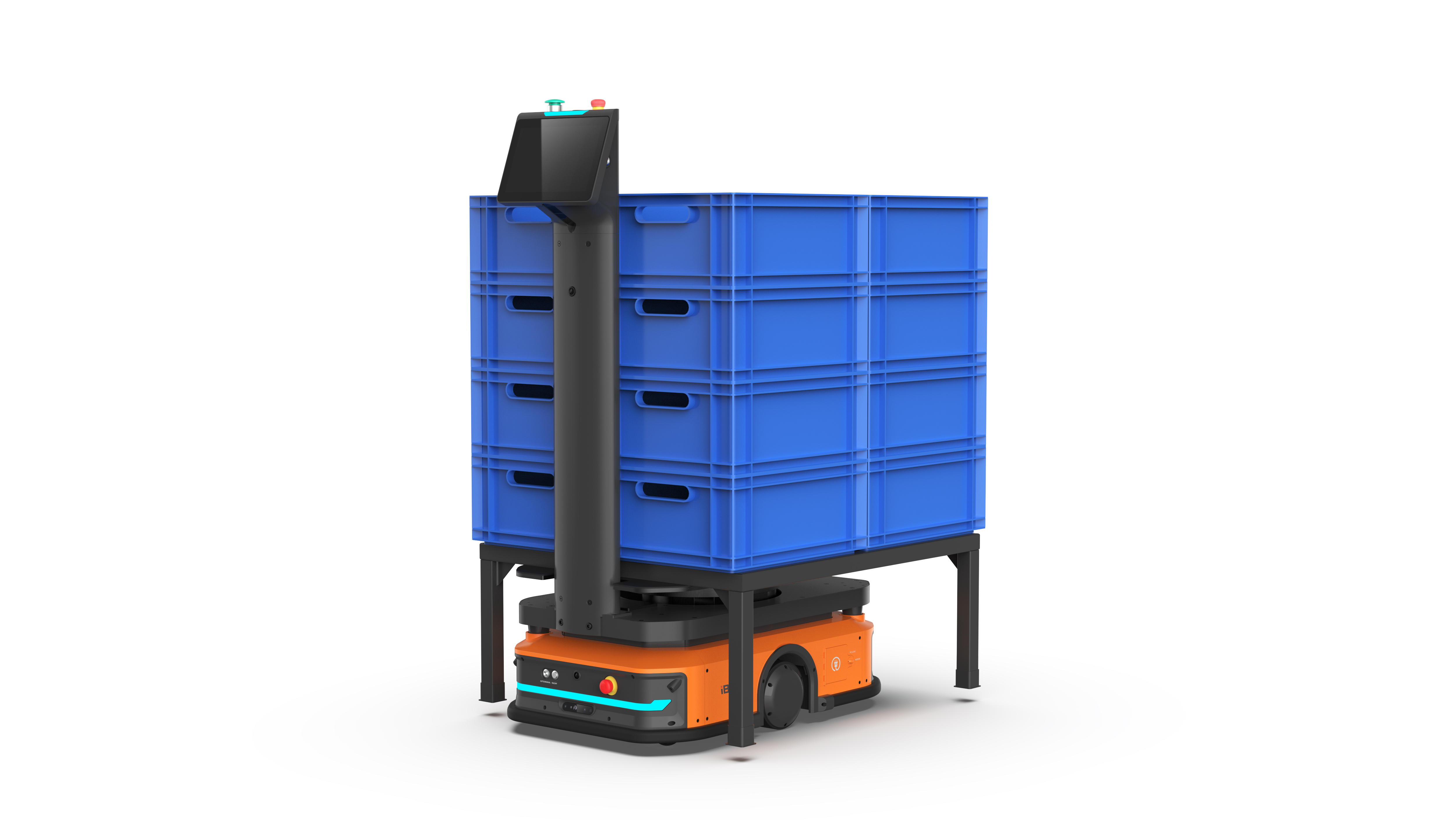
The warehouse interior handling robot has emerged as the cornerstone of this automation revolution. These autonomous mobile robots (AMRs) transport materials throughout facilities, freeing human workers for higher-value tasks while increasing throughput and accuracy. But with dozens of manufacturers and countless models on the market, how do you select the right solution for your specific operation?
This comprehensive buying guide cuts through the marketing claims to deliver a practical evaluation framework. We will examine eight critical features—from payload capacity to software integration—and provide clear criteria for matching robot capabilities to your warehouse reality. With insights drawn from thousands of real-world deployments, including those by iBEN Robot, this guide will help you make an informed investment that delivers measurable ROI.
Understanding Warehouse Interior Handling Robots
What Is a Warehouse Interior Handling Robot?
A warehouse interior handling robot is an autonomous mobile robot designed specifically to transport materials within warehouse and distribution center environments. Unlike automated guided vehicles (AGVs) that follow fixed paths defined by magnetic tape or QR codes, modern handling robots use advanced sensors and software to navigate freely, adapting to layout changes and dynamic obstacles in real-time.
These robots perform a range of essential functions:
-
Receiving: Moving incoming pallets from dock doors to staging areas
-
Putaway: Transporting goods from receiving to storage locations
-
Replenishment: Delivering inventory to pick faces as stock depletes
-
Picking support: Meeting pickers at locations to receive completed orders
-
Inter-zone transport: Moving materials between different warehouse areas
-
Shipping staging: Delivering completed orders to outbound dock doors
Key Types of Warehouse Handling Robots
Understanding the different robot types helps narrow your search to solutions matching your primary applications.
| Robot Type |
Typical Payload |
Primary Applications |
| Pallet-Moving AMRs |
500kg–1500kg |
Full pallet transport, receiving, putaway, shipping staging |
| Tugger/Tow Robots |
500kg–2000kg (towed load) |
Pulling multiple carts, train operations, cross-dock transport |
| Unit Load Carriers |
Under 500kg |
Tote transport, case handling, piece picking support |
| Collaborative Pick Assist |
Under 100kg |
Following pickers, meeting at pick locations, reducing walk time |
8 Critical Features to Evaluate When Buying a Warehouse Interior Handling Robot
-
Payload Capacity and Physical Configuration
The most fundamental specification is whether the robot can physically handle your loads. This requires matching both weight and dimensions.
Key Considerations:
-
Maximum payload: Calculate your heaviest typical load and add a 20% safety margin. A robot straining at its limits will experience faster wear and reduced battery life.
-
Deck configuration: Flat decks suit pallets and cages; lift-and-carry mechanisms allow robots to pick up and deposit loads at varying heights (floor level, conveyors, workstations).
-
Compatibility: Ensure deck height matches your existing rack levels, conveyor infeed heights, and workstation ergonomics.
iBEN Robot offers a complete range from 100kg to 1500kg payloads, with both flat transport and lift-and-carry configurations. This breadth allows warehouses to standardize on a single supplier across different applications.
-
Navigation Technology: SLAM vs. Infrastructure-Dependent Systems
Navigation technology determines how flexibly the robot moves and how easily it adapts to warehouse changes. This is perhaps the most important technical differentiator.
| Navigation Type |
How It Works |
Pros |
Cons |
| Magnetic Tape / QR Code |
Follows physical markers installed on floor |
Low robot cost, simple technology |
Expensive facility modifications, inflexible to layout changes, tape damage requires maintenance |
| Laser SLAM Only |
Uses LiDAR to map environment and locate itself |
No infrastructure needed, adapts to some changes |
Can struggle in highly dynamic environments or featureless spaces |
| Laser SLAM + VSLAM Fusion |
Combines laser ranging with visual recognition |
Excellent reliability, handles dynamic environments, re-localizes if moved |
Higher processing requirements |
| |
|
|
|
Why Dual SLAM Matters for Warehouses:
Warehouses are dynamic environments. Racks get moved. Inventory blocks sight lines. Temporary staging areas appear during peak seasons. A robot relying solely on laser SLAM may become confused when its map no longer matches reality. Adding VSLAM—visual recognition of features like signage, columns, and unique rack markings—provides redundant localization that maintains reliability through changes.
iBEN Robot employs Laser SLAM + VSLAM fusion across its AMR lineup, validated across thousands of warehouse deployments. This technology enables reliable operation even as warehouse layouts evolve.
-
Safety Systems and Certification
Warehouse robots operate alongside people, forklifts, and other moving equipment. Safety is non-negotiable.
Essential Safety Features:
-
360° obstacle detection: LiDAR, depth cameras, and ultrasonic sensors providing complete coverage around the robot
-
Emergency stop functions: Both software-controlled stops and physical emergency buttons
-
Speed control: Automatic slowing in pedestrian-dense zones
-
Audible and visual warnings: Indicators that communicate robot intent to nearby workers
Safety Certifications to Verify:
-
CE marking: Required for European markets
-
UL certification: North American safety standard
-
ISO 13849: Safety-related parts of control systems
-
IP ratings: Dust and moisture protection (IP54 minimum for warehouse environments)
iBEN Robot integrates multi-sensor fusion with 360° perception, creating redundant safety layers that detect obstacles at all heights—from low pallet edges to high forklift masts.
-
Battery Life and Charging Architecture
Battery performance directly impacts robot availability and throughput. Evaluate both runtime and charging approach.
Key Questions:
-
Runtime per charge: How many hours of continuous operation can you expect? (Typical: 8–12 hours depending on duty cycle)
-
Charging time: How long to full recharge? (Faster is better for multi-shift operations)
-
Opportunity charging: Can the robot charge during brief idle periods to maintain availability?
-
Auto-docking: Does the robot navigate to chargers autonomously?
-
Hot-swap batteries: Can batteries be exchanged manually for continuous operation?
Best Practice:
Look for robots that support opportunity charging—returning to charging stations during natural lulls in activity. This maintains high availability without requiring dedicated charging shifts.
iBEN robots feature fast-charge technology and auto-docking, enabling continuous operation across multiple shifts with minimal intervention.
-
Software and Fleet Management Integration
A single robot is useful. A coordinated fleet transforms warehouse operations. The software platform is as important as the hardware.
Software Capabilities to Evaluate:
-
Traffic management: How does the system prevent collisions and congestion when multiple robots operate simultaneously?
-
WMS/ERP integration: Can the robot receive tasks directly from your warehouse management system?
-
API availability: Can your team or integrator create custom workflows?
-
Real-time monitoring: Does the dashboard show robot status, battery levels, task completion, and alerts?
-
Analytics: What data can you extract to optimize operations?
Integration Depth Matters:
The most valuable robots become data nodes in your digital infrastructure, providing real-time visibility into material movement and highlighting optimization opportunities.
iBEN Robot offers open API architecture for connection to leading WMS platforms, plus distributed scheduling that enables robust multi-robot coordination without a single point of failure.
-
Environmental Adaptability
Warehouses come in all shapes and conditions. Your robot must handle your specific environment—not just a pristine showroom floor.
Physical Capabilities to Assess:
-
Narrow aisle navigation: What is the minimum aisle width the robot can navigate? (Critical for high-density storage)
-
Floor surface tolerance: Can the robot handle uneven floors, expansion joints, transitions between surfaces?
-
Obstacle clearance: Maximum step height and gap width the robot can traverse
-
Temperature range: Will the robot operate reliably in freezer/cooler environments or unheated warehouses?
-
Dust and moisture: IP rating appropriate for your environment
Real-World Requirements:
Many warehouses feature less-than-perfect floors, tight aisles, and transitions between dock plates and warehouse floors. Robots must handle these realities without constant intervention.
iBEN robots demonstrate exceptional environmental adaptability with 60cm narrow passage capability, 2cm step crossing, and 3.5cm gap traversal—features developed through real-world warehouse deployments.
-
Deployment Speed and Ease of Use
Time-to-value matters. A robot that takes months to deploy delays your ROI and strains internal resources.
Deployment Factors:
-
Infrastructure requirements: Does the robot require floor markers, reflectors, or network infrastructure installation?
-
Mapping time: How long to map a typical warehouse footprint? (Hours, days, weeks?)
-
User interface: Can non-technical warehouse staff assign tasks and monitor operations?
-
Training requirements: What training do operators and maintenance staff need?
The Ideal Scenario:
Modern AMRs should deploy in days, not months, with minimal facility modifications. Mapping should be intuitive, and daily operation should require no more than basic computer literacy.
iBEN Robot emphasizes rapid deployment tools that enable most warehouses to operationalize robots within a single day, with no facility modifications required.
-
Total Cost of Ownership and ROI Timeline
Purchase price tells only part of the story. Total cost of ownership (TCO) includes maintenance, software licenses, support, and scalability costs.
TCO Components:
-
Initial purchase price: Hardware, software licenses, deployment services
-
Ongoing costs: Annual software fees, maintenance parts, support contracts
-
Scalability costs: Cost per additional robot as you expand the fleet
-
Downtime costs: Reliability directly impacts productivity
Typical ROI Timeline:
Well-matched warehouse handling robots typically deliver payback within 12–24 months through:
-
Labor savings (reduced walking, more productive use of human workers)
-
Increased throughput (faster, more consistent material movement)
-
Reduced error rates (automated transport eliminates misdeliveries)
-
Scalability without proportional labor
Comparison Table: Key Feature Considerations
| Feature |
Minimum Acceptable |
Preferred |
iBEN Robot Offering |
| Payload Capacity |
Matches 80% of loads |
Matches 100% of loads + 20% margin |
100kg–1500kg multiple options |
| Navigation |
Laser SLAM |
Laser SLAM + VSLAM fusion |
Dual SLAM technology |
| Safety Sensors |
Front LiDAR only |
360° multi-sensor fusion |
360° perception + depth cameras |
| Battery Runtime |
6 hours |
8+ hours with opportunity charging |
Fast-charge, auto-docking |
| Narrow Aisle |
1 meter |
<80 cm |
60 cm passage capability |
| WMS Integration |
API available |
Pre-built connectors |
Open API architecture |
| Deployment |
2–3 days |
<1 day |
Rapid deployment tools |
| Environmental Tolerance |
Smooth floors only |
Uneven floors, ramps, transitions |
2cm step, 3.5cm gap crossing |
Matching Robot Types to Warehouse Applications
Different warehouse zones have different requirements. Match robot type to application for optimal results.
| Warehouse Zone |
Typical Tasks |
Recommended Robot Type |
Key Considerations |
| Receiving Dock |
Move incoming pallets to staging/storage |
Pallet-moving AMR (1000kg+) |
High payload capacity, rugged construction for dock environment |
| Bulk Storage |
Long-distance pallet transport to reserve locations |
Pallet-moving AMR |
Navigation accuracy over distance, extended battery life |
| Case Pick Area |
Replenish pick faces from reserve storage |
Unit load carrier or tugger |
Speed, frequent interaction with pickers, compact size |
| Piece Pick Zone |
Transport totes from pick to pack stations |
Unit load carrier |
Multiple totes per trip, frequent charging cycles |
| Packing/Shipping |
Move completed orders to outbound staging |
Tugger or unit load carrier |
Throughput matching, integration with sortation systems |
| Cross-Dock |
Rapid transfer between inbound and outbound docks |
High-speed AMR |
Speed, traffic management in congested area |
| Freezer/Cooler |
Transport temperature-controlled goods |
Cold-rated AMR |
Low-temperature battery and component specifications |
Common Mistakes When Buying Warehouse Interior Handling Robots
Mistake 1: Overlooking Facility Constraints
Buyers often evaluate robots in ideal conditions, then struggle when deployed in real facilities. Measure your:
-
Narrowest aisle widths (including pallet overhang)
-
Worst floor conditions (cracks, uneven seams, slopes)
-
Elevator sizes and door widths
-
Ramp gradients
Mistake 2: Ignoring Software Integration Requirements
Assuming robots will "just work" with your existing WMS leads to integration delays and custom development costs. Verify API compatibility and integration support early.
Mistake 3: Underestimating Training Needs
Staff must understand robot workflows, safety protocols, and basic troubleshooting. Factor training time and resources into your implementation plan.
Mistake 4: Buying on Price Alone
Lowest-cost robots often have hidden limitations—poor navigation reliability, limited software capabilities, or inadequate support. Calculate TCO, not just purchase price.
Mistake 5: No Scalability Plan
Adding robots later may require different fleet management software or create compatibility issues. Choose a platform that scales seamlessly from pilot to full deployment
Why iBEN Robot Stands Out for Warehouse Automation
Proven Warehouse Deployments
iBEN Robot brings nearly a decade of robotics experience to warehouse automation:
-
8,000+ cumulative robot shipments across logistics and manufacturing
-
15,000+ enterprise customers including major warehousing operations
-
500+ patents and IP assets protecting core technologies
Technology Built for Real Warehouses
iBEN robots are engineered for the realities of warehouse environments:
-
Dual SLAM navigation (Laser SLAM + VSLAM fusion) handles dynamic environments with moving racks, people, and equipment
-
Extreme passage capabilities navigate tight warehouse aisles down to 60cm
-
360° safety perception protects workers and inventory with redundant sensor coverage
-
Environmental tolerance handles uneven floors, ramps, and transitions
Flexible Integration Options
iBEN understands that warehouses operate on diverse software stacks:
-
Open APIs for connection to leading WMS platforms
-
Distributed scheduling for robust multi-robot coordination without single points of failure
-
IoT integration for automated doors, elevators, and equipment
Global Support Infrastructure
Your robots need support wherever you operate:
-
Regional teams in Europe (Germany focus), Americas, and Asia
-
Multi-language technical documentation and training materials
-
Partner network across 20+ countries providing local support
Questions to Ask Before Purchasing
Before finalizing any robot purchase, schedule detailed discussions with potential suppliers and ask these questions:
-
Can the robot navigate my narrowest aisles and worst floor conditions? (Request a site visit or provide floor measurements for verification.)
-
How does the robot handle peak season volume surges? (Does the software manage traffic effectively as robot count increases?)
-
What happens when a robot loses its way—how does it recover? (Autonomous recovery vs. requiring human intervention.)
-
Can I add more robots later without replacing my software? (Verify fleet management scalability.)
-
What training do you provide for my warehouse team? (On-site, virtual, documentation, ongoing support.)
-
How are software updates handled? (Frequency, process, potential downtime.)
-
What is your spare parts availability in my region? (Local stock vs. international shipping.)
-
Can you provide references from warehouses similar to mine? (Industry, size, application match.)
Conclusion: Making the Right Choice for Your Warehouse
Selecting a warehouse interior handling robot is a significant investment that will impact your operations for years. The right choice delivers rapid ROI, scalable throughput, and reliable performance. The wrong choice creates downtime, frustrated staff, and missed opportunities.
Use the framework outlined in this guide to evaluate potential solutions systematically. Match payload capacity to your loads. Prioritize navigation technology that adapts to dynamic environments. Verify safety systems protect your people. Ensure software integrates with your existing systems. And validate environmental adaptability against your facility's realities.
The warehouse automation market offers many options, but not all robots are created equal. Look for partners with proven deployments, mature technology, and the infrastructure to support you as you scale.
iBEN Robot has helped hundreds of warehouses transform their material handling operations with reliable, adaptable, and scalable AMR solutions. Contact iBEN today to discuss how their warehouse interior handling robots can optimize your facility.
Visit iBEN Robot to learn more and connect with a warehouse automation specialist.