In an era where automation is reshaping industries worldwide, autonomous service robots have emerged as pivotal tools driving efficiency, cost reduction, and operational innovation. According to CHISHIZHIXUN (China Insights Consultancy), the global market for autonomous service robot-related solutions is projected to soar from RMB 38.7 billion in 2024 to RMB 162.1 billion by 2029, boasting a staggering compound annual growth rate (CAGR) of 33.1%. As penetration rates climb from 8.2% to 20.2% over the same period, businesses across sectors are increasingly turning to these intelligent machines to streamline processes and enhance service quality. But what exactly are autonomous service robots, and what technologies and classifications define them? This article delves into the fundamentals of these game-changing devices, with insights from iBen Robot (Beijing Huiwen Technology), a national high-tech enterprise leading the industry with over 5,000+ intellectual property rights and services for 15,000+ global clients.
What Is an Autonomous Service Robot?
At its core, an autonomous service robot is an intelligent device that combines artificial intelligence (AI) with advanced hardware to perform specific service or operational tasks without continuous human intervention. Unlike traditional remote-controlled robots or fixed automation systems, these robots possess three key capabilities that set them apart: autonomous perception, decision-making, and execution.
Key Characteristics of Autonomous Service Robots
-
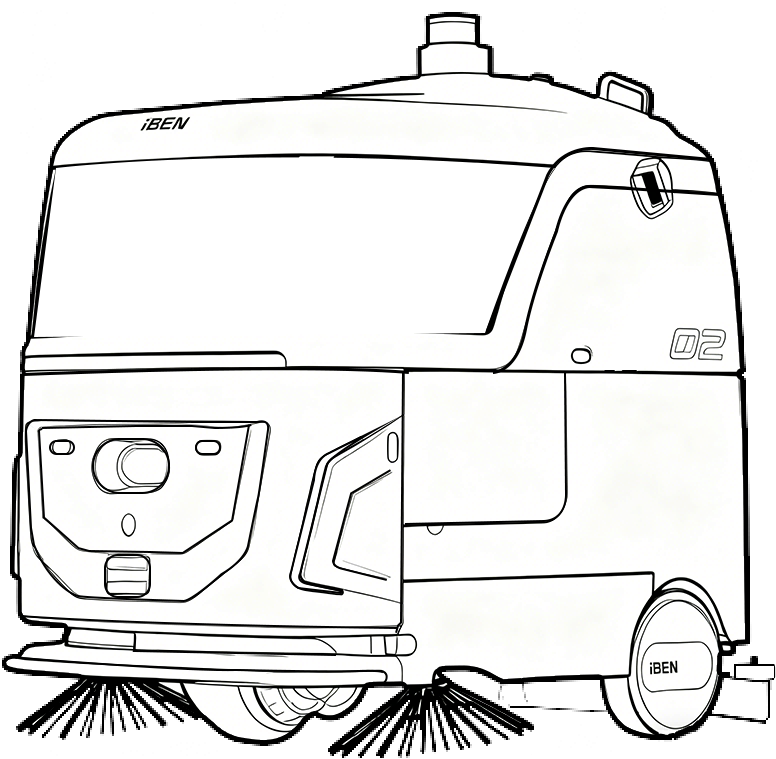
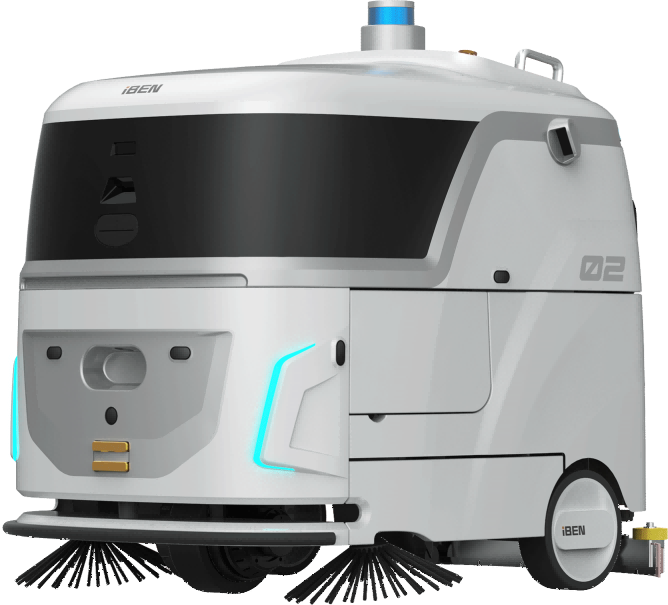
Autonomous Perception: They can sense their surrounding environment using sensors, cameras, and lidar, enabling them to detect obstacles, navigate complex spaces, and interact with humans or other devices. For example, iBen Robot’s cleaning robot P30 features 360° stereo perception technology, preventing collisions, slips, and falls in dynamic environments like shopping malls or factories.
-
Autonomous Decision-Making: Powered by AI algorithms and cloud-based management platforms, they analyze real-time data to adjust their actions—whether rerouting to avoid congestion, prioritizing tasks, or adapting to changes in workflow.
-
Autonomous Execution: They complete tasks independently, from material transportation in warehouses to customer greetings in hotels, forming a closed-loop service without the need for constant human oversight.
-
Interactive Capabilities: Many modern autonomous service robots support multimodal interaction, including natural language processing (NLP), visual recognition, and touchscreen communication, making them user-friendly for both employees and customers.
The value of these robots lies in their ability to replace repetitive, labor-intensive tasks while improving accuracy and efficiency. For instance, iBen Robot’s industrial autonomous mobile robots (AMRs) boost material handling efficiency by 40% compared to manual operations, significantly reducing labor costs for manufacturing and logistics enterprises. Unlike conventional robots that are limited to single scenarios, autonomous service robots offer flexibility, adapting to diverse industries from hospitality to high-tech manufacturing.
Core Technologies Powering Autonomous Service Robots
Autonomous service robots rely on a synergy of hardware and software technologies to deliver reliable, intelligent performance. Below are the foundational technologies that drive their capabilities, with a focus on innovations from industry leaders like iBen Robot.
-
Navigation & Localization Technology
Navigation is the backbone of autonomous operation, and the most advanced solutions today leverage laser SLAM + visual SLAM fusion technology. This hybrid approach combines the precision of laser radar with the environmental adaptability of visual navigation, enabling robots to operate seamlessly in complex, unstructured spaces—from crowded shopping malls to busy factory floors.
iBen Robot has refined this technology through years of validation in commercial and industrial settings. Its iBen X300 series industrial AMRs, for example, use laser SLAM + VSLAM fusion to achieve millimeter-level positioning accuracy, a critical requirement for docking with production lines and warehouse equipment. Unlike traditional magnetic strip navigation (which requires expensive environmental modifications) or single visual navigation (prone to interference), this fusion 方案 eliminates the need for extensive site renovations while ensuring stable operation in human-robot collaborative environments.
-
Perception & Interaction Technology
To interact effectively with humans and their surroundings, autonomous service robots integrate cutting-edge perception and interaction tools:
-
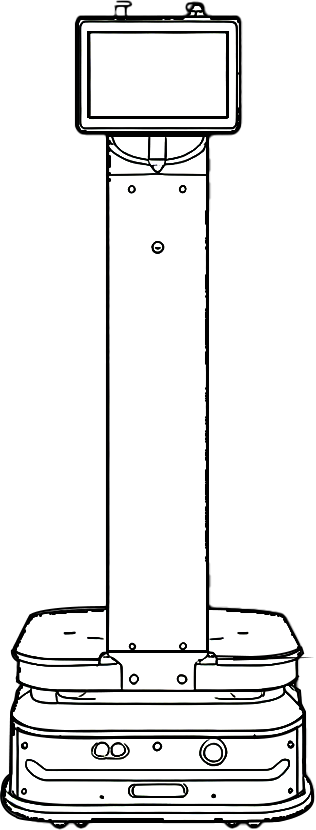
Multimodal Interaction: iBen Robot’s iBen A02 “Smart Large Screen” robot features dual-screen linkage, creating a more human-like interaction experience through voice, touch, and visual feedback. This design is particularly popular in exhibition halls and hotels, where robots serve as greeters and guides.
-
AI Large Model Integration: Robots like the iBen B01 “Smart Fish” incorporate large language models (LLMs) to enable natural, context-aware conversations. They can answer customer queries, provide product information, and even adapt their communication style to different users.
-
360° Environmental Perception: Equipped with multiple sensors, cameras, and lidar, robots can detect obstacles, humans, and equipment in real time. The iBen P30 cleaning robot, for instance, uses this technology to navigate narrow corridors and avoid collisions with pedestrians or furniture.
-
Scheduling & Control Technology
For scenarios requiring multiple robots to work together—such as warehouse logistics or factory material transportation—self-organizing network & distributed scheduling technology is essential. This system allows robots to communicate with each other, allocate tasks dynamically, and optimize routes to avoid bottlenecks.
iBen Robot’s cloud-based “Cloud-Pipe-Terminal” solution takes this a step further, enabling centralized management of multiple robots across locations. Through the cloud platform, administrators can monitor robot status, assign tasks, and analyze operational data to identify efficiency gains. Additionally, IoT integration allows robots to connect with warehouse management systems (WMS), manufacturing execution systems (MES), and other industrial equipment, creating a fully interconnected smart ecosystem.
-
Hardware Foundation
Robust hardware is critical for withstanding the demands of diverse applications:
-
Mobile Chassis: Designed for specific use cases—lightweight chassis for commercial settings (e.g., hotels, malls) and heavy-duty chassis for industrial environments (e.g., factories, warehouses).
-
Battery Technology: High-capacity batteries ensure long operational hours. The iBen P30 cleaning robot, for example, is equipped with a 200Ah large battery, supporting continuous operation for over 4 hours on a single charge.
-
Specialized Components: Features like lifting mechanisms (e.g., the iBen X300 series’ 60mm maximum lifting height), multi-axis humanoid robotic arms, and large-capacity storage tanks (for cleaning or disinfection robots) enhance versatility.
Technology Comparison: Traditional vs. Advanced Solutions
| Technology Type |
Traditional Robot Solutions |
iBen Robot’s Autonomous Service Robot Solutions |
Core Advantages |
| Navigation Technology |
Single visual navigation / magnetic strip navigation |
Laser SLAM + VSLAM fusion |
Adapts to complex scenes; no environmental modifications required |
| Scheduling Capability |
Single robot operation |
Self-organizing network & distributed scheduling |
Multi-robot collaboration; 40% efficiency improvement |
| Interaction Method |
Single voice / button control |
Multimodal dual-screen linkage |
Human-like experience; lower learning curve |
| Environmental Adaptability |
Limited to structured spaces |
360° perception + IoT integration |
Operates in dynamic, unstructured environments |
Classifications of Autonomous Service Robots
Autonomous service robots can be categorized based on application scenarios, functions, and technical levels, reflecting their versatility across industries. Below is a detailed breakdown, with examples from iBen Robot’s product lineup.
-
By Application Scenario
Commercial Service Robots
These robots are designed for customer-facing or public environments, focusing on enhancing service quality and user experience:
-
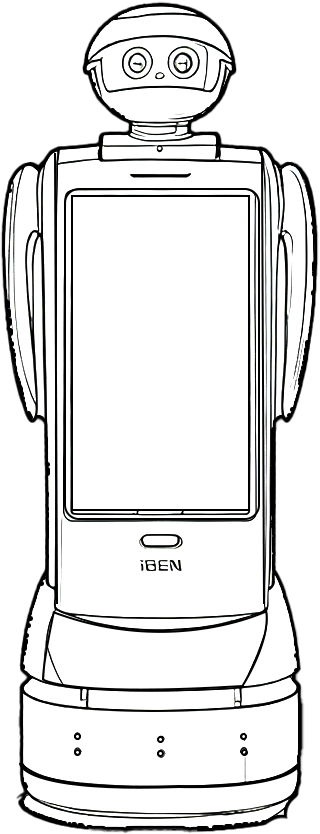
Greeting & Guiding Robots: The iBen A03 “Smart Agile” robot is a standout example, serving as the official service robot for the China International Import Expo (CIIE). It offers smart guided tours, multimodal interaction, and can navigate complex spaces like exhibition halls and hotels with ease. iBen Robot leads the industry in revenue for greeting and explanation robots, with the highest shipment volume of customized explanation robots.
-
Cleaning Robots: The iBen P30 intelligent cleaning robot supports two cleaning modes—deep cleaning (0.1m/s) and quick cleaning (0.2m/s)—and features self-cleaning 污水 tanks and automatic water refilling/draining. It is widely used in shopping malls, airports, and office buildings.
-
Disinfection Robots: The iBen M01 and M02 disinfection robots use dual sterilization methods (atomization + UV light) with a 360° spray angle and 3m spray height. The M02 model supports personalized appearance customization, making it suitable for hospitals, factories, and public spaces.
Industrial Service Robots
Tailored for manufacturing, logistics, and warehouse environments, these robots prioritize precision, durability, and efficiency:
-
Industrial Handling Robots (AMRs): The iBen X300 series (X300B, X300B-L, X300T) is designed for material transportation in warehouses, production lines, and electronic manufacturing facilities. It supports plastic pallet delivery, multi-layer placement, and reduces the need for warehouse modifications. The X300T model is ideal for electronic precision product lines, offering high stability and load capacity.
-
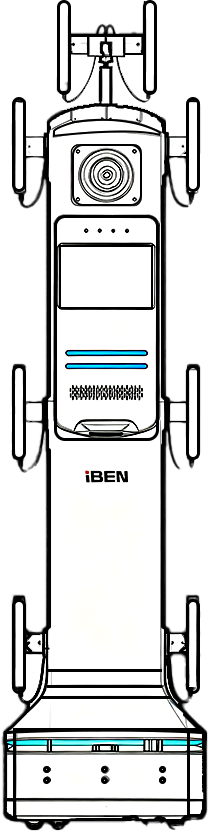
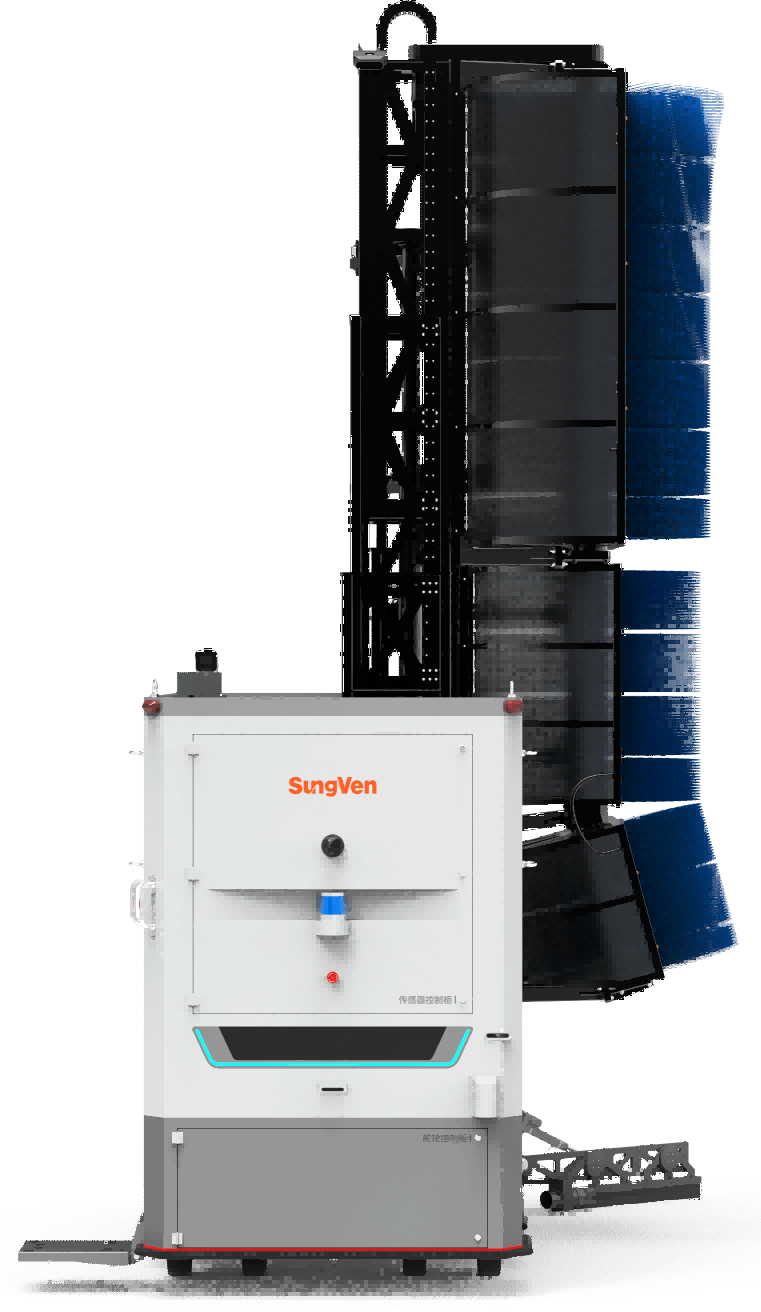
Intelligent Inventory Robots: The iBen S01 inventory robot uses RFID technology for batch inventory checks and features a lifting pole that can reach up to 5 meters. It automates inventory tasks, reducing errors and saving time for logistics enterprises.
-
Specialized Industrial Robots: iBen Robot also offers customized solutions for niche industries, such as high-speed train cleaning robots and large-area disinfection robots with high-performance chassis and lifting mechanisms.
-
By Function
-
Service-Oriented: Focus on customer interaction, including greeting, guiding, consulting, and explaining (e.g., iBen A03, iBen B01).
-
Operational-Oriented: Perform practical tasks like material handling, inventory management, cleaning, and disinfection (e.g., iBen X300 series, iBen P30, iBen M01).
-
Management-Oriented: Act as smart central controllers, connecting with other devices to enable unified management and data analysis (e.g., iBen A02).
-
By Technical Level
-
Basic Level: Complete single fixed tasks (e.g., simple material delivery without complex navigation).
-
Advanced Level: Support multi-task collaboration and environmental adaptation (e.g., iBen X300 series AMRs that operate in high-temperature, dusty industrial environments).
-
Premium Level: Feature AI self-learning and deep scene customization (e.g., iBen Robot’s hardware and software customization services, which adapt to the unique needs of 15,000+ enterprise clients).
Classification & Application Case Table
| Robot Type |
Representative Product (iBen Robot) |
Core Functions |
Target Scenarios |
| Greeting & Guiding Robot |
iBen A03 |
Smart guided tours, multimodal interaction |
Exhibition halls, hotels, shopping malls |
| Industrial Handling Robot |
iBen X300B |
Pallet delivery, multi-robot collaboration |
Warehouses, electronic production lines |
| Intelligent Inventory Robot |
iBen S01 |
RFID batch inventory, 5m lifting height |
Warehouses, logistics centers |
| Disinfection Robot |
iBen M02 |
Atomization + UV sterilization, 360° spray |
Hospitals, factories, public spaces |
| Cleaning Robot |
iBen P30 |
Deep/quick cleaning, automatic water management |
Malls, airports, office buildings |
Why Autonomous Service Robots Are Transforming Industries
The rapid adoption of autonomous service robots is driven by their ability to address key industry pain points—labor shortages, rising costs, and the need for greater efficiency and accuracy. Here’s how they are reshaping major sectors:
-
Booming Market Penetration
The global autonomous service robot market is expanding at an unprecedented rate, with several key segments leading growth:
-
Warehouse Automation: The global warehouse automation solutions market is expected to reach RMB 804 billion by 2029, providing massive opportunities for AMRs and inventory robots.
-
Smart Logistics: China’s smart logistics market is projected to see the fastest growth in mobile automation equipment, reaching nearly RMB 150 billion by 2025.
-
Diversified Industry Demand: From e-commerce logistics (adapting to fluctuating order volumes) to automotive manufacturing (solving “last 100 meters” material delivery) and pharmaceutical/food industries (meeting GMP standards for sterile handling), autonomous service robots are tailored to diverse sector-specific needs.
-
Key Industry Impacts
-
Cost Reduction: By replacing manual labor in repetitive tasks, robots lower long-term operational costs. iBen Robot’s industrial AMRs, for example, reduce labor costs by 30-50% for manufacturing clients while improving efficiency by 40%.
-
Accuracy & Reliability: Robots eliminate human errors in tasks like inventory management and material transportation. For instance, the iBen S01 inventory robot achieves near-perfect accuracy, reducing inventory discrepancies by over 90%.
-
Safety Enhancement: In high-risk environments (e.g., chemical factories, sterile pharmaceutical facilities), robots reduce human exposure to hazards. Disinfection robots like the iBen M01 also play a critical role in public health, minimizing the spread of pathogens.
-
Scalability: Autonomous service robots can easily scale with business growth. The self-organizing network technology allows enterprises to add more robots to their fleet without overhauling existing systems.
iBen Robot’s Autonomous Service Robot Solutions
As a leading provider of scenario-based intelligent robot solutions, iBen Robot (Beijing Huiwen Technology) has established itself as an industry pioneer since its founding in 2016. The company’s core strengths lie in its mature technology platform migration capabilities, extensive intellectual property portfolio (500+ patents), and deep understanding of customer needs.
Key Advantages of iBen Robot’s Solutions
-
Technology Migration: iBen Robot’s core technologies—including laser SLAM + VSLAM fusion, self-organizing network scheduling, and multimodal interaction—have been validated in commercial scenarios (malls, hotels, exhibition halls) and seamlessly adapted to industrial environments, ensuring reliability and performance.
-
Customization Capabilities: The company offers end-to-end hardware and software customization, supporting personalized appearance, function, and integration with existing enterprise systems. This flexibility has made iBen Robot a trusted partner for 1000+ key account clients.
-
Global Presence: With strong market performance in Japan, India, Thailand, Malaysia, Indonesia, and Germany (a key KPI market), iBen Robot delivers localized solutions that comply with regional standards and industry requirements.
-
Comprehensive Product Matrix: From commercial greeting robots to industrial AMRs and specialized cleaning/disinfection robots, iBen Robot covers the full spectrum of autonomous service robot needs, supported by a “Cloud-Pipe-Terminal” ecosystem that enables centralized management and seamless integration.
Conclusion
Autonomous service robots are no longer a futuristic concept—they are a present-day reality transforming industries worldwide. Defined by their ability to perceive, decide, and execute independently, these robots rely on advanced technologies like SLAM fusion, AI, and distributed scheduling to deliver efficiency, cost savings, and enhanced user experiences. With diverse classifications tailored to commercial and industrial scenarios, they offer flexible solutions for businesses of all sizes.
As the market continues to grow at a CAGR of 33.1%, choosing the right autonomous service robot partner is critical. iBen Robot’s proven track record, technical expertise, and customer-centric approach make it a standout choice for enterprises seeking to embrace automation. Whether you need a greeting robot for your hotel, an AMR for your warehouse, or a customized solution for your industry, iBen Robot delivers reliable, intelligent products that drive real value.
Visit
iBen Robot’s official website to explore their full product range or contact their team to learn how their autonomous service robot solutions can transform your business.