The quest for efficiency in warehouses and manufacturing plants invariably leads to a critical juncture: automating material transport. For decades, the conveyor belt reigned supreme as the symbol of industrial automation. Today, a new, agile contender has emerged—the
Automatic Transport Robot, or Autonomous Mobile Robot (AMR). This isn't merely a choice between two machines; it's a strategic decision between two fundamentally different philosophies of automation: fixed, rigid infrastructure versus flexible, intelligent mobility.
Choosing the wrong path can lead to costly inefficiencies, bottlenecks, and an inability to adapt to market changes. This comprehensive guide will dissect the automatic transport robot and the traditional conveyor system across every critical metric—from flexibility and cost to intelligence and future-proofing—empowering you to make the optimal decision for your operation's long-term success.
Understanding the Contenders: Core Technologies Defined
Before diving into the comparison, let's clearly define the technologies at play.
What is an Automatic Transport Robot (AMR)?
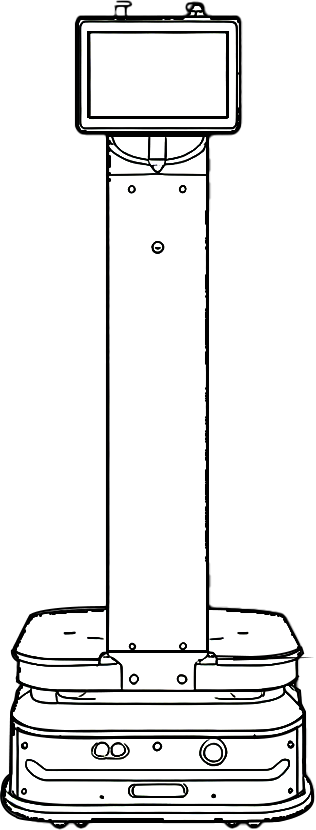
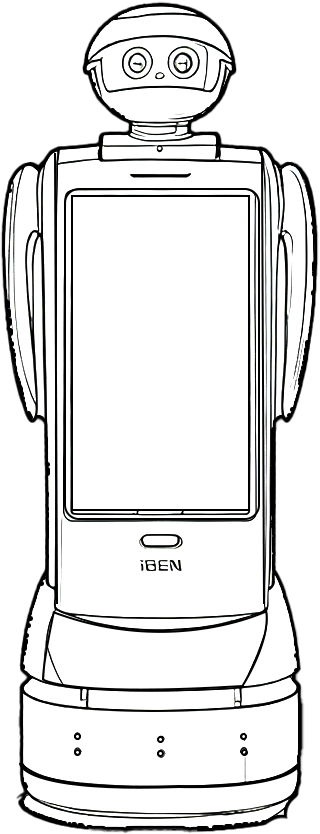
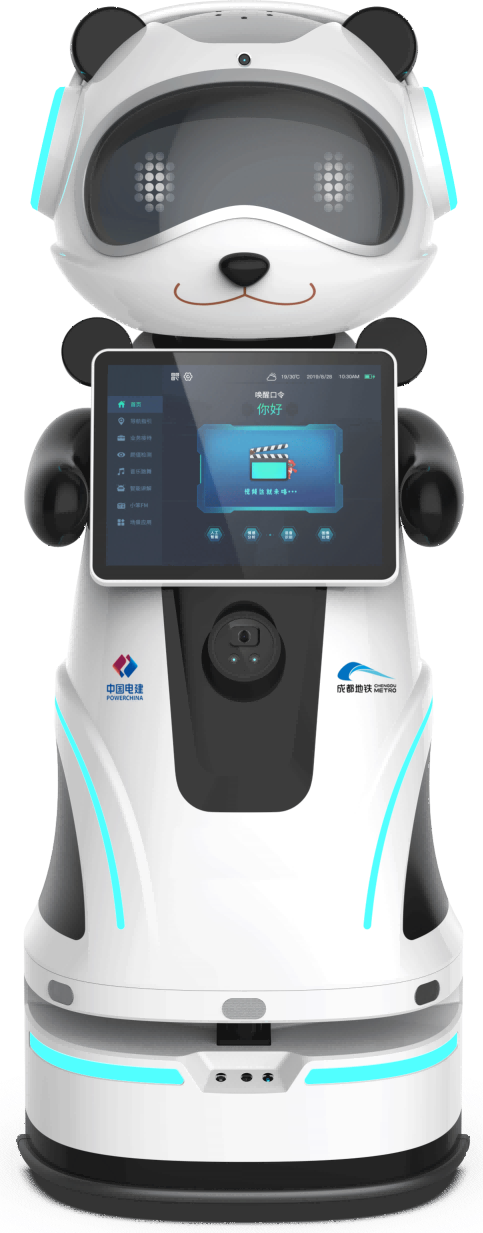
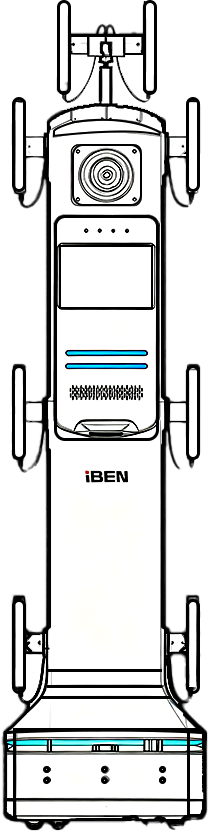
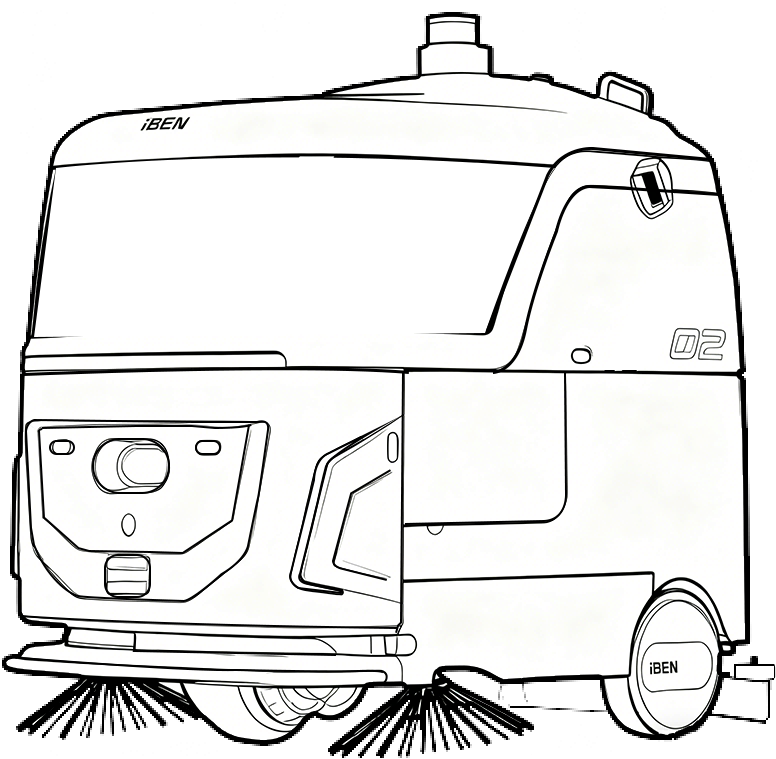
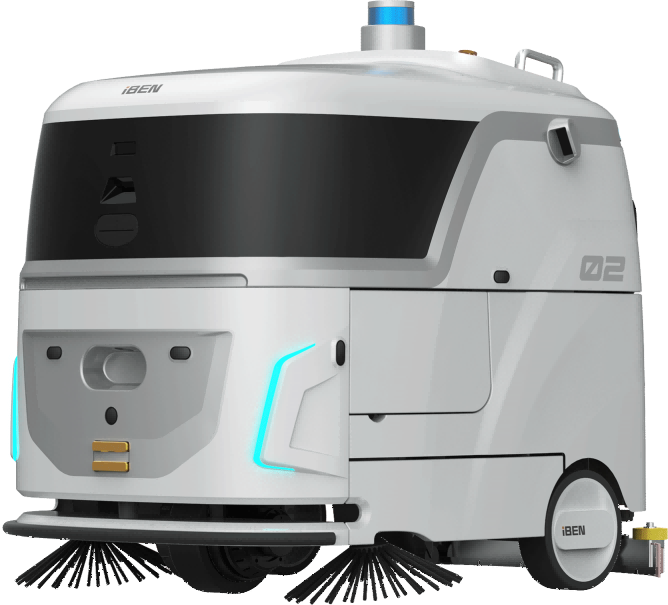
An Automatic Transport Robot is a self-navigating, intelligent vehicle designed to move materials without fixed, predefined paths. Equipped with a sophisticated array of sensors (laser LiDAR, cameras, 3D vision), onboard processors, and advanced software, AMRs perceive their environment in real-time. They use technologies like Simultaneous Localization and Mapping (SLAM) and Visual SLAM (VSLAM) to create a dynamic map of their surroundings, allowing them to navigate around people, pallets, and unexpected obstacles autonomously.
The core principle of the AMR is flexibility through intelligence. It’s not just a dumb carrier on wheels; it’s a decision-making node in your operational network. Leading providers, such as iBEN Robot, leverage mature commercial robotics platforms, adapting them for industrial rigor. This results in robots that are not only smart but also boast extreme scene adaptability, capable of navigating 60cm narrow aisles, crossing 2cm thresholds, and working seamlessly across both industrial and commercial environments.
What is a Traditional Conveyor System?
A traditional conveyor system is a fixed-path, mechanized assembly of belts, rollers, or chains designed to move materials continuously from point A to point B (and sometimes C, D, and E, via complex diverters and mergers). Its operation is linear, predictable, and high-speed for consistent, uniform items.
The core principle of the conveyor is fixed efficiency. It is engineered for a specific task, flow, and throughput. Once installed, its path is permanent. Changing a product's route or integrating a new process typically requires significant mechanical re-engineering, downtime, and capital investment.
Head-to-Head Comparison: AMRs vs. Conveyors
Let's break down the key operational differences that will impact your bottom line.
Flexibility and Adaptability
-
Automatic Transport Robot (AMR): The undisputed champion of flexibility. AMR routes are defined in software, not concrete. Changing a pickup point, adding a new workstation, or completely reconfiguring a warehouse layout requires only a software update to the robot's map. This makes AMRs ideal for dynamic environments like 3C electronics manufacturing or e-commerce fulfillment centers, where product lines and processes evolve rapidly.
-
Conveyor System: Inflexible by design. Any change to the material flow path requires physical alteration—adding, removing, or relocating sections of heavy machinery. This process is slow, expensive, and disruptive. Conveyors thrive in environments with ultra-stable processes that are unlikely to change for 5-10 years.
Implementation and Scalability
-
AMR: Deployment is typically rapid and non-invasive. Advanced systems emphasize "no infrastructure" deployment, meaning no magnetic tapes, QR codes, or major facility modifications are needed. As your needs grow, you can adopt a modular "add-as-you-grow" approach, integrating new robots into the existing fleet with minimal fuss. This aligns perfectly with the "1-2-N-X" core philosophy used by iBEN, which allows scaling from a single intelligent robot to a full fleet within a unified architecture.
-
Conveyor: Implementation is a major capital project involving lengthy installation times, significant construction, and facility downtime. Scaling throughput often means building a parallel line or significantly expanding the existing one, both of which are akin to new installations in terms of cost and disruption.
Operational Complexity and Intelligence
-
AMR: These are collaborative, smart machines. They can make decisions—like choosing an alternative route when a path is blocked—and integrate deeply with your Warehouse Management System (WMS), Enterprise Resource Planning (ERP), and Internet of Things (IoT) devices. This enables features like automatic elevator calling, dynamic task prioritization, and real-time data collection on material movement.
-
Conveyor: A conveyor is a "dumb" system. It moves what is placed on it, where the hardware directs it. It lacks decision-making capability and requires manual intervention at transfer points, merge points, and for exception handling. Integration with software systems is generally limited to basic on/off controls.
Space Utilization and Facility Impact
-
AMR: AMRs operate on the existing floor space, sharing pathways safely with humans and other vehicles. They require minimal dedicated infrastructure, freeing up valuable square footage for storage or production. Their 360° perception detection ensures safe coexistence in shared spaces.
-
Conveyor: Conveyors consume permanent, dedicated space. They create physical barriers within a facility, often segmenting workflows and requiring significant overhead or floor footprint that cannot be repurposed.
Cost Analysis: Initial Investment vs. Total Cost of Ownership (TCO)
This is where the narrative shifts from simple price tags to long-term value.
| Cost Factor |
Automatic Transport Robot (AMR) |
Traditional Conveyor System |
| Initial Capital Cost |
Typically higher per-unit cost for hardware/software. |
Can have a lower upfront cost per linear foot for simple lines. |
| Installation/Deployment Cost |
Very low. Often just unboxing, mapping, and configuration. Some providers tout up to 80% lower deployment costs. |
Extremely high. Involves civil works, mechanical installation, and extensive electrical work. |
| Cost of Change/Reconfiguration |
Negligible. Software-based path changes. |
Prohibitively High. Requires mechanical re-engineering and construction. |
| Scalability Cost |
Linear and predictable. Purchase additional robots as needed. |
Step-function and high. Significant capital outlay for any capacity increase. |
| Operational Flexibility |
High. Pay for adaptive intelligence and multi-use capability. |
Low. You pay for a single, fixed function. |
| Total Cost of Ownership (TCO) |
Often lower over 3-5 years. Lower change costs and higher asset utilization justify the initial investment. |
Often higher over time. Inflexibility leads to hidden costs of workarounds and missed opportunities for optimization. |
The Decision Matrix: Which Solution is Right for Your Scenario?
Use this matrix to guide your initial assessment:
| Key Decision Factor |
Choose an Automatic Transport Robot (AMR) |
Choose a Traditional Conveyor |
Either Could Work |
| Process Stability |
Processes change frequently (seasonally, or with new products). |
Processes are completely static and won't change for many years. |
Moderate change is anticipated. |
| Layout/Facility Volatility |
Layout changes often, or you plan to move/expand facilities. |
Facility and layout are permanent. |
Some future changes are possible but not defined. |
| Product/SKU Variety |
High mix, low volume; many different items to route. |
Low mix, very high volume; moving the same item constantly. |
A manageable number of primary SKUs. |
| Capital Budget Profile |
Preference for OpEx, modular spending, and faster ROI. |
Large capital budget available for a single, upfront project. |
Budget allows for either approach. |
| Need for Operational Data |
High need for traceability, workflow data, and process analytics. |
Basic movement tracking is sufficient. |
Data is useful but not critical. |
| |
|
|
|
When to Choose an Automatic Transport Robot (AMR)
Your operation is a prime candidate for AMRs if: You operate in batch-based manufacturing (automotive, aerospace), high-variability warehousing, multi-floor facilities, or have plans for
phased automation. They are perfect for tasks like line-side feeding, material delivery to assembly stations, and intermediate product transfer where routes are not uniform.
When a Traditional Conveyor System Still Makes Sense
Conveyors remain the best tool for a specific job: moving an extremely high volume of identical items over a very long, straight, and permanent distance at maximum speed. Think bottling plants, package sorting hubs for uniform parcels, or bulk material handling (coal, grain) where the material itself defines the path.
The Future is Flexible: How AMRs Like iBEN Are Evolving the Paradigm
The trend is unmistakably toward flexible, software-defined automation. Modern AMR solutions are closing the historical gaps in durability and precision that once favored conveyors for industrial settings. Companies like
iBEN Robot exemplify this evolution by transferring hardened commercial robotics technology into the industrial arena.
For a business evaluating automatic transport robots, key differentiators to look for include:
-
Rapid, Infrastructure-Light Deployment: Technology that uses laser SLAM+VSLAM fusion for environment adaptation, enabling setup in days, not months, without facility modifications.
-
Industrial-Grade Flexibility: Robots that promise not just navigation, but "extreme scene passage"—capable of handling the tight spaces, ramps, and uneven floors of real-world factories.
-
Distributed Intelligence: Moving beyond a single central brain to a "distributed scheduling" system. This allows robot fleets to collaborate more efficiently, reducing single points of failure and enabling smoother multi-robot coordination.
-
Open Ecosystem Integration: The ability to easily connect with WMS, ERP, and IoT platforms transforms the AMR from a transport tool into a connected data node within your smart factory.
Conclusion: Making an Informed Choice for Long-Term Success
The choice between an automatic transport robot and a conveyor system is ultimately a choice between two visions of your operation's future. The conveyor offers optimized, fixed efficiency for a known world. The AMR offers resilient, flexible intelligence for an uncertain and dynamic world.
For most modern businesses facing volatility, customization demands, and the need for data-driven optimization, AMRs represent a more future-proof and adaptable investment. Their higher initial cost is frequently offset by dramatically lower costs of change, faster deployment, and the invaluable ability to adapt your material flow as your business evolves.
As you consider your path forward, evaluate providers who offer not just a robot, but a full-scene solution built on proven, adaptable technology. The goal is not just to automate a task today, but to embed the flexibility to thrive tomorrow.