Introduction: From Basic AGVs to Smart Warehouse AGV Systems
In early generations of warehouse automation, AGVs were often little more than carts following magnetic tape or QR codes on fixed routes. They provided some labor savings but offered limited flexibility and required heavy upfront work to install guidance infrastructure. In 2026, the picture looks very different: smart warehouse AGV systems combine autonomous navigation, real‑time decision‑making and deep IT integration to form the backbone of smart warehousing.
A smart warehouse AGV is not just a standalone vehicle; it is part of a complete system that includes vehicle hardware, onboard controllers, fleet management, traffic control, safety subsystems and interfaces to WMS, MES and ERP. These systems connect receiving, storage, picking, value‑added services and shipping into one continuous material flow, replacing fragmented manual operations with coordinated, data‑driven processes.
As a specialized warehouse automation provider,
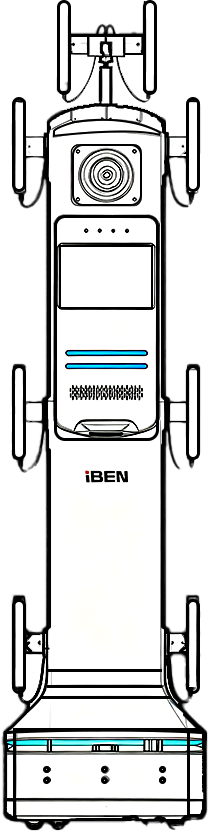
iBEN Robot focuses on intelligent logistics AGV solutions for modern warehouses and production logistics. Its platform is built around infrastructure‑free navigation, distributed scheduling and open APIs, enabling fast deployment and tight integration with existing warehouse IT environments.
What Exactly Is a Smart Warehouse AGV System?
A smart warehouse AGV system is an integrated automation solution where autonomous vehicles handle material transport while a control layer orchestrates tasks in real time. This differs from traditional AGV setups, where vehicles follow fixed paths and receive simple start/stop commands from basic controllers.
At the hardware level, smart warehouse AGVs typically feature industrial‑grade chassis, electric drive units, lift modules or roller conveyors, safety scanners and batteries sized for multi‑shift operation. Onboard controllers handle local navigation, collision avoidance and communication with the fleet management system. These vehicles can transport pallets, racks, carts or totes between different warehouse zones with high positioning precision.
However, the “smart” part lies mainly in the software and system architecture. Intelligent logistics AGV systems use advanced algorithms to decide which vehicle handles which task, which route it should take, and how to coordinate dozens of AGVs without traffic jams. They also integrate closely with WMS and other systems so that missions are generated automatically from order and inventory events rather than manual dispatch.
System Architecture: Layers of a Smart Warehouse AGV
A defining feature of smart warehouse AGV deployments is their layered system architecture. Understanding these layers helps warehouse managers plan projects, evaluate vendors and design for scalability.
-
Vehicle Layer At the bottom is the vehicle layer, consisting of AGVs equipped with navigation sensors, safety scanners, controllers and communication modules. Each AGV is responsible for local perception and motion control, including route execution and obstacle avoidance.
-
Fleet Management & Traffic Control Layer Above the vehicles sits the fleet management and traffic control layer. This layer assigns tasks to vehicles based on position, battery level, payload suitability and priority, while a traffic control module ensures that AGVs do not block each other at intersections or narrow aisles. Intelligent distributed scheduling can reduce reliance on a single central server and simplify scaling.
-
Integration & Business Logic Layer The top layer handles integration with WMS, MES, ERP and sometimes AS/RS and sortation systems. Here, business logic determines when tasks are created: for example, when the WMS allocates a picking batch, or the MES detects low material at a station. Open APIs and standard protocols allow smart warehouse AGV systems to plug into existing IT environments with minimal disruption.
These capabilities are bundled into iBEN’s
Smart Warehousing solutions, which use a common software and integration framework across multiple AGV and AMR models.
Key Technologies: Navigation, Scheduling and Integration
Three technology domains largely determine how “smart” a warehouse AGV system really is: navigation, scheduling and integration.
Navigation and Positioning Smart warehouse AGVs use laser SLAM, vision SLAM or sensor fusion to navigate without fixed guidance infrastructure. This supports high‑precision navigation even when layouts or lighting change, and remapping or extending routes can be done via software rather than civil works. As a result, AGVs can be redeployed or their missions adjusted quickly when storage zones or workflows are reconfigured.
Fleet Scheduling and Traffic Management Scheduling determines how tasks are assigned to AGVs and how they move through shared spaces. Traditional systems rely on a central server that calculates routes and sends commands, which can become a bottleneck and a single point of failure. More advanced intelligent logistics AGV systems adopt distributed or hybrid scheduling architectures, where vehicles collaborate through a self‑organizing network to make local decisions within global constraints.
Integration with WMS, MES and AS/RS Smart warehouse AGV systems deliver maximum value when deeply integrated with existing enterprise systems. Through open APIs, AGVs can connect with WMS to receive picking, put‑away and replenishment tasks and with MES to respond to material shortage signals at production lines. In automated warehouses, AGVs act as the moving link between AS/RS racks and workstations, retrieving totes or pallets from high‑density storage and delivering them to packing, kitting or cross‑dock areas.
Smart Warehouse AGV Use Cases Across the Facility
Smart warehouse AGV systems cover a wide set of use cases rather than just replacing forklift runs.
Receiving and Put‑away When goods arrive, the WMS can automatically trigger put‑away missions that are dispatched to AGVs. Vehicles pick up pallets or racks at docks and deliver them to buffer zones or storage aisles according to storage strategies such as ABC zoning or temperature control. This reduces congestion at receiving and helps goods become available for picking faster.
Storage, Replenishment and Internal Transfers Inside the storage area, AGVs support tasks such as consolidation, relocation and replenishment. They can move pallets to optimize space, fill forward pick locations based on demand signals, or prepare specific zones for upcoming promotions. When combined with high‑density storage systems, AGVs link automated racks with manual or semi‑automatic workstations.
Picking Support and Goods‑to‑Person Flows In goods‑to‑person or tote‑to‑person setups, AGVs bring racks or totes to stationary picking stations to eliminate walking and increase pick rates. Fleet management coordinates routes so vehicles arrive in the right sequence to maintain steady workstation utilization.
Outbound and Cross‑Docking On the outbound side, AGVs move completed orders from packing zones to shipping docks and return empty pallets or containers to where they are needed next. For cross‑docking operations, they transfer inbound pallets directly to outbound lanes based on routing plans.
These use cases are integrated into
iBEN Robot smart warehousing solutions, which standardize how AGVs interact with different warehouse zones and IT systems.
Benefits: Flexibility, Throughput and Data‑Driven Operations
Deploying smart warehouse AGV systems delivers benefits that reach beyond simple headcount reduction.
-
Flexibility and Fast Reconfiguration – Navigation without fixed guides lets AGVs adapt quickly to layout or process changes. Instead of engineering projects, many adjustments can be done via mapping updates and mission configuration.
-
Higher Throughput and Better Space Utilization – Coordinated fleets reduce non‑value‑added travel and waiting, enabling more moves per hour with the same or less space. Integration with high‑density storage enables more pallets or totes per square meter.
-
Improved Safety and Predictability – AGVs follow defined routes, speeds and safety rules, reducing collision risk and improving cycle time consistency.
-
Data‑Driven Operations – Smart warehouse AGV software generates detailed data on travel times, queueing, bottlenecks and resource utilization. Managers can use these insights to adjust layouts, fine‑tune buffer sizes and align staffing more closely with real demand patterns.
Cost Structure of Smart Warehouse AGV Systems
The cost structure of a smart warehouse AGV project typically includes hardware, software, infrastructure, integration, deployment and ongoing operations. Hardware costs depend on payload capacity, navigation technology, safety configuration and any special top modules such as conveyors or lifts.
Software costs cover fleet management, traffic control and sometimes simulation or analytics tools used during design and optimization. Infrastructure costs include charging stations, network coverage and any minor changes to floors or markings. Integration and deployment costs depend heavily on the complexity of the WMS, MES and other systems that need to interface with the AGVs.
Ongoing operating expenses include maintenance, software licensing, energy and periodic battery replacement. Industry examples show that for many deployments, yearly opex per vehicle is a fraction of the annual cost of a full‑time forklift operator, especially in multi‑shift operations. Properly designed smart warehouse AGV systems can significantly reduce damage, errors and overtime, which also contribute to ROI.
ROI: When Smart Warehouse AGV Investment Makes Sense
To evaluate ROI, warehouses need to quantify both direct and indirect benefits. Direct benefits include reduced labor hours for internal transport, fewer forklift‑related incidents and shorter cycle times. Indirect benefits include higher inventory accuracy, better on‑time shipping performance and the ability to support new business models such as late‑cutoff orders or same‑day delivery.
Analyses of typical deployments suggest that smart warehouse AGV projects can often achieve payback within 2–4 years. In high‑volume facilities with high labor costs and long operating hours, the payback period can be shorter, especially if AGVs replace multiple forklift shifts and reduce overtime. Systematically tracking KPIs such as moves per hour, cost per order and damage rates before and after AGV deployment helps quantify the impact and justify further expansion.
Because smart warehouse AGV platforms are scalable, initial projects can focus on high‑impact areas while leaving room to expand later, spreading investment over time and aligning it with business growth.
Implementation Roadmap and Best Practices
Successful smart warehouse AGV implementation follows a structured roadmap.
-
Assessment and Concept Design – Start by mapping current flows, constraints and pain points, then identify target processes for automation.
-
Pilot Project – Deploy a small number of AGVs in a representative workflow to validate technology, integration and operator acceptance.
-
Phased Roll‑Out – Expand to additional flows and zones in phases, using lessons learned from earlier stages.
-
Continuous Optimization – Use data collected from AGVs and warehouse systems to refine routes, layouts and operating rules.
Many warehouses choose a technology partner that can provide both hardware and system‑level expertise, such as
iBEN Robot, to reduce project risk and accelerate deployment.
Conclusion: Smart Warehouse AGV as a Strategic Enabler
Smart warehouse AGV systems represent a new generation of warehouse automation that combines infrastructure‑free navigation, intelligent scheduling and deep IT integration. Rather than simply replacing forklifts, they reshape how warehouses receive, store, pick and ship goods, providing higher flexibility, throughput and visibility.
For operators facing labor constraints, rising service expectations and frequent layout changes, smart warehouse AGVs are emerging as a strategic enabler of long‑term competitiveness. With scalable platforms like
iBEN Robot smart warehousing, companies can start with targeted pilots and gradually build a connected, data‑driven warehouse network.